
2026 State of Loyalty & Retention Report
Read next

Cyber Monday isn't the finish line—for your customers or your Q4 revenue:
Your December plan:
Here are 12 strategies to do both.
Your customers expect deals to end on Cyber Monday. If you're keeping a good thing going, tell them. After all, as economic uncertainty continues, shoppers are cautious and value-focused.
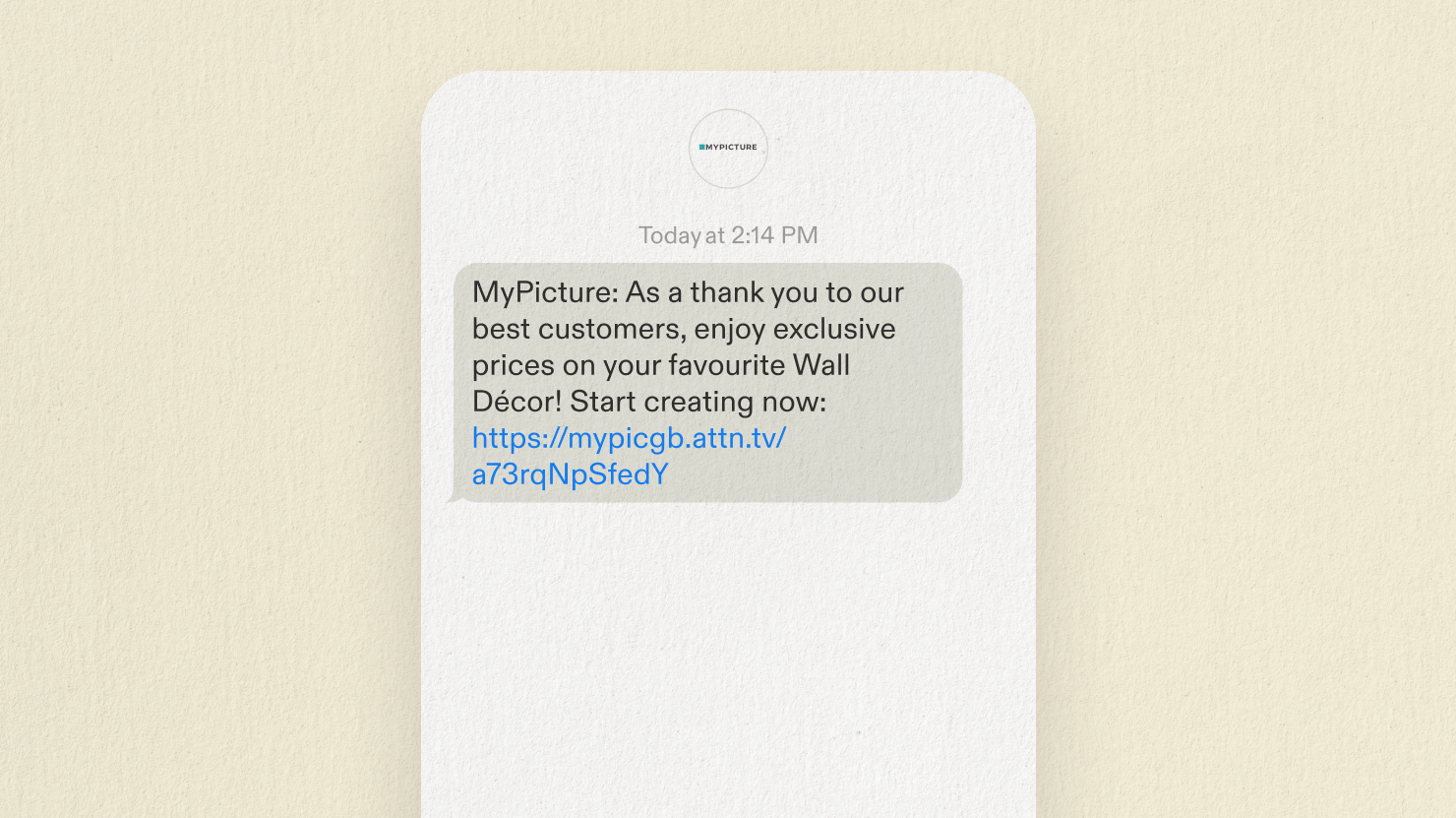
You don't need to match your BFCM intensity. Smaller follow-up offers reach the shoppers who missed the main event—and positioning them as subscriber-exclusive year-end offers makes your list feel like VIPs rather than stragglers.
Prioritize the audience most likely to act: subscribers who engaged during Cyber Week but didn't purchase. A modest incentive gives them a reason to come back, even if they missed your best deal.
December brings its own calendar of high-revenue shopping events. Aligning your messaging with these dates gives you built-in reasons to send—no BFCM-level discounts required.
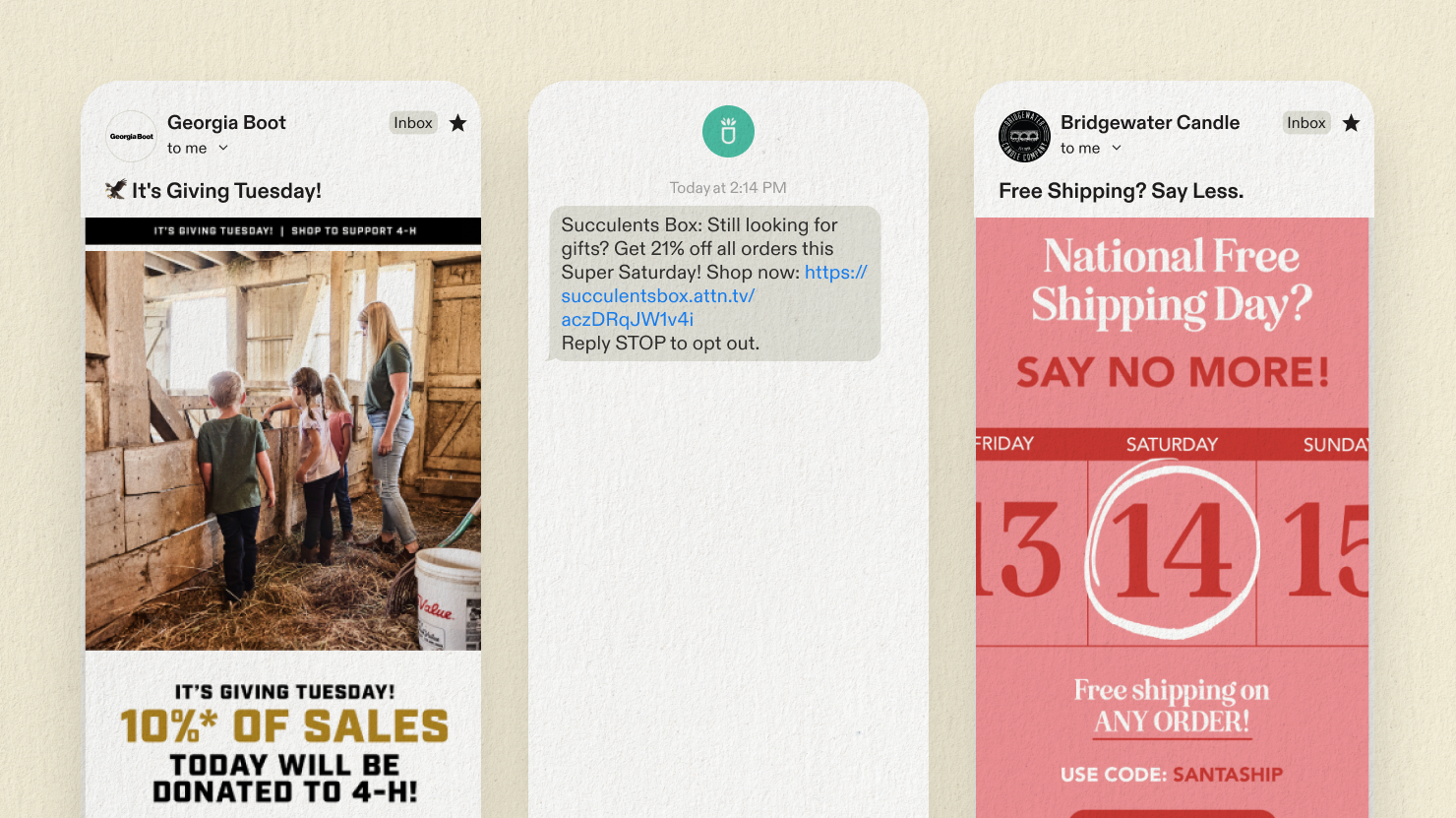
Giving Tuesday (December 1): The day after Cyber Monday is a chance to connect on shared values. Offer to donate to charity when customers place an order, and choose a cause that aligns with your brand to strengthen affinity beyond the transaction.
Free Shipping Day (December 14): The last major push for standard shipping before December holiday delivery deadlines. Offer free shipping if you don't already—or lower your threshold—and pair it with curated gift bundles to lift AOV. Check with your third-party logistics provider (3PL) beforehand so you can promote deadlines with confidence.
Green Monday (December 14): The term isn't well known by consumers, but many brands run deals on December's second Monday—right as shoppers get serious about finishing their gift lists. Share gift guides, bestsellers, and bundled gift sets. It's also a good moment to highlight flexible payment options: 25% of post-BFCM shoppers said they'd use more payment plan options through the end of the year.
Super Saturday (December 19): The Saturday before December 25 can rival Black Friday for in-store traffic. Promote in-store events to subscribers near your retail locations, highlight express and same-day delivery to geographic segments where it's available, and use conversational SMS to help last-minute shoppers find the right gift.
Boxing Day (December 26): Growing beyond its UK and Commonwealth roots, Boxing Day is gaining momentum in the US as well. It’s a traditional gifting holiday where people gather with loved ones, watch sports, and shop end-of-year deals—and it's a natural moment for brands to clear end-of-season inventory.
Want more reasons to send? Find niche December moments that fit your brand in the Attentive marketing calendar.
Gift lists aren't done, and overwhelmed shoppers will welcome the help. Send personalized gift guides and product recommendations based on recent browsing, and position products your customers have already bought and loved as reliable gift options.
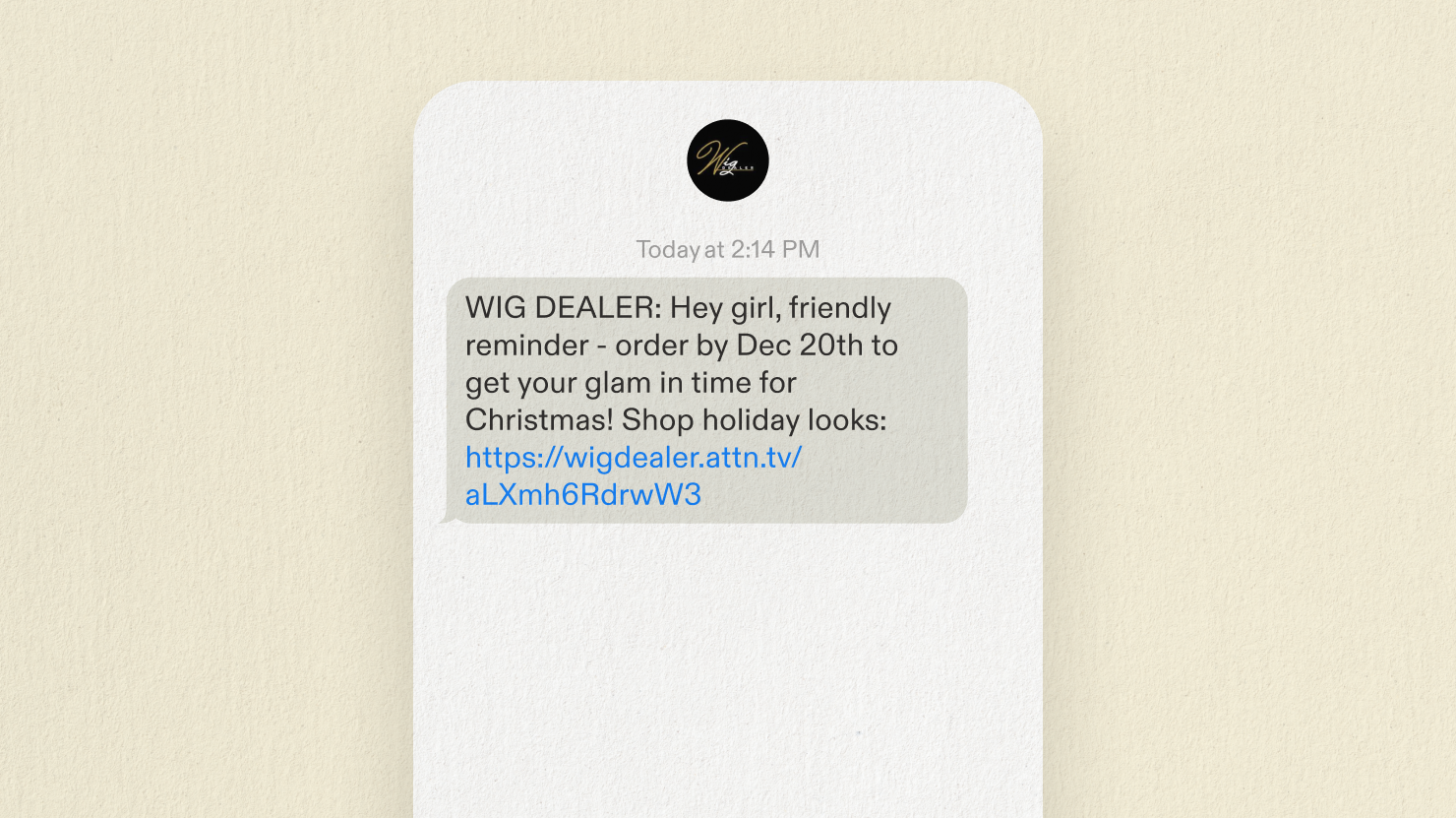
Conversational SMS turns this into a two-way exchange: ask who they're shopping for or what their budget is, then respond with curated collections or giftable bundles for different personas.
Shipping deadlines introduce urgency that can convert shoppers. Use them strategically throughout December to convert browsers into buyers.
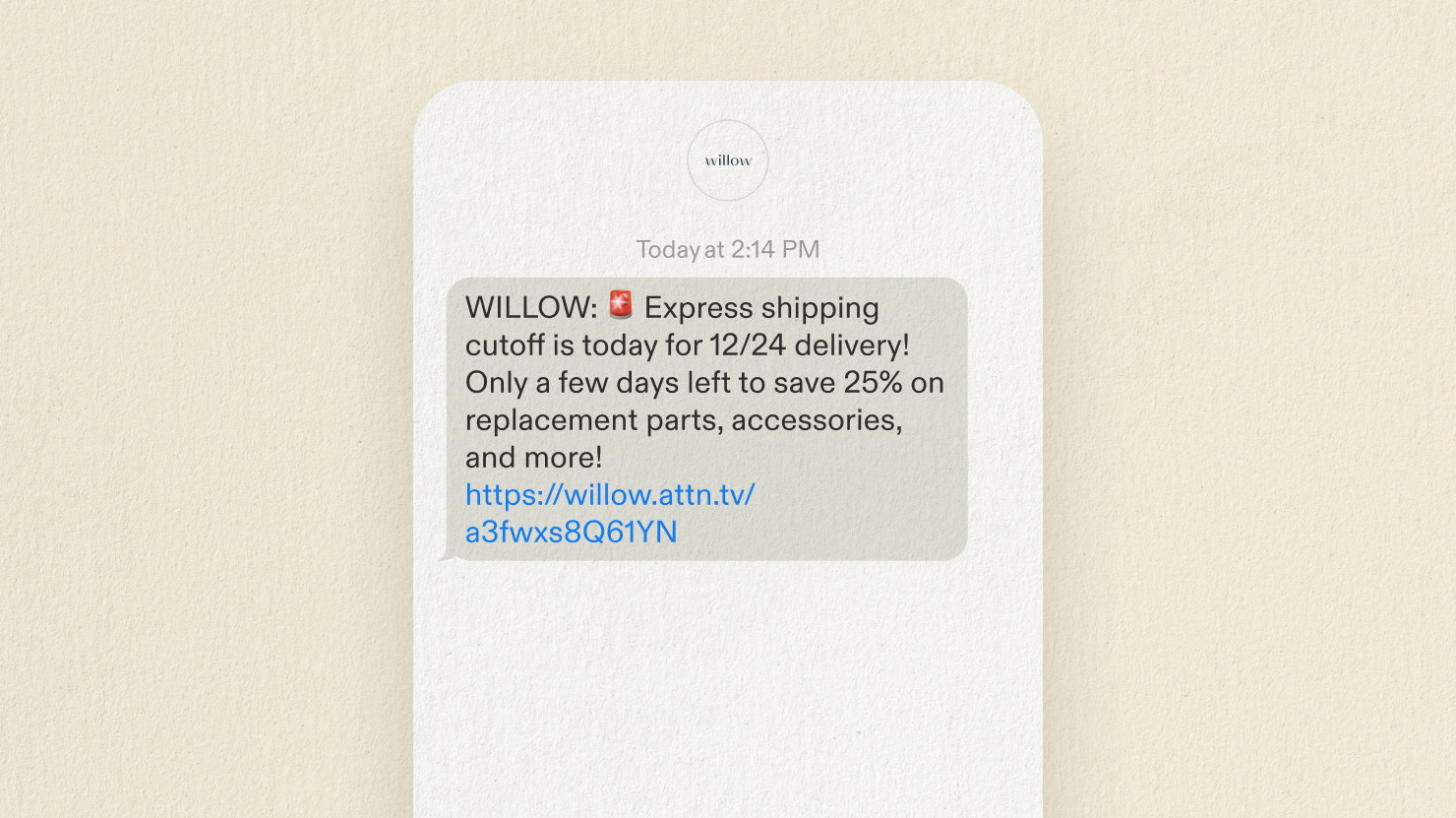
We recommend a tiered approach: start with your standard shipping deadline, then shift to expedited options.
You can send multiple messages to help subscribers plan around the cutoff:
Consider connecting the deadline to something shoppers want. Instead of a generic "last chance for delivery by 12/24," try "These ready-to-gift bundles are perfect for everyone on your list. Order by midnight PT for delivery by 12/24."
Digital gift cards become your MVP once shipping deadlines pass.
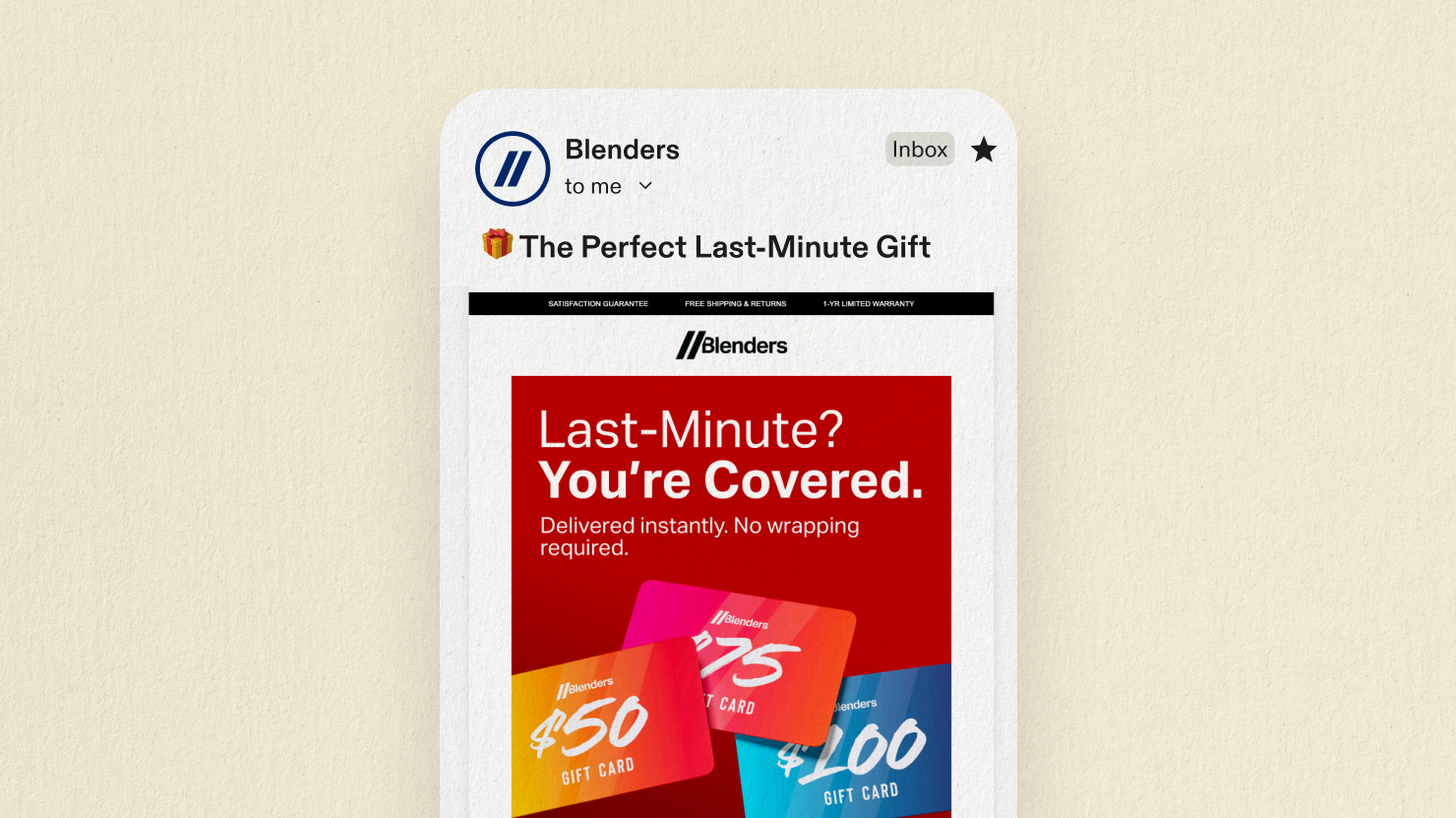
Start positioning them in mid-December as the thoughtful choice for hard-to-shop-for loved ones—then shift the focus after your final delivery cutoff, when they're the only option that still arrives on time.
Consider sweetening the deal with a bonus like "Buy a $100 gift card, get $10 in store credit for yourself." It rewards the buyer and plants the seed for their own next purchase.
December 26–31 is prime time for post-holiday shopping and prepping for the New Year.
People are browsing casually at home, redeeming the gift cards they just received, and shifting from buying for others back to buying for themselves.
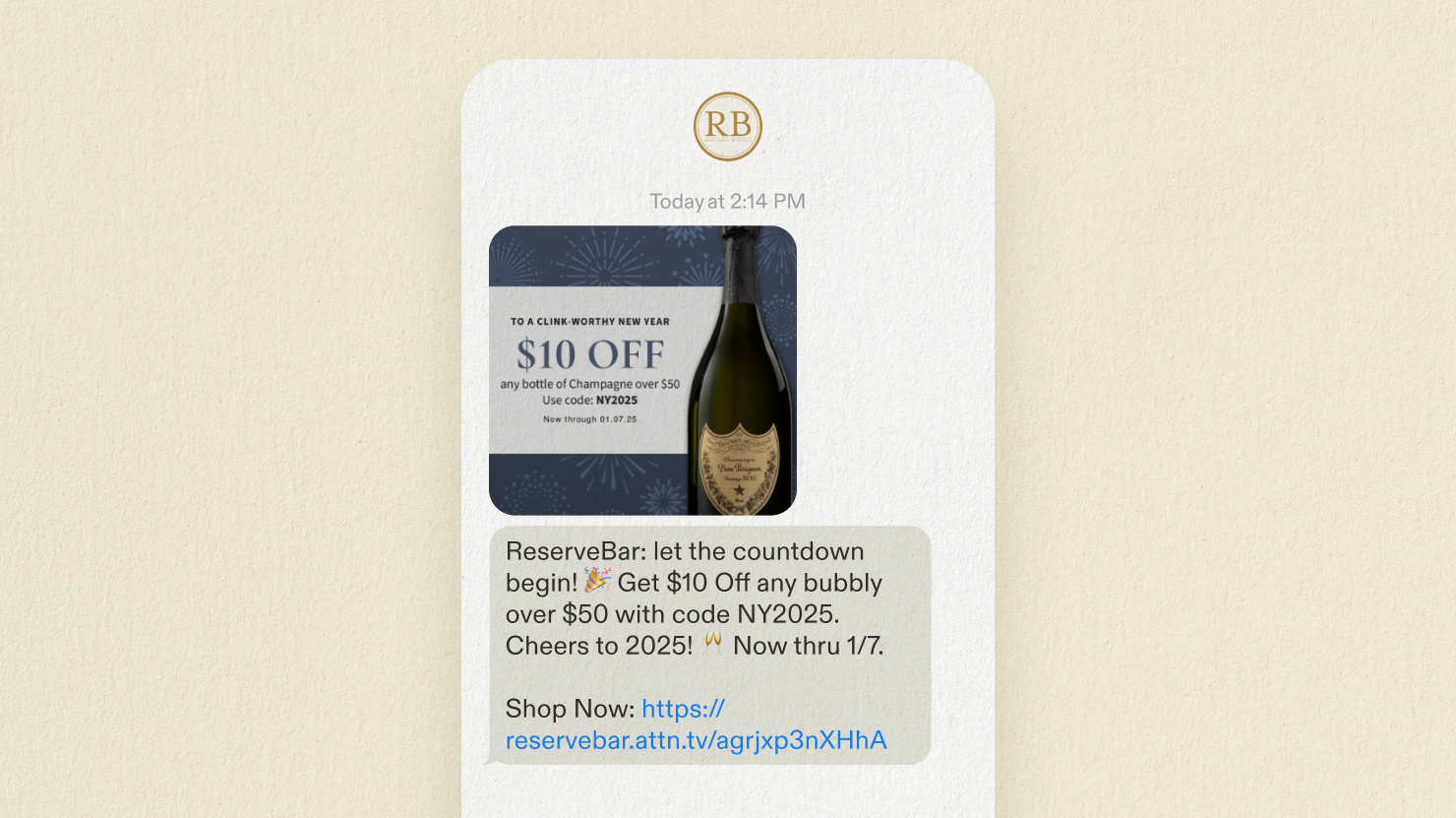
Meet the moment:
"As a gardening company, we're preparing for spring while many brands are winding down for the year. Because of that, BFCM plays a different role for us. Rather than ending the year with our biggest sales event, we use it to help kick off the upcoming gardening season.
We stay engaged with customers through the end of the year using seasonal, educational content, relevant product recommendations, and new product launches for the growing season ahead."
– Mel Reynolds, Director of Marketing, Territorial Seed Company
Last year, 36% of shoppers planning to unsubscribe from their new BFCM sign-ups said it was because they only wanted the deals.
That's not a lost cause. It's a brief: create a BFCM-specific version of your post-purchase flow that provides value and gives deal-seekers a reason to stay.
The value they want is confidence. 69% of shoppers say post-purchase content like customer reviews, use and care tips, and photos of the product in action makes them more confident in what they bought.
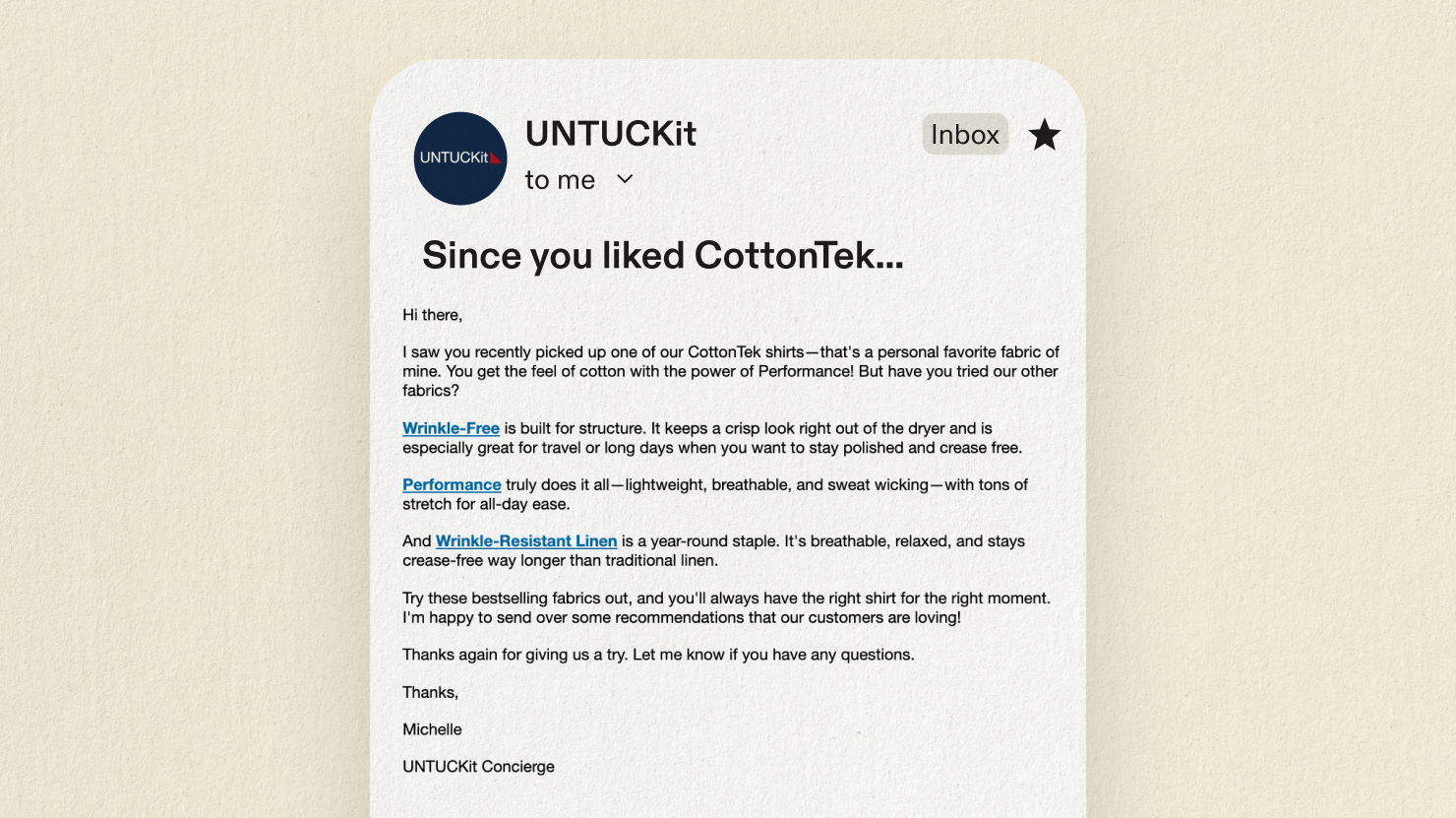
How to craft it:
"After Cyber Week, the opportunity to convert last-minute shoppers is still strong, but nurturing your customers—both new and existing—begins right away. Include post-purchase guides, recommend complementary products, and prep them for replenishment needs down the road.
Staying relevant with timely offers and personalized touches ensures your subscribers are excited to keep engaging with your brand well into the New Year."
– Carla Donahue, Head of Lifecycle Marketing, WITHIN
Put your fresh BFCM data to work by encouraging new customers’ next purchase. 68% of shoppers say they're more likely to purchase when they receive product recommendations based on what a brand knows about them.
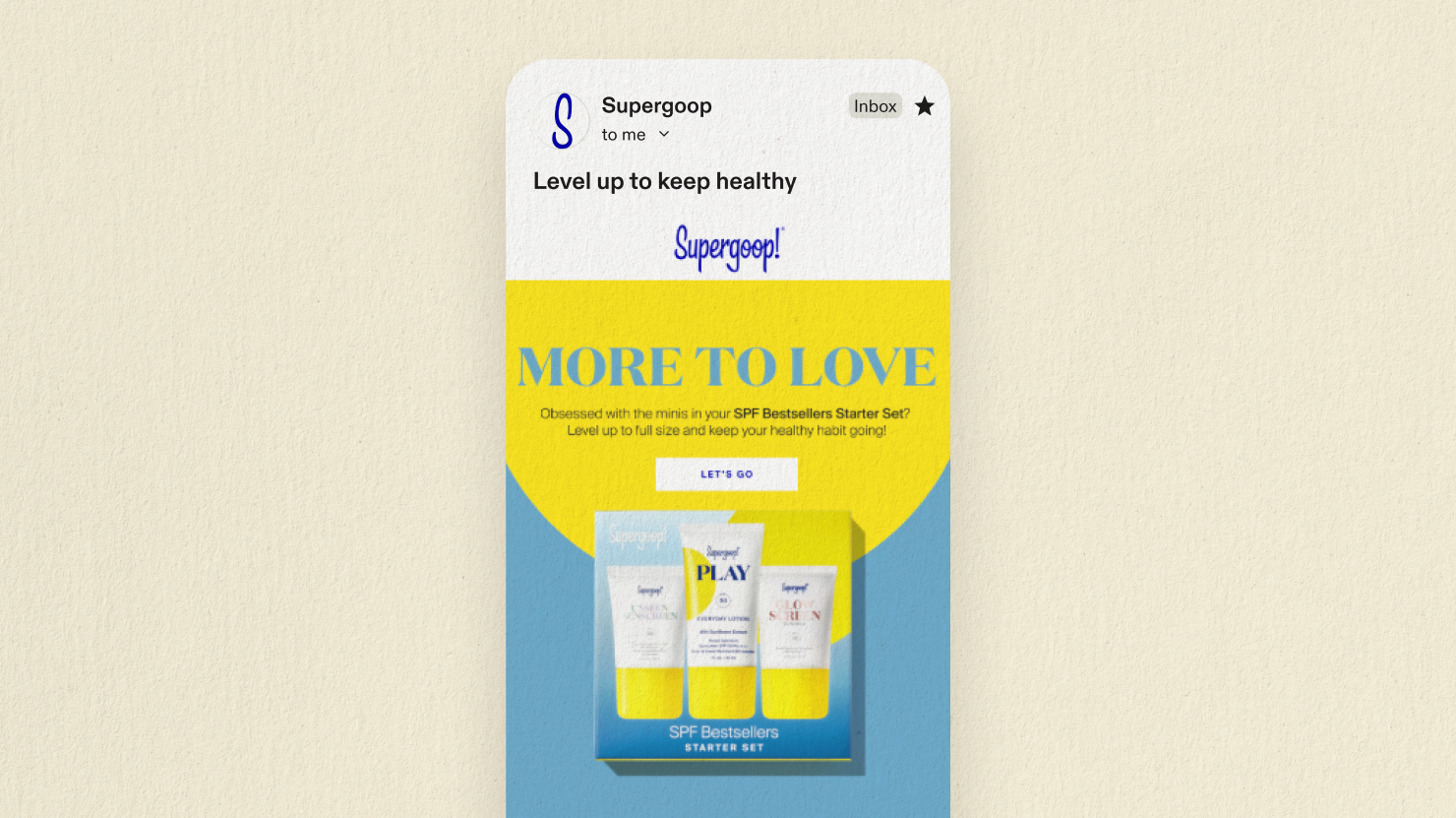
Segment customers by what they bought during BFCM, then recommend what completes it:
The bar for relevance is higher with your most valuable subscribers: Shoppers subscribed to two or three channels are 2.2x more likely to be deterred by irrelevant product recommendations. Recommendations built on customer data are what earn the second order.
If you’re looking to reduce discount dependence after your deepest markdowns of the year, lean on value-add perks in January instead of another sale.
A few ways to encourage that second purchase without a flat discount:
Position these in the post-purchase window while your brand is still top of mind.
A first purchase is a strong moment for a loyalty pitch. While their order is fresh, tell new customers how many points they just earned and exactly how they can redeem them. It reframes the purchase they already made as progress toward the next one.
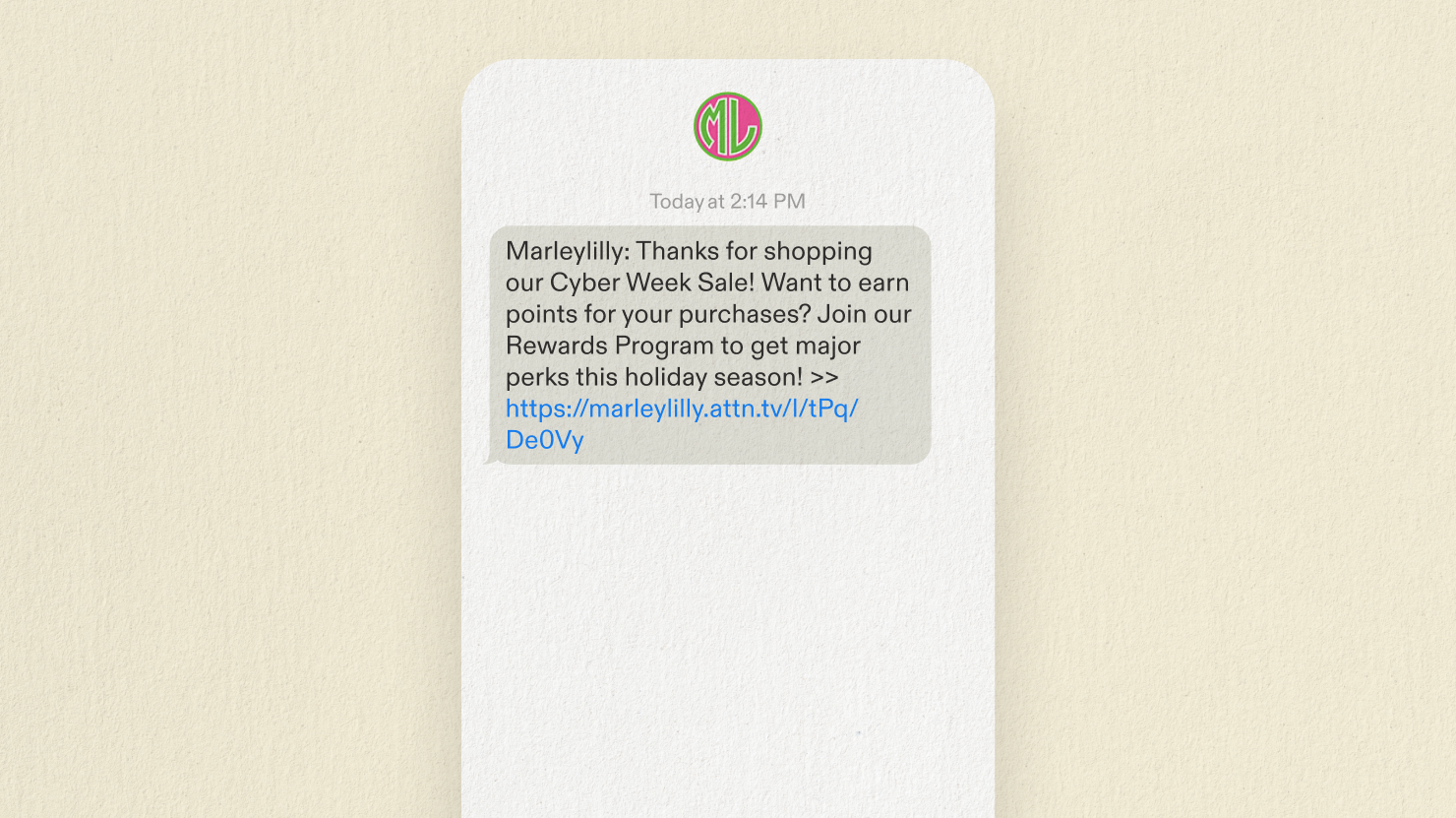
To elevate this strategy:
Create a post-BFCM re-engagement plan that gives non-purchasers a fresh reason to convert: a modest end-of-year offer, a back-in-stock alert on something they browsed, or a price drop on an item they carted.
Come January, consider sending a win-back series that reintroduces your brand and helps them find products they’d like, featuring bestsellers or curated picks.
Email deliverability naturally wanes during BFCM as inboxes flood with promotions and engagement dilutes. December is when you rebuild it.
The brands that treat December as the second half of BFCM are the ones that turn a high-traffic weekend into a larger overall customer base.
Last year, 79% of marketers whose messaging performance improved reported successfully retaining their BFCM-acquired customers, versus 48% of other marketers surveyed.
And the work doesn't end when the calendar flips. Turning BFCM buyers into repeat customers is a year-round discipline—and it's exactly why we studied how shoppers decide which brands earn their loyalty.
See what keeps customers coming back long after Cyber Week:
{{next-article}}