.png)

Shoppers are overwhelmed by choice, and generic marketing gets ignored. But personalized experiences keep them engaged—and influence 93% of shoppers to stay loyal. The brands that act on this reality will gain a competitive edge.
Editor's note: Updated September 2026 with new findings from the April 2026 Attentive Consumer Pulse survey and the 2026 Attentive Marketer Pulse.
Online shopping has brought a world of choice and convenience to consumers’ fingertips. But it hasn’t made shopping simpler. When there are too many options, shoppers can get stuck—taking longer to decide what to purchase or giving up completely.
70% of shoppers say they feel overwhelmed, uncertain, or that it takes too long to find an option they like when shopping online.
When they feel this way:
- 62% keep browsing for more options
- 61% look for reviews or recommendations to help them decide
- 38% postpone purchases for later
- 21% give up on purchasing completely (and younger shoppers are even more likely to give up)
And research suggests as shopping journeys stretch out, fatigue sets in—leading consumers to delay purchases or not complete them at all.
Additionally, brands and shoppers alike are still feeling the impacts of an uncertain economy. In the April 2026 Attentive Consumer Pulse, 90% of shoppers said they’re concerned about the economy (the highest we’ve seen since we started tracking this in August), and 63% are comparing prices more carefully before buying.
This is where personalization helps. Not as a buzzword, but as a way to reduce noise, build decision confidence, and help shoppers keep moving forward.
To understand what shoppers expect from personalization now, we asked 1,050 consumers across the US, UK, and Australia. The results reveal what “personalized” means to shoppers, what drives action and loyalty, and where brands can focus to make personalization effective.
{{lemon-one}}
Personalization matters: 64% of shoppers want marketing to be more personalized
With so many choices, shoppers ignore generic messages. But they pay attention when marketing reflects what they care about.
Shoppers tune out brands that send irrelevant messages
Personalization is how you earn attention now:
- 56% of shoppers often or very often receive irrelevant messages.
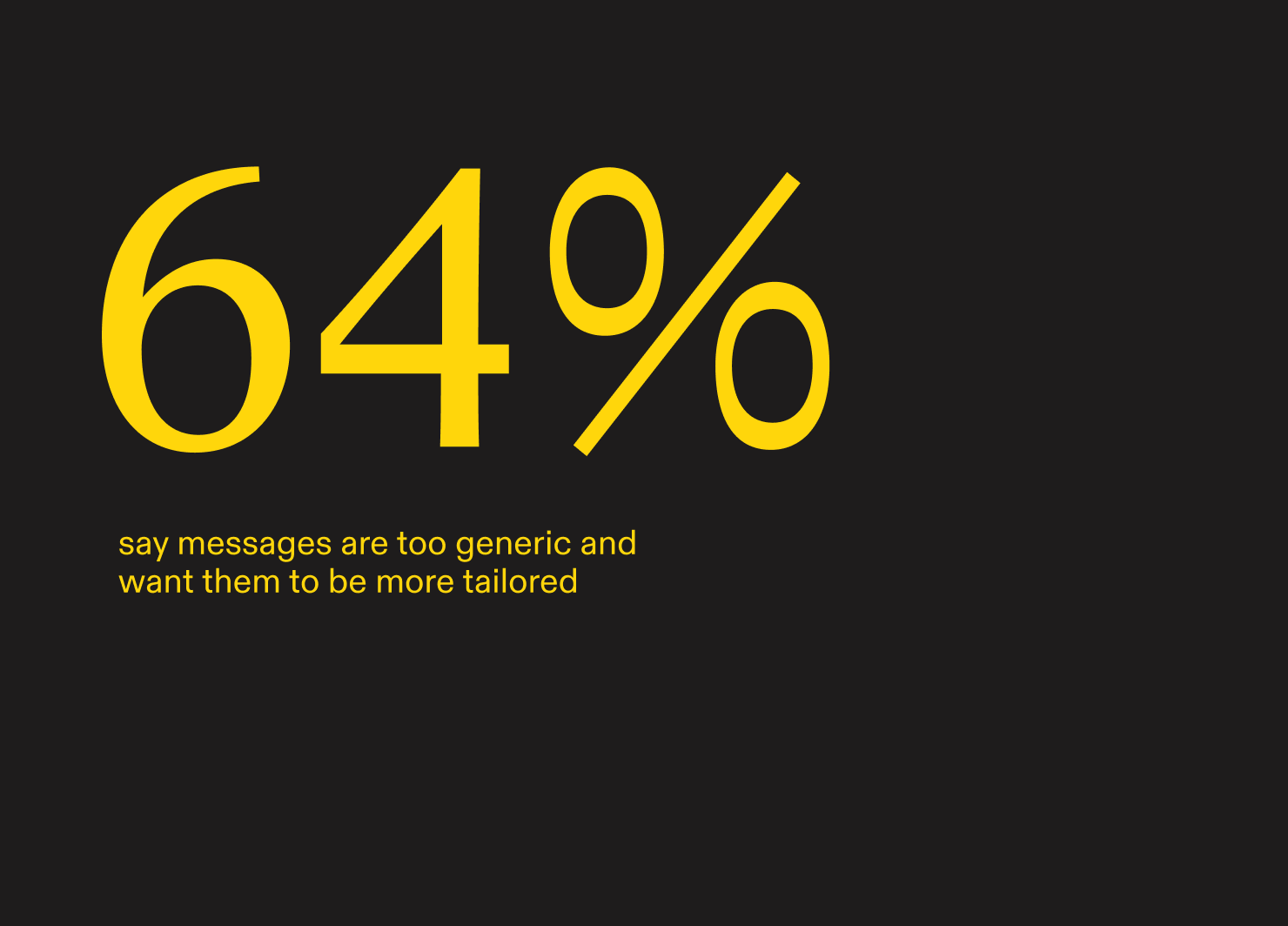
- 64% say messages are too generic and want them tailored to their needs, preferences, or style.
- 80% are more likely to ignore brands that send irrelevant messages.
And the stakes are highest with your most valuable subscribers: shoppers subscribed to two or three channels are 2.2x more likely to be deterred from buying again by irrelevant product recommendations (The 2026 State of Loyalty & Retention).
Attentive platform data shows that 90%+ of text messages sent are batch-and-blast. So there’s room to use the signals shoppers are already giving you, like: engagement by message type and product category, purchase history and recency, browsing activity, and preferences gathered in campaigns or at sign-up.
Consumers reward brands that personalize their experience
Shoppers want brands to adapt to them over time:
- 68% want brands to learn from their shopping habits over time (73% of Gen Z; 81% of Millennials).
- 73% are more likely to purchase when given product suggestions that feel relevant to their needs and preferences (83% for shoppers subscribed to emails, texts, and push notifications).
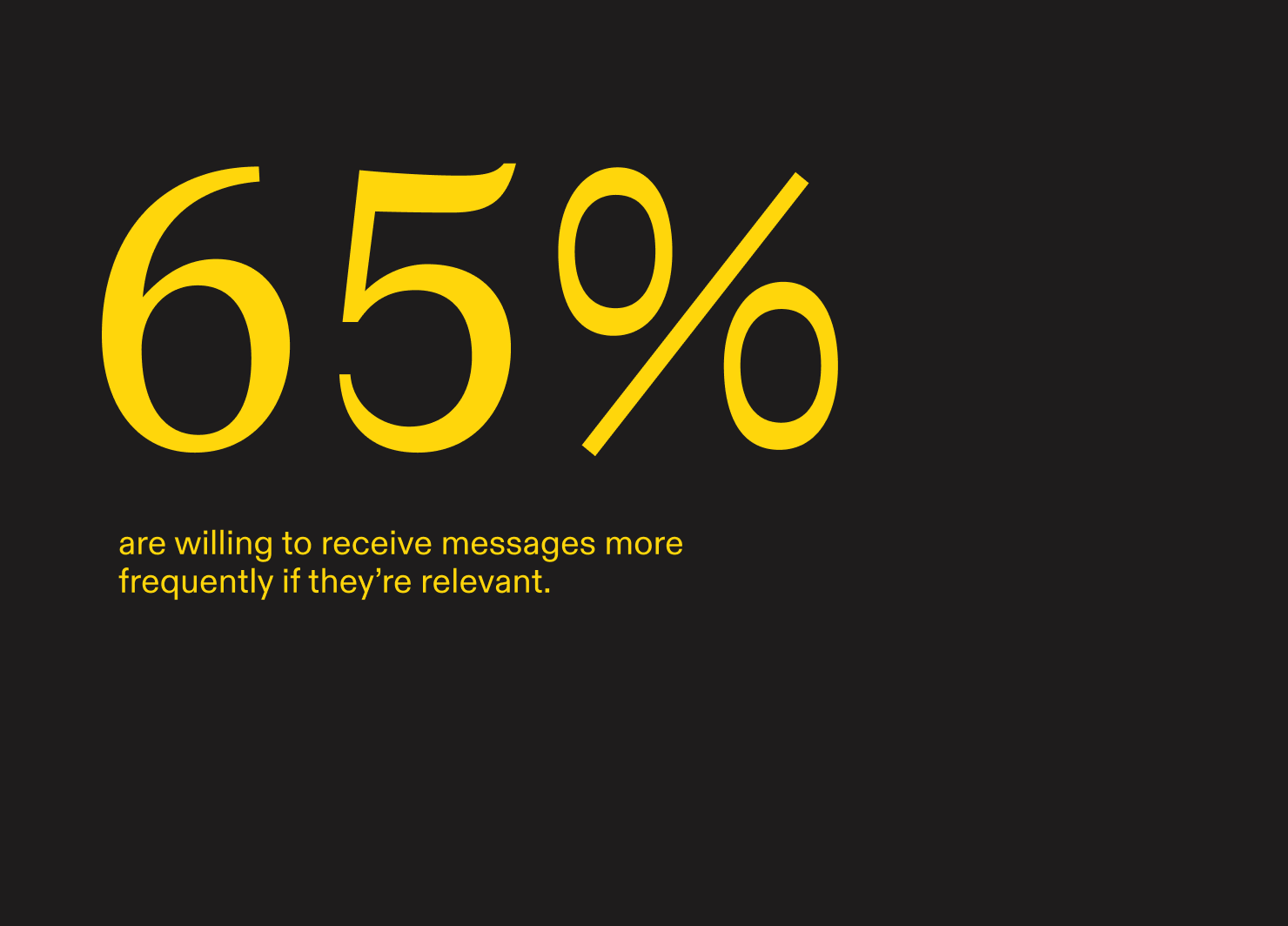
- 65% are open to receiving messages more frequently if they’re relevant.
- 53% say remembering their preferences is a top factor that leads them to continue shopping with a brand.
- 47% name remembering their past interactions as a top factor to continue shopping with a brand.
And there’s a significant opportunity with multi-channel subscribers (across SMS, email, and push).
Those who sign up for two or three channels are more likely to purchase when receiving relevant product suggestions than one-channel subscribers. And they’re open to higher message frequency if it’s relevant to their needs, preferences, and style.
The opportunity: remove friction and help shoppers decide faster
When we asked what would improve shopping the most, the answers pointed to the same idea: make it easier and reduce the noise.
The top three improvements shoppers want:
- Remember their preferences so it’s easier to shop
- Give them product recommendations that match what they like
- Help them pick up where they left off (e.g., saved products, recently viewed items, what’s in their cart)
{{grey-one}}
What personalization means to shoppers: 48% say it starts with the preferences they’ve shared
“Personalized” and “relevant” can start to sound empty unless you define what they mean.
According to shoppers, personalization is based on their interactions with brands
Shoppers say marketing feels personalized when it:
- 48%: Uses preferences they’ve shared (e.g., size, style, interests)
- 47%: Keeps them updated on things they care about (e.g., back-in-stock alerts, sales on items they’re interested in)
- 41%: Features products that complement what they’ve browsed or bought
- 38%: Reflects what they’ve recently done with the brand (e.g., products viewed, added to cart, or purchased)
- 35%: Anticipates their needs (e.g., refills, seasonal items)
In other words, personalization is grounded in what shoppers do and share with brands.
Personalization also has a loyalty effect
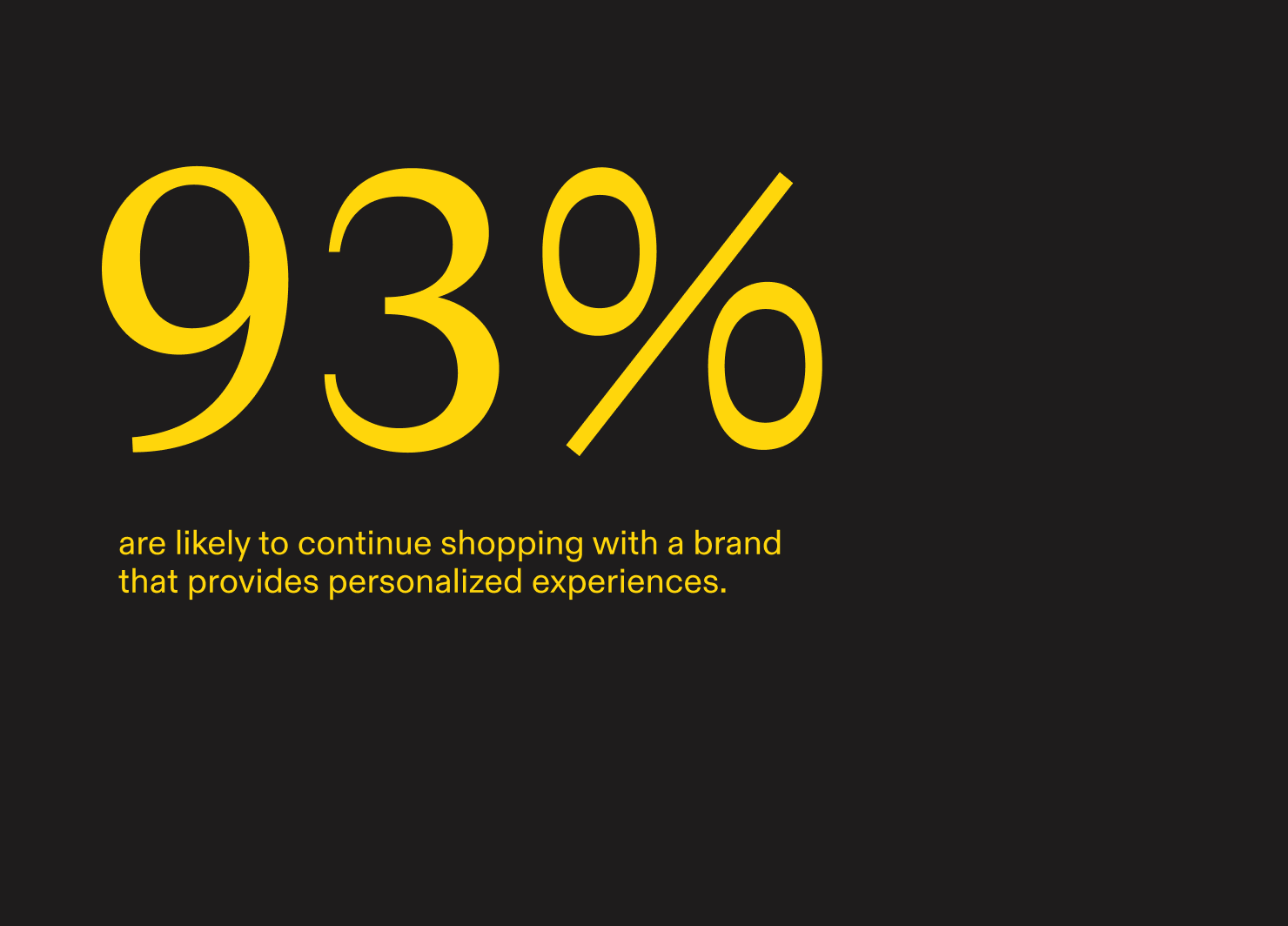
93% of shoppers say they’re likely to continue shopping with a brand when it provides personalized experiences like:
- 53%: Remembering their preferences
- 53%: Making relevant product suggestions
- 47%: Remembering past interactions (purchases, browsing, etc.)
- 39%: Anticipating needs (50% for Gen Z)
- 32%: Sending messages at times that work well for them
{{pistachio-one}}
{{grey-two}}
Identity resolution: Accurate subscriber recognition is the foundation of personalization
To deliver the personalized experiences shoppers want, brands need to recognize who’s browsing and connect that activity back to a subscriber profile. But when shoppers switch devices or return over multiple sessions, the same customer can look like multiple visitors if the signal gets interrupted.
Shorter cookie windows and multiple identifiers (phone numbers, email addresses, IP addresses, etc.) add to the challenge.
These factors make it harder to connect on-site behavior to an existing subscriber profile—and when profiles are incomplete or duplicated, personalization becomes less accurate.
This can show up in a few ways:
- You might miss chances to trigger journeys when someone shows interest in your products—reducing the total possible revenue that abandonment flows provide.
- You might prompt existing subscribers to sign up—70% of shoppers say this happens often.
- You might send abandonment messages after a purchase already happened on a different device—which can frustrate shoppers and increase opt-outs.
That’s why identity resolution (recognizing the same shopper across sessions/devices and tying their behavior back to an email address or phone number) is becoming increasingly important.
Brands can lose signal as shoppers switch devices or take their time
In the past three months:
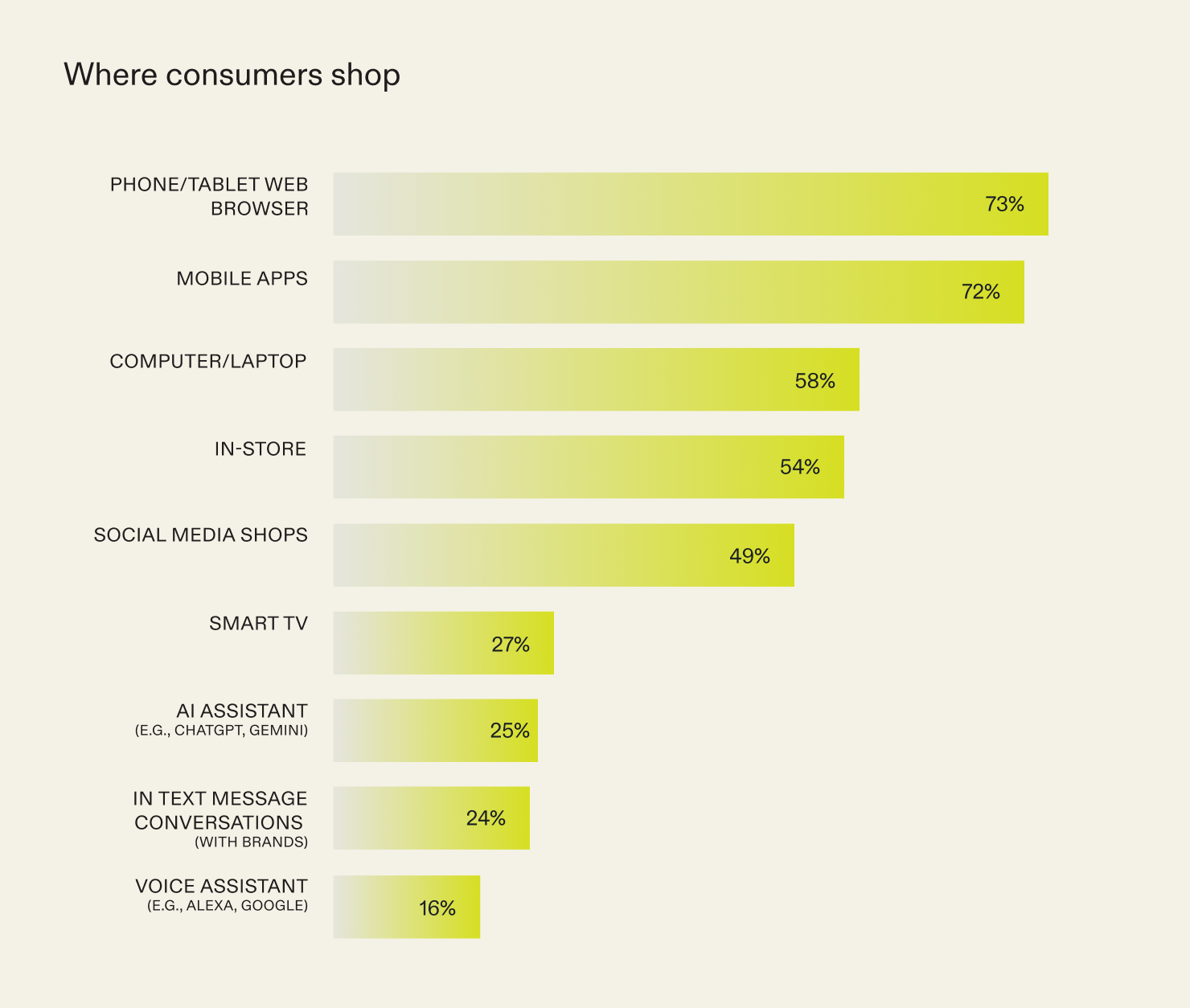
- The average consumer has shopped in 4 different ways across various platforms, devices, and in-store.
- 53% are aware that they’ve switched devices or taken multiple online sessions before making a purchase.
Customer expectations are high—and brands benefit by meeting them
Shoppers say:
- 67% are more likely to unsubscribe if they keep receiving reminders about a product after they’ve purchased it.
- 71% expect brands to remember what they viewed or added to their cart if they switch devices or return later.
- 74% are more likely to purchase when a brand helps them pick up where they left off (saved items, recently viewed, what’s in their cart).
And according to our survey for the 2026 Cross-Channel Marketing Playbook, 54% of shoppers say they regularly get reminded to buy something they’ve already purchased.
The brands solving for this are seeing significant impact.
Those investing in identity are 34% more likely to report year-over-year growth (2026 Attentive Marketer Pulse) than those who aren’t.
Our platform data reveals that brands using a modern identity solution like Attentive Signal see 20% higher conversion rates and 95% more triggered email revenue.
Phone numbers are the most stable form of identification
Shoppers use multiple identifiers while they shop, which can fragment profiles:
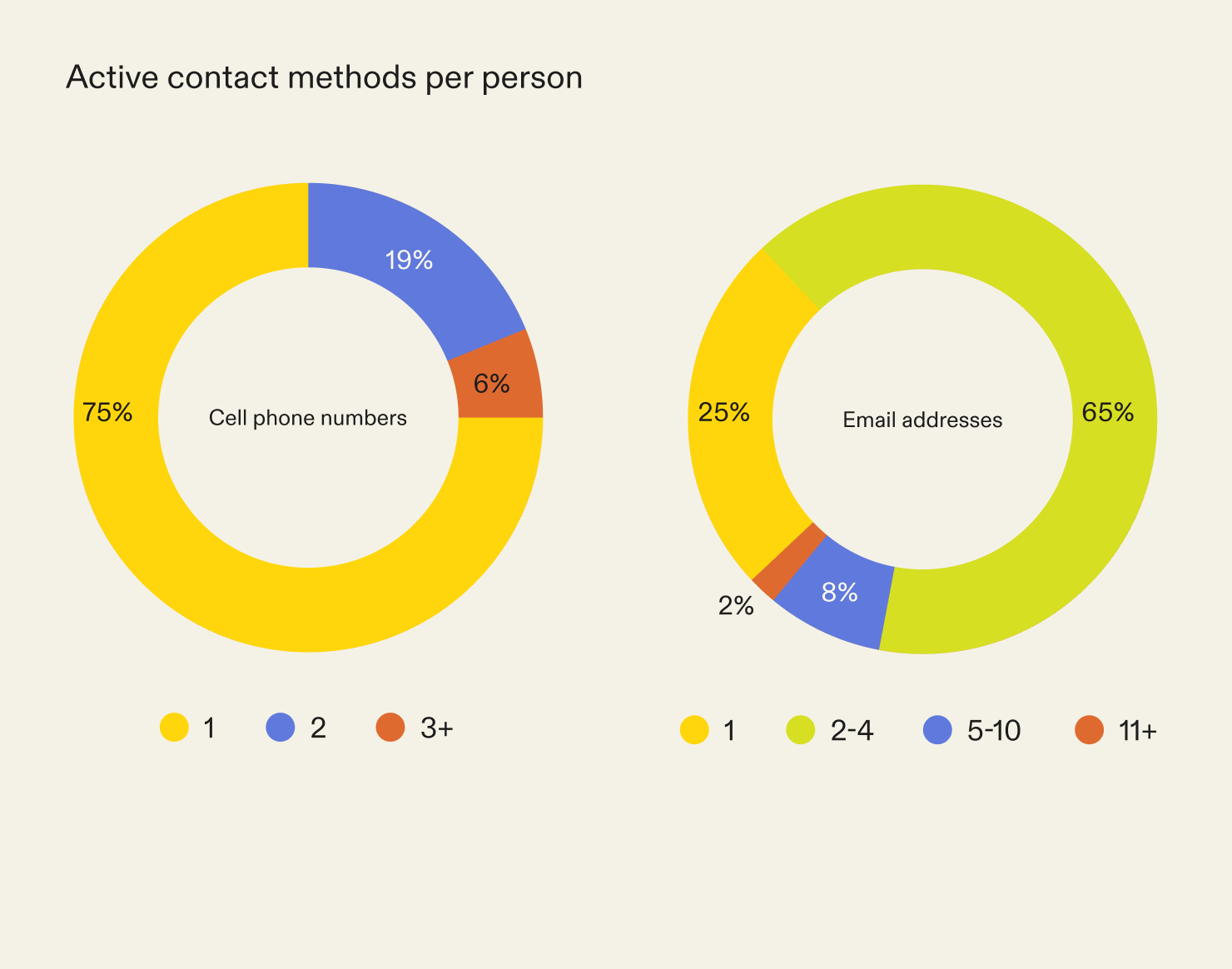
- 75% of consumers have at least two active personal email addresses.
- 32% use a separate email address for marketing sign-ups or an email proxy to hide their email address.
Meanwhile, cell phone numbers prove stable:
- 75% of shoppers have just one active cell phone number.
- 68% have had their cell phone number for at least three years (and 49% for at least six years).
{{grey-three}}
Triggered messages: Behavioral flows drive action
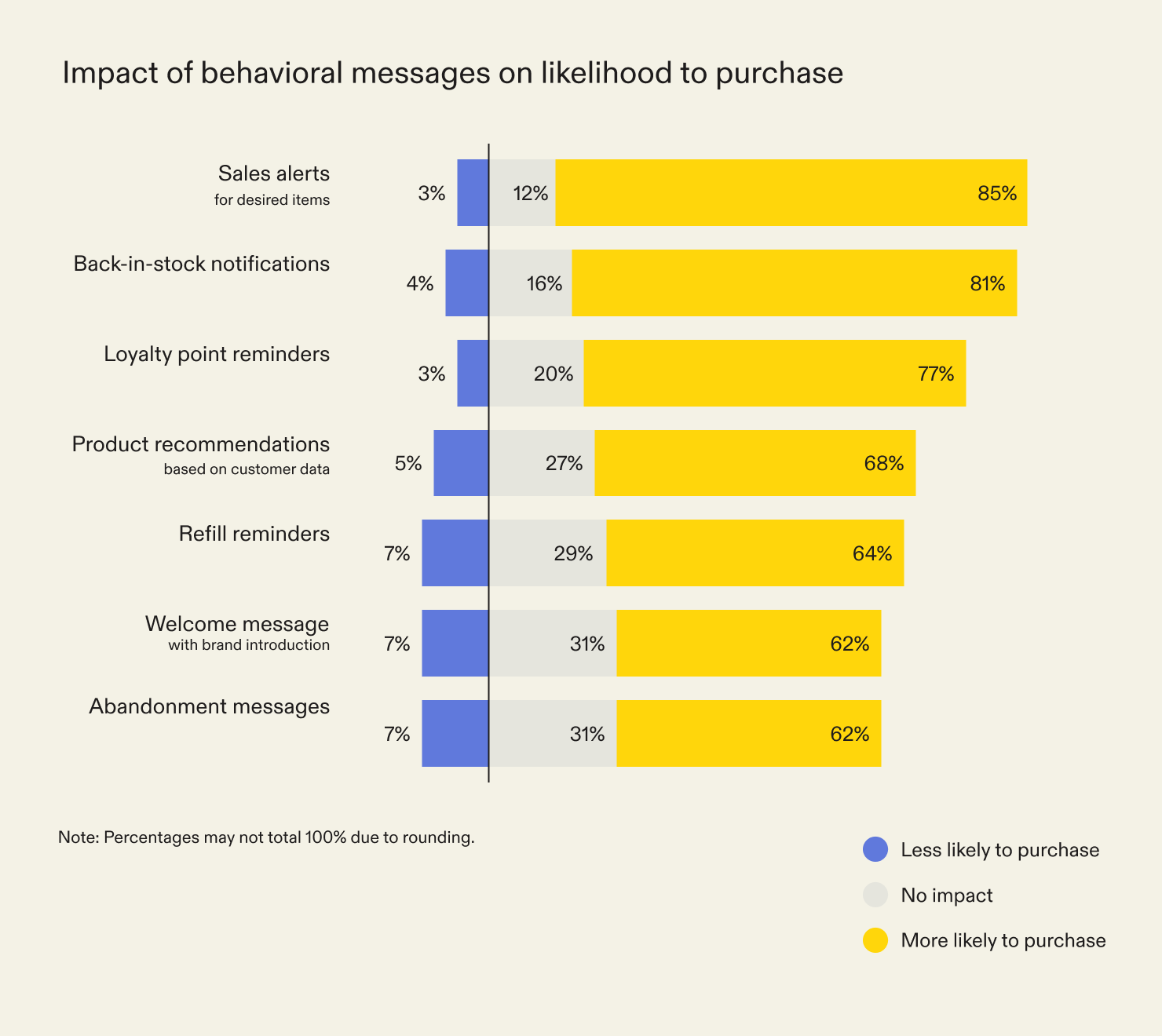
Triggered messages drive a large share of email and SMS revenue, and they’re one of the simplest ways to make marketing feel personal.
Shoppers say they’re more likely to purchase when they receive:
You likely already have welcome, abandonment, and post-purchase flows. But this data points to an untapped opportunity to test other high-impact journeys like price drops, back-in-stock, replenishment, and loyalty.
{{grey-four}}
Cross-channel coordination: 57% are more likely to purchase from multi-channel campaigns
Shoppers don’t engage with brands in just one place. Additional data from our January 2026 Consumer Pulse survey shows that 69% of email subscribers also get text messages.
And Attentive platform data indicates that subscribers who receive both SMS and email are 2x more likely to buy than those who just receive SMS.
Multi-channel communications are more effective when brands coordinate across channels:
- 57% of shoppers are more likely to make a purchase from a brand when they see the same promotion in multiple places (67% for shoppers subscribed to emails, texts, and push notifications).
- 73% prefer when follow-up messages add something new instead of repeating the same thing (83% for shoppers subscribed to emails, texts, and push).
The strongest programs keep the core message consistent, while each touchpoint adds a little more value—helping shoppers move from interest to purchase.
And coordination quality matters as much as channel presence. Shoppers who find brands’ cross-channel marketing coordinated are 17x as likely to find those messages helpful compared to shoppers who find messages uncoordinated.
Marketers’ results back this up. In the 2026 Attentive Marketer Pulse, the share of brands reporting improved messaging performance climbed steadily with coordination maturity—from 50% of brands with no coordination, to 78% of those running well-coordinated campaigns, to 90% of those with personalized coordination, where channel and timing adapt to each customer.
{{grey-five}}
Message timing: Timing is part of relevance—but right-timing varies by customer
Personalizing what you send matters, but so does when you send it. Most shoppers don’t think about message timing, but it’s growing in importance—and it’s a quiet driver of engagement and conversions.
32% of shoppers say message timing is a top-three reason they’ll continue shopping with a brand—up from 25% last year.
Ideal timing varies widely
Shoppers say they’re most likely to click a link or shop after receiving a marketing message:
Even the most popular times only capture a portion of your audience. So a single “best send time” won’t reach everyone. Tailoring send time to each shopper can help you reach customers based on their unique engagement patterns.
When brands personalize send time with a solution like Send Time AI, email CVR lifts by 15% on average.
Shopping timing also shifts throughout the year
When asked when they shop online the most, shoppers pointed to:
There’s meaningful shopping activity across many moments on the calendar, but it’s not universal.
Gen Z insight: Payday is a standout moment—44% of Gen Z say they shop the most when they receive their paycheck (1.9x as high as other generations). So if you have a younger consumer base, consider leaning into end-of-the-month paycheck timing.
{{grey-six}}
Privacy paradox: 71% of shoppers protect their privacy—but they still want personalized experiences
Privacy behavior is on the rise. 71% of shoppers are taking action to protect their privacy (up from 64% last year).
They’re doing things like:
- Opting out of cookies
- Limiting app access to phone data
- Shopping in incognito
- Opting out of personalized ads on social media
- Using separate email addresses for marketing
- Using an email proxy
Yet shoppers expect brands to tailor their experience
Privacy-conscious behavior doesn’t mean shoppers want brands to stop personalizing. In fact, 69% of privacy-conscious consumers still want brands to learn from their shopping habits over time (vs. 66% of those who aren’t privacy-conscious).
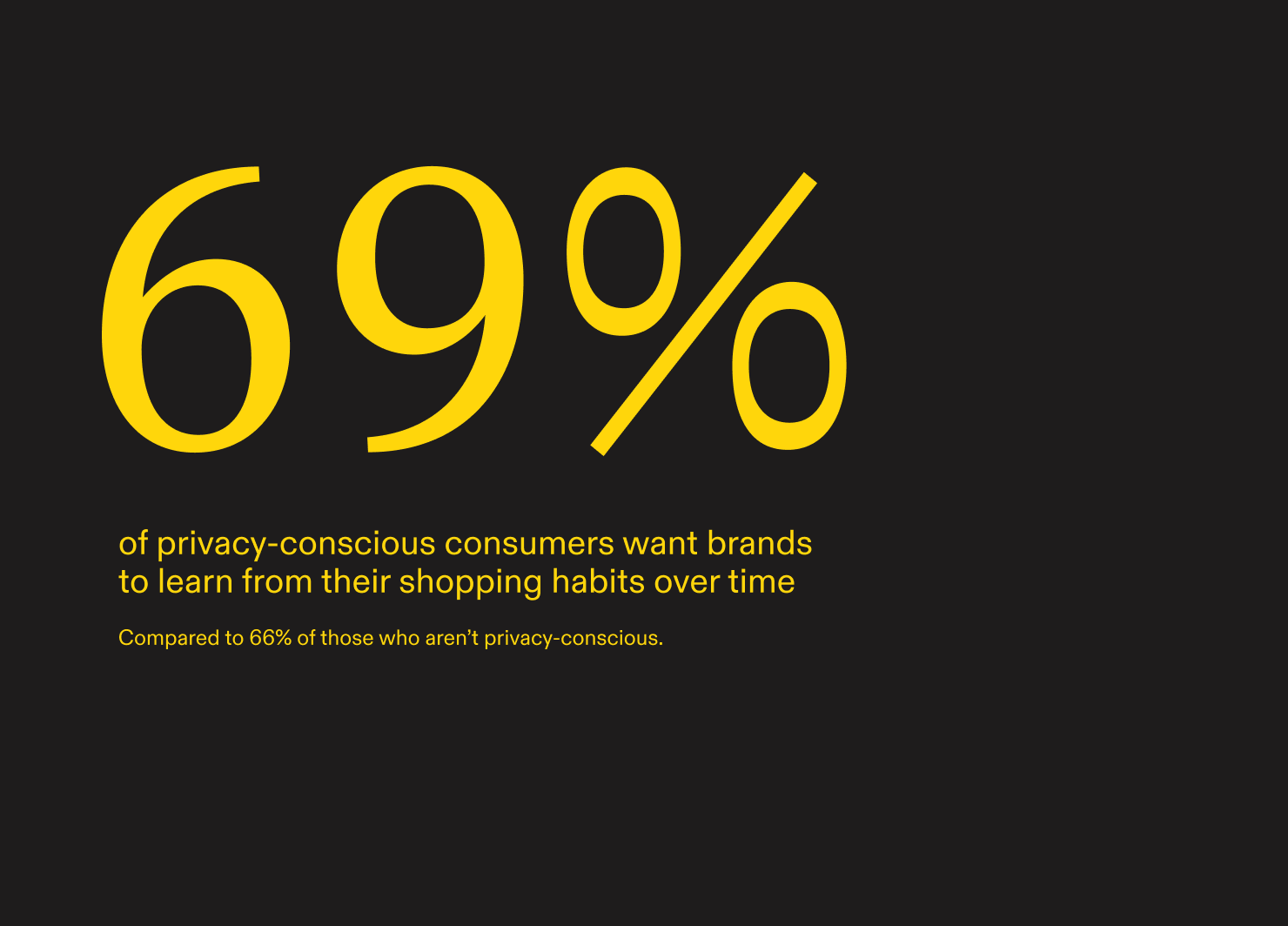
Privacy-conscious consumers are also more likely to say marketing is too generic and should be more tailored (66% compared to 59%).
Why shoppers protect their privacy
Shoppers point to concerns that brands can directly address:
Shoppers still want relevance—just on terms they understand and can control. That means it’s within brands’ power to personalize in a way that honors customer privacy and improves their experience.
{{grey-seven}}
Helpful vs. creepy: Personalization can cross a line—but most of it is fair game
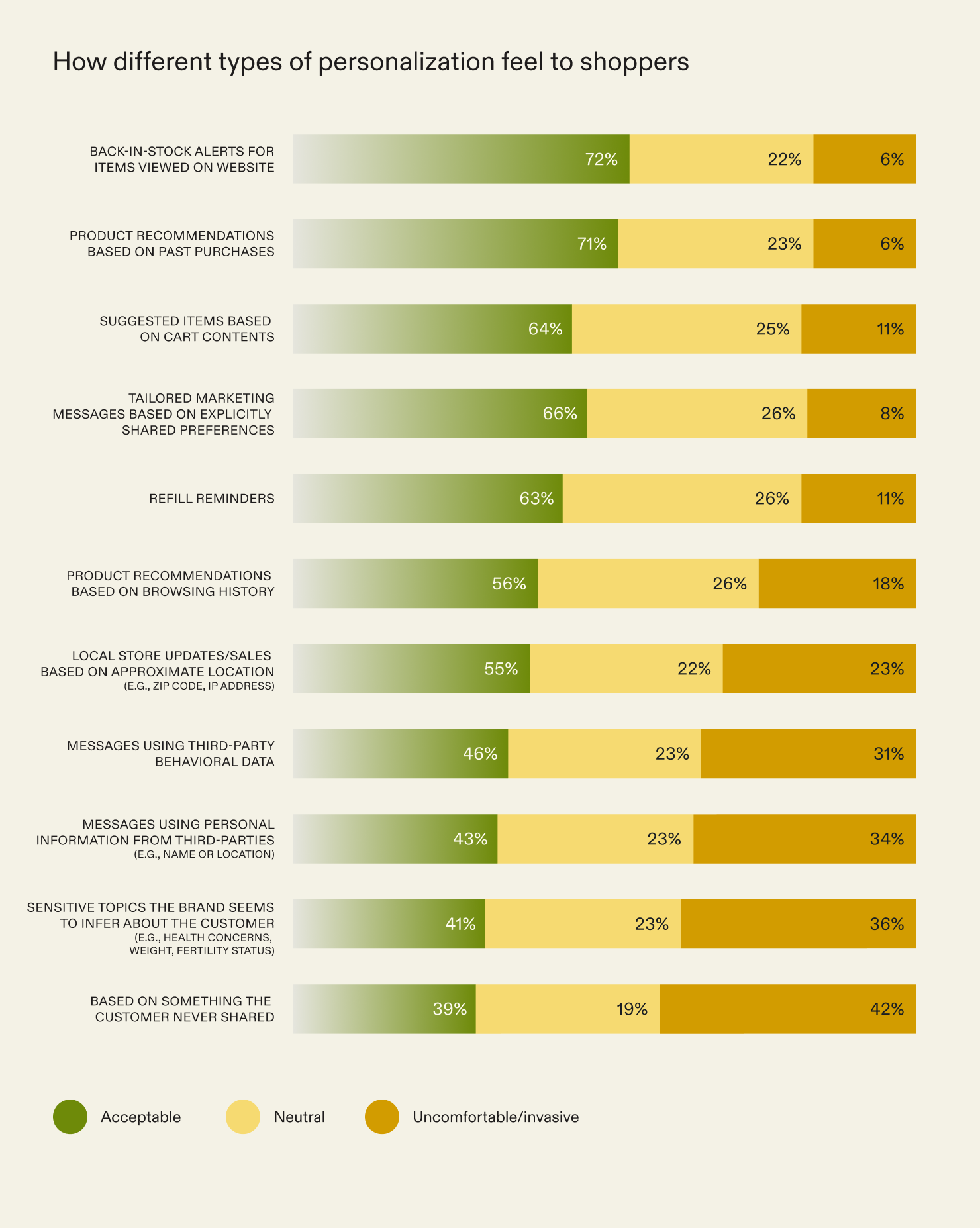
Shoppers are clear that they want more personalized experiences. But there’s a difference between what feels helpful and what feels uncomfortable or invasive.
Personalization feels invasive when it implies something shoppers didn’t share
Shoppers say it feels uncomfortable or invasive when:
- 42%: A brand personalizes in a way that implies it knows something the shopper never shared
- 36%: Personalization is based on sensitive topics the brand seems to infer (e.g., health concerns, weight, fertility status)
- 34%: Personal information comes from another website/app (e.g., name, location)
- 31%: A brand uses data from other websites/apps to personalize messages
The most common reasons these experiences feel uncomfortable:
- 61% aren’t sure how the brand got the information
- 58% feel like they don’t have control over how their data is used
- 38% say it’s uncomfortable when incorrect assumptions are made
Shoppers are comfortable with personalization based on what they do or share with your brand
The good news: shoppers are comfortable with most personalization scenarios. The common thread is relying on first-party data, while avoiding sensitive inferences.
Shoppers say it feels acceptable or neutral when brands:
The more channels a customer is subscribed to, the more likely they are to view all forms of personalization as acceptable.
{{grey-eight}}
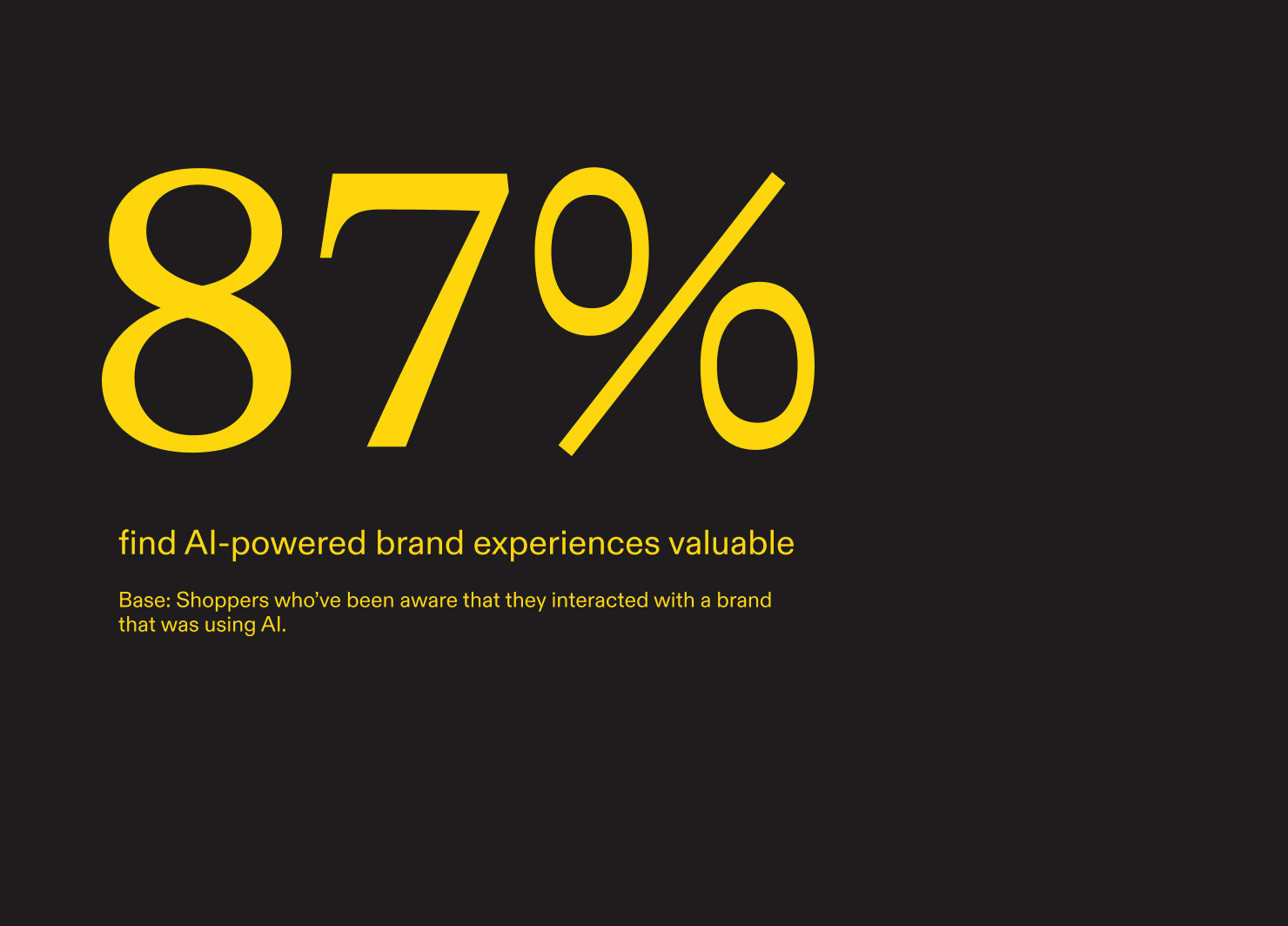
AI personalization: 87% find AI-powered brand experiences valuable
Customers want brands to make shopping easier—and AI can help scale relevance that’s hard to do manually.
AI improves the shopping experience
Of shoppers who have been aware they’ve interacted with a brand that’s using AI, 87% of them say those experiences are valuable.
They say AI-powered brand experiences:
- Save time and effort
- Resolve issues faster (e.g., returns, shipping, order updates)
- Give relevant product recommendations
- Increase purchase confidence
- Make marketing messages feel more relevant
In a 2025 study, advanced AI was shown to directly improve the shopping experience by reducing decision fatigue and purchase postponement in luxury shoppers.
Shoppers are open to AI personalization—but they want it done responsibly
Here’s what shoppers told us:
- 58% of shoppers are comfortable with brands using their interactions to personalize with AI (only 20% are uncomfortable).
- 64% worry their data will be used in ways they don’t understand.
- 47% worry AI will push them to buy things they don’t need.
- 47% say they’d be more loyal to brands that use AI to make life easier, not just sell more.
Younger generations embrace AI: 71% of Gen Z and Millennials say they’re comfortable with brands using AI for personalization.
Brands can help shoppers feel more comfortable
Shoppers say they’d feel more comfortable with AI personalization if brands met these requirements:
- 51%: Strong security and privacy policies
- 45%: Clarity on what data is collected and how it’s used
- 45%: Commitment not to sell/share data
- 42%: Ability to request deletion of their data
- 36%: Clearer benefit to them
{{grey-nine}}
RCS: 92% say RCS improves the shopping experience
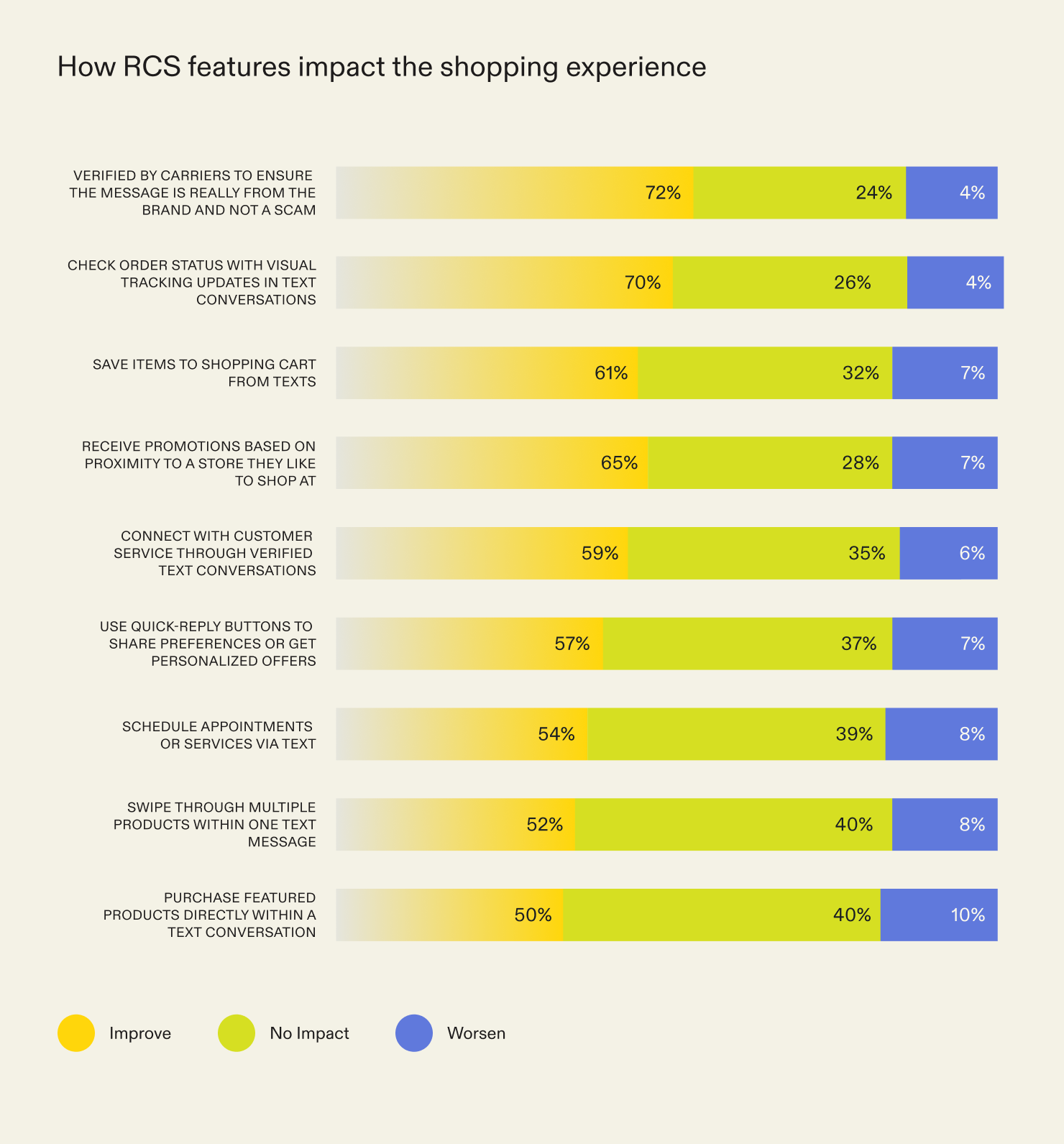
RCS (Rich Communication Services) Business Messaging is the next generation of mobile messaging, bringing more interactive experiences directly into text conversations between brands and consumers. And shoppers are ready for it: 92% say at least one RCS feature would improve their shopping experience.
The top RCS features they say would improve their experience:
- 72%: Messages verified by carriers to ensure it’s not a scam
- 70%: Check order status with visual tracking updates
- 65%: Receive promos based on store proximity
- 61%: Save items to their cart
- 59%: Connect with customer service through verified conversations
- 57%: Use quick-reply buttons to share preferences or get personalized offers
- 54%: Schedule appointments or services by text
- 52%: Product carousels
- 50%: Purchase featured products within the text conversation
Early adopters are already seeing impressive results from RCS:
- FragranceNet.com has increased CVR by 50%
- Spanx drives 201% more revenue/send from unengaged subscribers
{{grey-ten}}
The takeaway: Relevance wins when shoppers are more selective
With ongoing price pressure, shoppers are being more deliberate in 2026. Add in choice overload and it takes more to earn their attention.
Shoppers have made it clear what keeps them engaged and gets them to pull out their wallets: Personalized experiences.
And they actively want brands to use their interactions to make shopping easier and make marketing more relevant.
When brands align with that, they earn attention and loyalty—which ultimately supports stronger conversion rates and ROI.
The marketers acting on this are already pulling ahead: in the 2026 Attentive Marketer Pulse, brands that personalize their marketing were 3.5x as likely to see improved messaging performance year over year (69% vs. 20% of brands that don’t personalize).
That’s exactly what Attentive helps marketers do—turning first-party signals into more relevant messages across SMS, email, push notifications, and RCS.
Want to see what this could look like for your brand? Learn more and get a demo.
Methodology
This survey was conducted online via Pollfish among 1,050 consumers across the US, UK, and Australia, ages 18–79 on February 23, 2026. Respondents have shopped online in the past three months and are currently opted in to at least one of email or text message marketing from brands. The study was designed to analyze results evenly across four generations: Baby Boomers, Gen X, Millennials, and Gen Z so that each one contributed equally to the overall analysis. No other post-stratification adjustments were applied.