BFCM Campaign Best Practices for SMS, Email, Push, and RCS
Read next
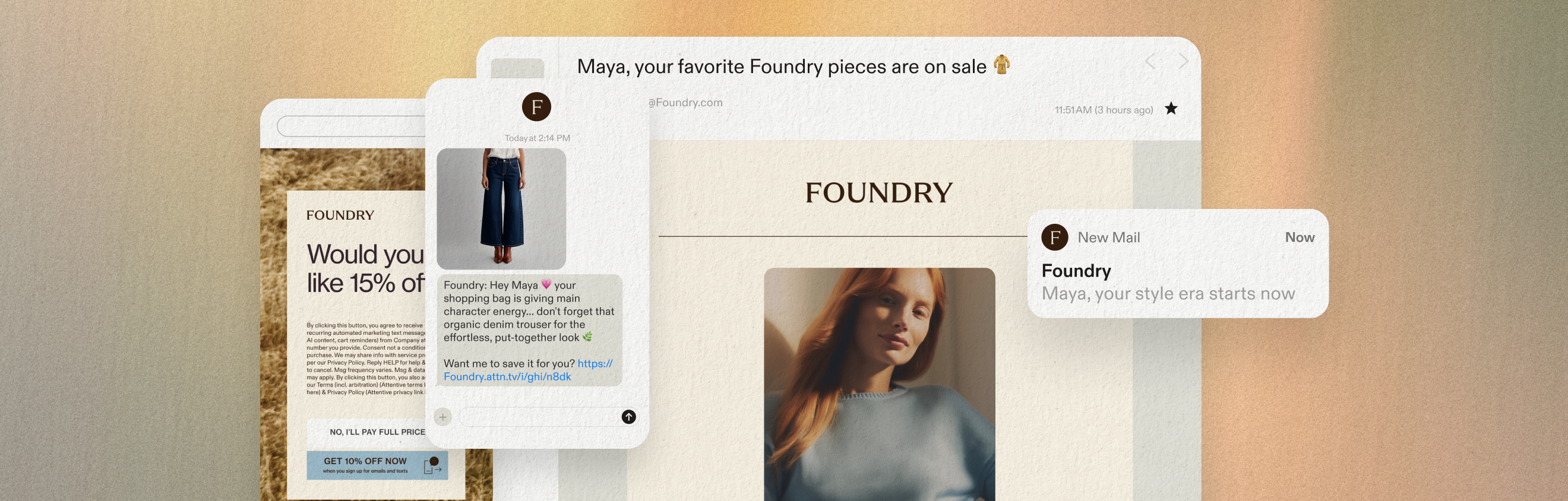
Cross-channel marketing pays off:
And during BFCM, when every subscriber's inbox is crowded, the follow-up from one channel to another gives brands a leg up:
Marketers who follow up on a second channel when a subscriber doesn't engage on the first were 38% more likely to report improved BFCM performance year over year.
Here are six ways to coordinate your channels as one system before Cyber Week.
Role clarity lets each message do a specific job within the flow of your campaigns instead of every channel repeating the same thing at once.
Take your Black Friday launch:
A quick primer on what each channel is best for:
Go deeper: BFCM Campaign Best Practices for SMS, Email, Push, and RCS
Shoppers are more open to frequent messaging during Cyber Week. But as you improve your program’s cross-channel coordination leading up to BFCM, give your messages more room to land.
The data supports this:
When you space out messages so a reminder lands later, they may be more likely to see and act on your follow-ups.
During BFCM, these follow-ups can be closer together.
Each message in a campaign should pick up where the last one left off—a new reason to buy, a new piece of context.
73% of shoppers prefer follow-up messages that add something new. And of the shoppers who find cross-channel marketing annoying, 81% say it's because messages feel repetitive.
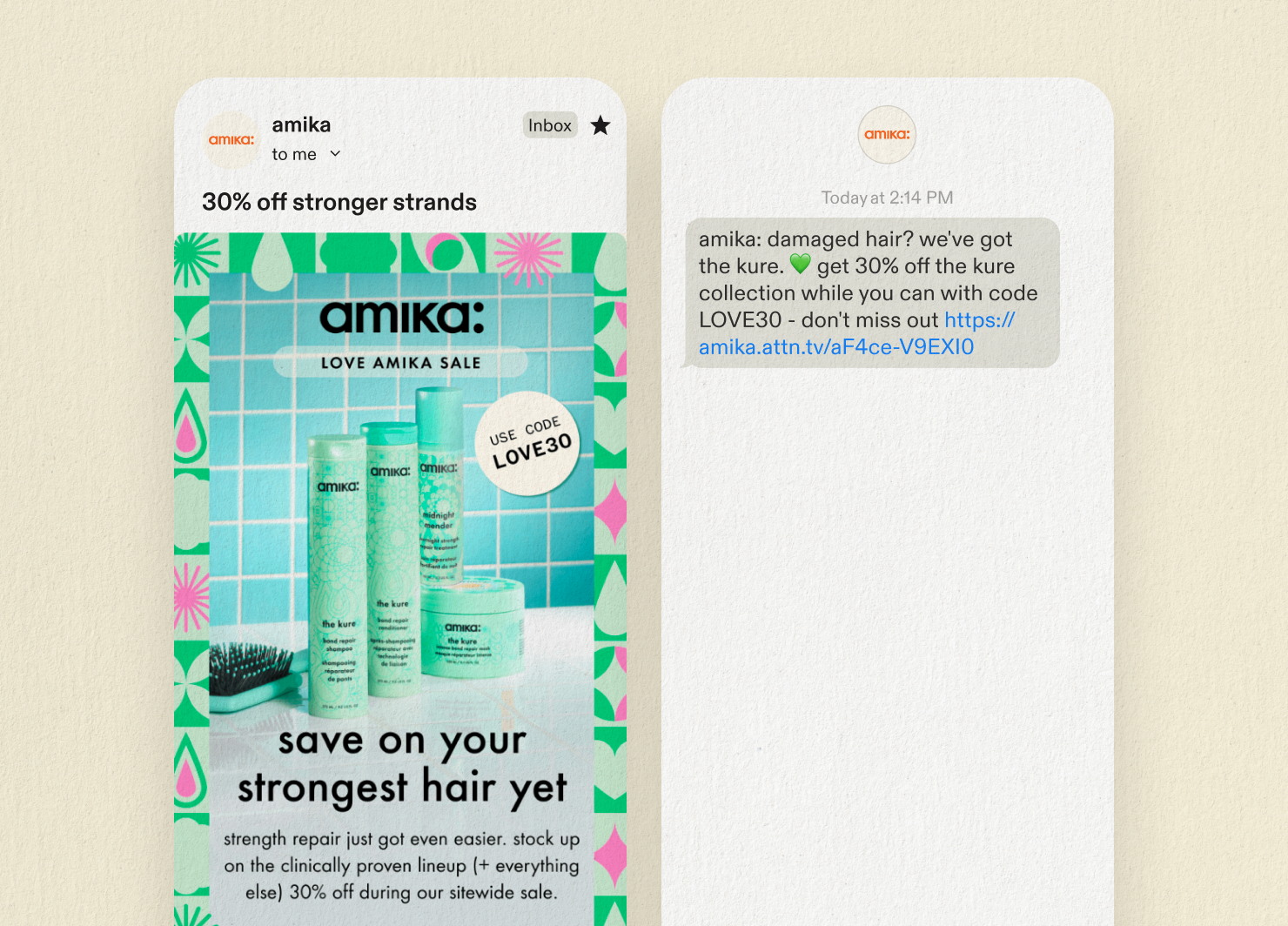
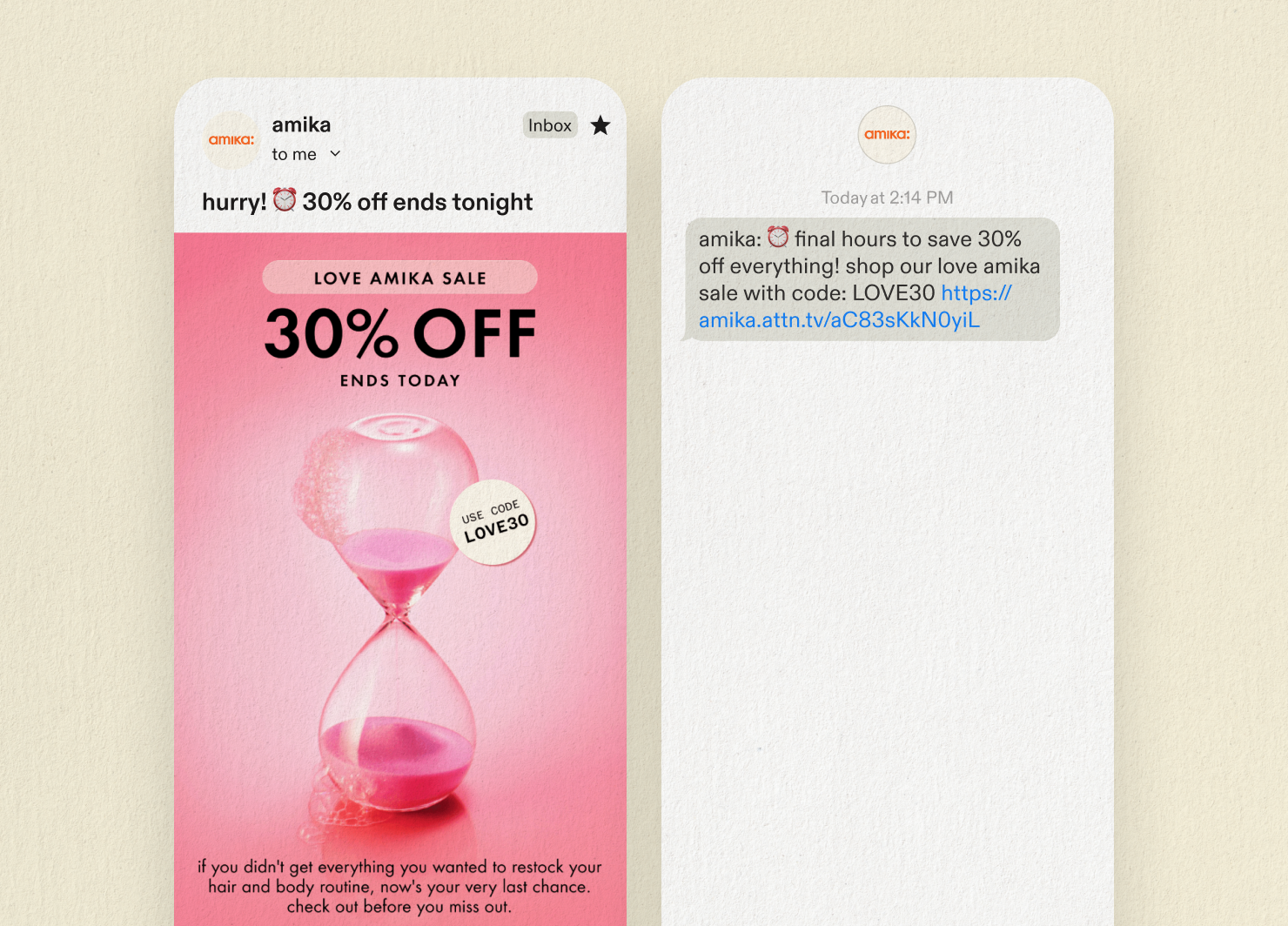
Haircare brand amika shows what the conversation looks like in practice. For a recent multi-day sale, they built a sequence that maps an effective arc:
1. Announce the sale. Amika announced by email first, then by SMS a few hours later—reaching shoppers who missed the first send.

2. Highlight products. A couple of days in, a campaign featuring bestsellers with customer reviews. For BFCM, this is where doorbusters, gift-guide picks, or complementary bundles would live.

3. Reframe the sale for specific segments. Messages featuring a single product or collection, sent to subscribers who'd shown interest in those items—turning a sitewide sale into a personal one.
4. Send the last call. Final-hours reminders to capture lingering interest.
Go deeper: 16 BFCM Campaigns That Convert
Not every message should go to every shopper.
Why relevance matters:
Ways to segment your campaigns for relevance:
Relevance also buys you volume. 65% of shoppers are open to receiving messages more frequently if they're relevant.
Go deeper: Segmentation: The Audiences to Define Before BFCM
There's no one-size-fits-all send frequency: Some shoppers want to hear from you daily, others weekly. 75% want brands to adjust how often they're messaged based on their engagement.
The cross-channel approach: send more on the channels each subscriber engages with, less on the ones they ignore.
If a shopper clicks every text but rarely opens an email, save email for the big moments—your Black Friday launch, a relevant product launch—and let SMS carry the day-to-day of your campaigns.
During BFCM, pay special attention to your multichannel subscribers—they're your highest-intent tier. 22% of email-and-SMS subscribers plan to spend more this BFCM, versus 14% of email-only subscribers. Don't hold your most invested shoppers to the same Cyber Week frequency as everyone else.
{{protip-1}}
A cart abandonment reminder after the shopper already bought disrupts the feeling of a connected experience. 54% of shoppers say this happens to them regularly—and 67% say that mismatch makes them more likely to unsubscribe.
Most brands already have suppression rules. The gap is a customer recognition problem: if your platform can't tell that the person who clicked Thursday's email is the same person who purchased from Friday's text, your abandonment flows keep firing.
Cyber Week intensifies the gap. Shoppers move between devices and channels all weekend, and traditional platforms—built on expiring cookies and siloed email addresses—log them as separate visitors.
The fix is an identity foundation that links every identifier a customer shares (phone number, email addresses, devices, loyalty ID) into one unified profile. Attentive Signal recognizes the same shopper across channels, devices, and sessions, so during BFCM you can:
The payoff shows up in performance: In the 2026 Attentive Marketer Pulse, brands actively investing in identity resolution are 34% more likely to report year-over-year improvements, and brands using Attentive Signal see 20% higher conversion rates and 95% more triggered email revenue.
Go deeper: Identity Resolution for Marketing: The Biggest Revenue Opportunity in a Privacy-First World
Your channels are set up to work as one system—roles defined, sends spaced, campaigns that build on each other, and recognition holding it all together.
The coordination pays off: Additional data from the December 2025 Attentive Consumer Pulse revealed that shoppers who bought after seeing campaigns on 2+ channels were 49% more likely to spend more than planned than single-channel subscribers.
Next, make each of those coordinated messages worth opening. Learn how SMS, email, push, and RCS each play a clearer role during Cyber Week—and how to craft stronger campaigns for each of them:
{{next-article}}
Rule-based frequency has limitations. Audiences AI, part of Attentive AI™ Pro, finds the engagement patterns you can't spot manually and adjusts campaign audiences by likelihood to purchase—driving up to a 20% increase in revenue.