

Every subscriber you recognize on site is a chance to trigger journeys that drive revenue. But many brands only identify a fraction of their visitors—making recognizing more of them one of the biggest growth opportunities available.
Picture this: A loyal customer visited your site five times this week, but your analytics only captured one of those visits.
The other four showed up as “anonymous”, creating a fragmented picture where one loyal customer looks like five different people.
Maybe they browsed on their phone during lunch, checked their prices on their laptop at home, and came back through an Instagram ad later. Each time they were just another unknown visitor, even though they’ve been a loyal subscriber for two years.
In fact, most of your subscribers likely appear as anonymous visitors every day—resulting in missed opportunities and less effective marketing campaigns.
This isn’t a unique problem. It’s happening to nearly every brand every day.
Brands that figure out how to identify their subscribers so they can personalize the customer experience in this privacy-centric world are seeing remarkable results: a 20% increase in conversion rates overall and 95% higher triggered email revenue.
The identity revolution is here. And the brands winning are updating their approach to better recognize and respond to the shoppers coming to their site.
Identity resolution helps you recognize the same shopper across touchpoints
For the purpose of email and SMS marketing:
Identity resolution is the ability to recognize an opted-in subscriber when they come to your site and tie them back to an email address or phone number.
It’s about connecting the dots between a customer’s various touchpoints (across devices, browsers, email addresses, and phone numbers) to create a unified view of who they are and how they interact with your brand.
When identity resolution works, you know that the person who just abandoned their cart on their phone is the same person who was browsing from their laptop last night. So you can trigger the right message at the right time, personalize their experience, and avoid redundant communication.
Traditional solutions miss shoppers in a privacy-first, multi-device world
Identity resolution used to be simpler. Traditional email service providers could rely on long-lasting cookies and stable email addresses to track customers. But in a privacy-first, multi-device reality, the service providers that have powered email marketing for the last decade aren't keeping up.
Not because they were poorly designed, but because they were built when cookies lasted forever, people were expected to keep their email addresses, and consumers did most of their shopping on one device. These older ESPs were built for a different era and haven’t evolved to handle the level of sophisticated matching necessary today.
The technical landscape has changed:
- Privacy regulations like GDPR and CCPA require consent for certain types of data collection, and many people say no.
- Apple shortened first-party cookie lifespans from 30 days to 7 and turns off third-party cookies by default.
- 75% of shoppers have at least two active personal email addresses
- 71% of shoppers are actively protecting their privacy by using incognito mode, blocking cookies, and using multiple email addresses.
- Consumers shop an average of 4 different ways across platforms and devices, creating a maze of disconnected touchpoints—and 53% of shoppers are aware they’ve switched devices or taken multiple online sessions before completing a purchase.
Traditional email platforms weren't built for this reality. They treat every email address as a separate person and keep channel data in silos. But one unique shopper can show up through multiple identifiers—different email addresses, multiple devices—and engage across SMS, email, and push notifications.
Without the ability to stitch these signals together, you’re marketing to a fragmented set of identifiers instead of a single, real-world shopper.
And now, the cookies that legacy platforms rely on for subscriber recognition disappear after a week.
And shoppers feel the difference:
- 69% of shoppers expect brands to remember what they already browsed, clicked, or bought
- 54% regularly receive reminders to buy something they already purchased
- 67% are more likely to unsubscribe if they keep receiving reminders about a product after they’ve purchased it
The impact? Missed chances to connect with customers and earn their business.
Without being able to recognize returning subscribers, brands miss opportunities to trigger the automated journeys that make up the majority of email and SMS revenue.
But this missed revenue creates huge opportunity
Despite protecting their privacy, 69% of those same consumers want brands to learn from their shopping habits to deliver personalized experiences. That’s higher than the 66% of consumers who aren’t privacy-conscious who say the same.
This isn’t a contradiction. Consumers want personalized experiences, but on their terms—with transparency about data use and control over their information.
When subscribers opt into your email and SMS program, they’re explicitly saying “I want you to recognize me.” They’re giving you permission to know them—and build the kind of relationships that turn one-time buyers into lifetime customers.
When you can identify your opted-in subscribers across their full journey, you can engage them at the right times with the personalized experiences they expect—and drive exceptional results for your brand.
The brands that crack the identity code have discovered a hidden growth lever and are seeing unprecedented growth.
In the 2026 Attentive Marketer Pulse, we found that brands actively investing in identity resolution are more likely to report improved messaging performance year-over-year (79% vs. 59% of brands that don’t prioritize it).
UNTUCKit earns 25% more revenue from triggered journeys after improving subscriber recognition
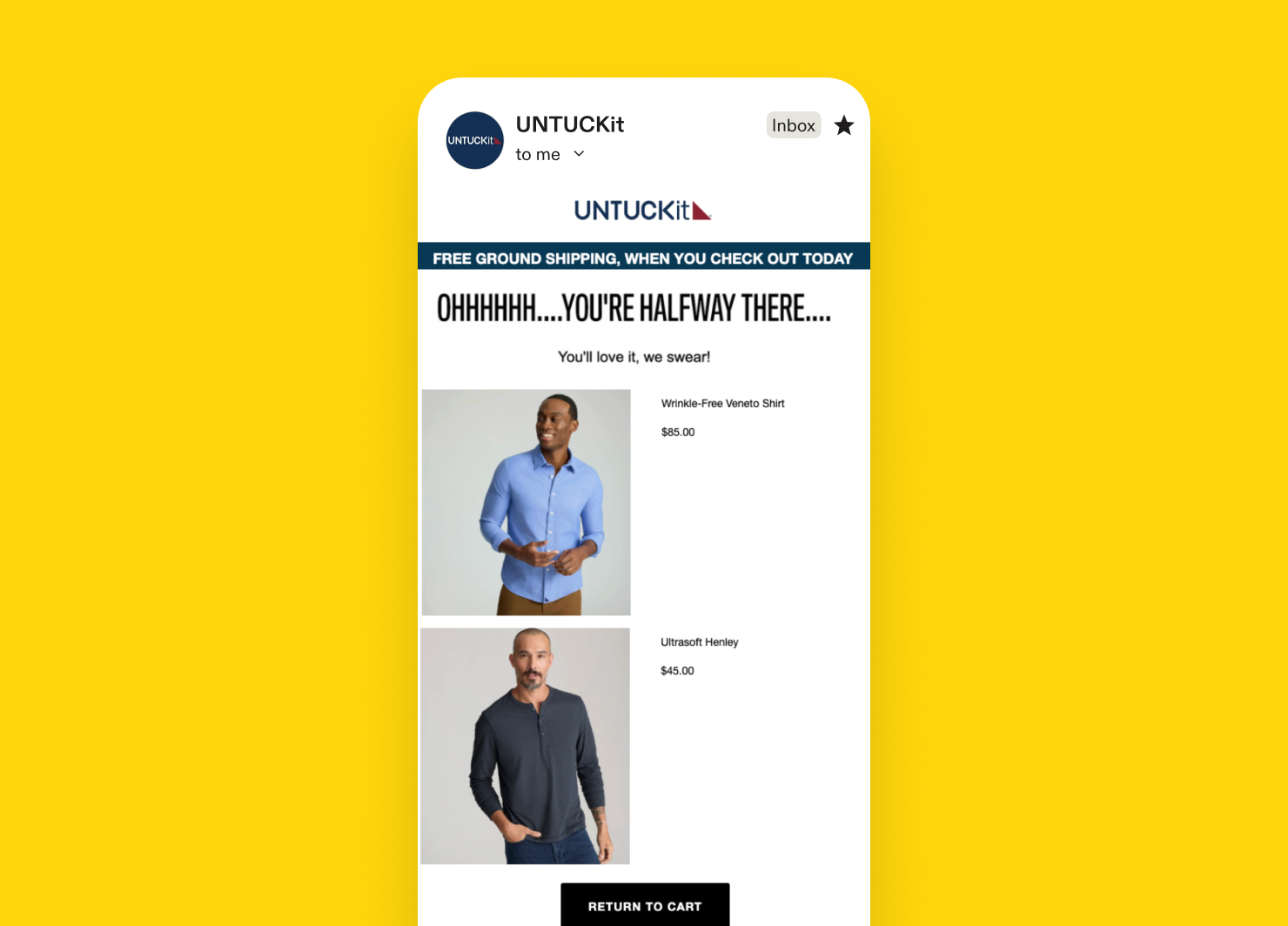
Take UNTUCKit, who adopted Attentive’s unified identity solution that recognizes subscribers across devices and sessions.
By improving recognition across previously fragmented channels, they’ve eliminated duplicate sends and conflicting messages. Now, every message is more relevant.
The impact? A striking 25% year-over-year increase in revenue from triggered journeys and near 60% unique open rates on email journeys.
Customer recognition unlocks the revenue that’s already there
Your best customers are already on your site showing their interest. The catch? They’re moving across devices, browsers, and identifiers making it hard to act on their interest if you’re using a traditional platform.
That fragmentation caps the revenue your email, SMS, and push program could be earning.
As UNTUCKit and a growing list of brands are realizing, recognizing more subscribers with a modern identity solution like Attentive Signal turns that existing potential into revenue. More triggered journeys, more relevant messages, and strong results from the work you’re already doing.
Want to know how to put this into action?
Read part 2: How to Improve Identity Resolution: 3 Strategies That Increase Revenue


.png)