
Triggered email is one of the highest-performing channels in your toolkit. It's also one of the most underleveraged. Here's how to change that.
Most brands have some version of a triggered email strategy. A cart abandonment flow they set up two years ago. A welcome series that hasn't been touched since launch. Maybe a post-purchase confirmation that's technically automated but barely personalized.
The problem isn't that they're not doing triggered email—it's that they've stopped there.
Triggered email, at its best, is behavior-led messaging: emails that fire in real time based on what a specific customer just did, not what your campaign calendar says. A subscriber browses a product and leaves without buying. A loyal customer hasn't purchased in 90 days. Someone's order just shipped. Each of those moments is a signal—and a triggered email strategy worth its name responds to that signal while it's still relevant.
Legacy ESPs made "automated" feel like enough. It isn't anymore. The brands winning on email right now aren't just automating sends—they're building flows that respond to what customers are actually doing, in the moment. And the gap between that and a static if/then rule built in 2021 is where a significant amount of revenue gets left on the table.
If you're ready to move past the basics, here's where to start.
Key takeaways
- Triggered email is behavior-led, not calendar-led. The brands winning on email aren't sending more—they're sending smarter, reaching customers at the exact moment their intent is highest.
- The basics aren't enough anymore. Welcome and cart abandonment are table stakes. The real opportunity is in the flows most brands overlook—checkout and session abandonment, post-purchase sequences, lifecycle milestones, and winback.
- Segmentation and timing are where good programs become great. One flow for all subscribers is a missed opportunity. The more precisely you can match a message to where a customer is in their journey, the better your results.
- A strong triggered program is never finished. The brands pulling ahead are the ones treating their triggered flows as a program to build, measure, and optimize over time—not a set-it-and-forget-it checklist.
What is triggered email
Triggered email is an automated message sent to a subscriber based on a specific action they took — like browsing a product, abandoning a cart, or making a purchase. Unlike batch emails that go out on a set schedule to a broad list, triggered emails fire in real time in response to individual customer behavior, making them inherently more relevant and timely.
A batch email goes out because your calendar says it's time. A triggered email goes out because your customer just did something.
The most common triggered flows—and the ones with the highest proven impact—are the ones tied to purchase intent and lifecycle moments:
- Welcome series: The first impression after a subscriber opts in. Sets the tone for the relationship and consistently delivers strong results
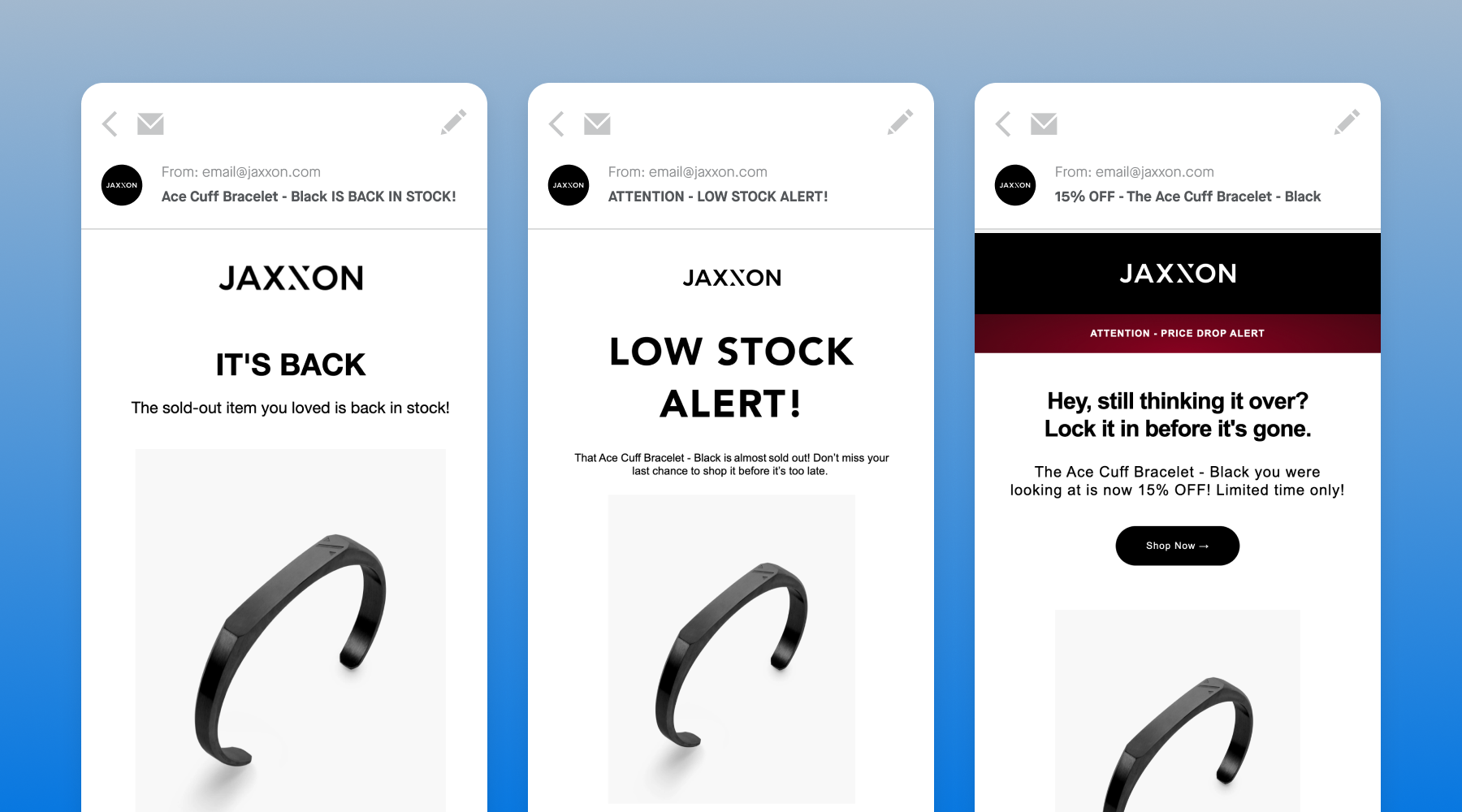
- Browse abandonment: A subscriber viewed a product but didn't add it to their cart. High-intent signal, often underleveraged.
- Cart abandonment: They added something and walked away.
- Checkout abandonment. A customer who made it to checkout has already decided to buy—they just didn't finish. That proximity to purchase makes checkout abandonment one of the highest-revenue triggers in email, consistently outperforming standard cart abandonment flows.
- Session abandonment. Session abandonment fires before browse abandonment even happens—when someone visits your site but doesn't view a specific product. It's the earliest signal in the consideration window, and when you have the identity capabilities to recognize who's on your site in real time, it's one of the most underleveraged opportunities in email.
- Post-purchase: The sale isn't the finish line. A well-timed post-purchase sequence drives reviews, repeat purchases, and long-term loyalty. This sequence can also reduce chrun and increase cross-sell/upsell opportunities.
- Winback: A customer who used to buy hasn't in a while. The right message at the right moment can recover a relationship that would otherwise lapse entirely.
What makes these flows work isn't just automation—it's timing. Customer intent has a short shelf life. The browse abandonment email that lands two hours after someone left your site performs very differently from one that lands two days later. Triggered email works because it respects that window. It shows up when the signal is still warm, with something relevant to say.
That's what batch sending structurally can't do—and it's why the gap between the two approaches shows up so clearly in the numbers.
Strategic benefits of triggered email marketing
Triggered email isn't just a tactical upgrade—it's a fundamentally different way of thinking about your email program. Instead of planning around when you want to send, you're building around when your customers are most ready to engage. That shift has compounding returns.
Relevance drives performance
Customers are more likely to open, click, and convert when a message is directly connected to something they just did. Behavior-based emails earn attention in a way that broadcast sends simply don't, because they arrive with built-in context. The customer already knows why you're reaching out.
Timing creates a sustainable advantage
Every triggered flow you build is working for you around the clock, reaching customers at the exact moment their intent is highest—without requiring a campaign brief, an approval process, or a send-day checklist. A well-built triggered program generates consistent revenue in the background while your team focuses on higher-order strategy.
Personalization at scale becomes achievable
One of the hardest problems in email marketing is delivering relevant content to a large audience without an army of people building one-off campaigns. Triggered flows solve that by letting customer behavior do the segmentation work for you. What someone viewed, what they bought, how long they've been a customer—all of that becomes input into a message that feels tailored, not templated.
Automation that earns its keep
Not all automation is equal. Batch sends are automated too, but they don't get smarter over time. Triggered flows, built with the right logic and regularly optimized, do. Each iteration—a timing test here, a subject line change there—makes the flow more effective, and that improvement carries forward to every subscriber who enters it going forward.
With AI Journeys, you can build triggered experiences that adapt to customer behavior and personalize each message based on where someone is in their journey.
Deliverability that works in your favor
There's a deliverability benefit to triggered email that doesn't get talked about enough. Because triggered flows fire in response to a recent customer action—a site visit, a product view, a cart add—the people receiving them are active and engaged.
That's a fundamentally different audience than a dormant segment you haven't mailed in months. Engaged recipients signal to inbox providers that your emails are wanted, which protects and strengthens your sender reputation over time. Unlike campaign sends, triggered emails don't require the same warmup process—they can be deployed to an active audience without the ramp-up that bulk sends typically demand.
The numbers back this up
After implementing a personalized triggered email strategy that leveraged subscriber attributes to craft more relevant journey messages, one Attentive customer saw:
- 157% increase in triggered email revenue
- 292% boost in total sessions within six months.
Email revenue grew 18% overall. The shift wasn't about sending more—it was about sending smarter, with triggers that responded to what customers were actually doing.
Six triggered email FAQs
1. What is triggered email marketing?
Triggered email is an automated message sent to a subscriber based on a specific action they took—like browsing a product, abandoning a cart, or making a purchase. Unlike batch emails that go out on a schedule, triggered emails fire in real time in response to individual customer behavior, making them more relevant and timely.
2. What's the difference between triggered email and batch email?
Batch emails send on your calendar to your full list or a broad segment. Triggered emails send based on what a specific customer just did—in real time, with a message tailored to their action. The key difference is relevance: batch assumes interest, triggered responds to it.
3. What are the most effective triggered email flows?
The highest-performing triggered flows are tied to purchase intent and lifecycle moments: welcome series (28% average CTR), browse abandonment (36% CVR), cart abandonment (57% CVR), checkout abandonment, post-purchase sequences (23% CVR), and winback flows. Session abandonment and custom event triggers are among the most underleveraged opportunities.
4. Why does triggered email perform better than batch campaigns?
Triggered emails arrive when customer intent is highest—immediately after they take an action—which makes them inherently more relevant. This timing advantage, combined with personalization based on what someone actually did, consistently drives higher open rates, click rates, and conversions than scheduled batch sends.
5. When should I send triggered emails?
Timing matters more than most teams realize. The difference between sending a cart abandonment email at 30 minutes versus four hours can significantly impact performance. Test your timing as a variable and let your data show when your customers are most responsive. Customer intent has a short shelf life—the closer you get to the triggering action, the better.
6. How do I get started with triggered email?
Start by auditing what you currently have running, then identify gaps where customer behavior signals aren't being captured. Prioritize high-intent, high-gap triggers first—flows where customer intent is strong and your current coverage is weak. Welcome and cart abandonment are table stakes; the real opportunity is in browse abandonment, post-purchase, winback, and lifecycle milestone triggers.
Ready to build a smarter triggered email program?
If this audit surfaced more gaps than you were expecting, you're not alone—and you don't have to close them all at once. The brands with the strongest triggered email programs got there by starting with the right foundation and building deliberately from there.
If you want a clearer picture of where your program stands and where the biggest opportunities are, we'd love to take a look together.