
June is less about pushing promotions—and more about showing up with the right message at the right moment.
June is a different kind of marketing month. It’s not as high-pressure as November or as reset-focused as January. People are outside more. They’re traveling, celebrating, and spending less time glued to their phones—and that shift matters.
If May is about momentum, June is about connection.
The brands that stand out this month aren’t sending more—they’re sending better. They’re showing up in ways that feel timely, useful, and actually relevant to what their customers are doing in real life.
So instead of cramming your calendar with promotions, ask a better question:
How can we show up in a way that actually adds value right now?
What matters in June (and when to show up)
1. The summer mindset shift is real
Attention spans drop. People are mobile-first, often distracted, and less likely to engage with anything that feels heavy or overly “salesy.” Your messaging should be quick, clear, and easy to act on.
2. Gifting and gatherings drive behavior
Graduations, Father’s Day, weddings, vacations—June is full of reasons to celebrate others. Campaigns that help (gift guides, reminders, ideas) outperform ones that just sell.
3. Identity and values are front and center
Pride Month and Juneteenth aren’t just marketing moments—they’re cultural. Brands need to show up thoughtfully, not transactionally.
4. Timing matters more than volume
People are in and out. Smart triggers, personalization, and well-timed nudges will outperform batch-and-blast campaigns every time.
5. Shared, real-time moments are back
From global sports to sunny weekends, June is full of “in-the-moment” opportunities. The brands that show up in real time—not overproduced—stand out.
June moments to build around
Quick reference: June marketing holidays:
- Pride Month (all month)
- Graduation season (early–mid June)
- Wedding season (all month)
- Travel + vacation planning (all month)
- June 7: National Trails Day
- June 11: FIFA Club World Cup Starts
- June 13: King’s Birthday (UK)
- June 14: Flag Day
- June 15: Amazon Prime Day expected
- June 19: Juneteenth
- June 21: Father’s Day
- June 21: First Day of Summer
- June 29: Wimbledon
Benchmarks: What “good” looks like in June
June performance shifts—but that doesn’t mean it drops. It just changes shape.
June SMS Benchmarks
June Email Benchmarks
SMS insights
- Engagement holds strong when messages feel timely and personal
- Behavior-based triggers outperform batch sends
Email insights
- Opens may soften—subject lines and content need to work harder
- Utility (guides, reminders, curated picks) wins over promos
Push insights
- Best for real-time, context-aware nudges
- Short, well-timed messages outperform everything else
The takeaway: Relevance beats volume. Every time.
June SMS strategies and examples: Be helpful, not loud
SMS should feel like a well-timed nudge—not a brand shouting into someone’s pocket.
1. Father’s Day reminder (that actually helps)
As the holiday gets closer, shoppers aren’t looking for more options—they’re looking for help deciding. A well-timed reminder that feels curated (not generic) can cut through that decision fatigue and make it easier to act.
Why it works: People forget. You’re helping, not selling.
Example:
Hey {{first_name}}, still looking for the perfect Father’s Day gift?
We saved a few ideas for you 👇
{{link}}
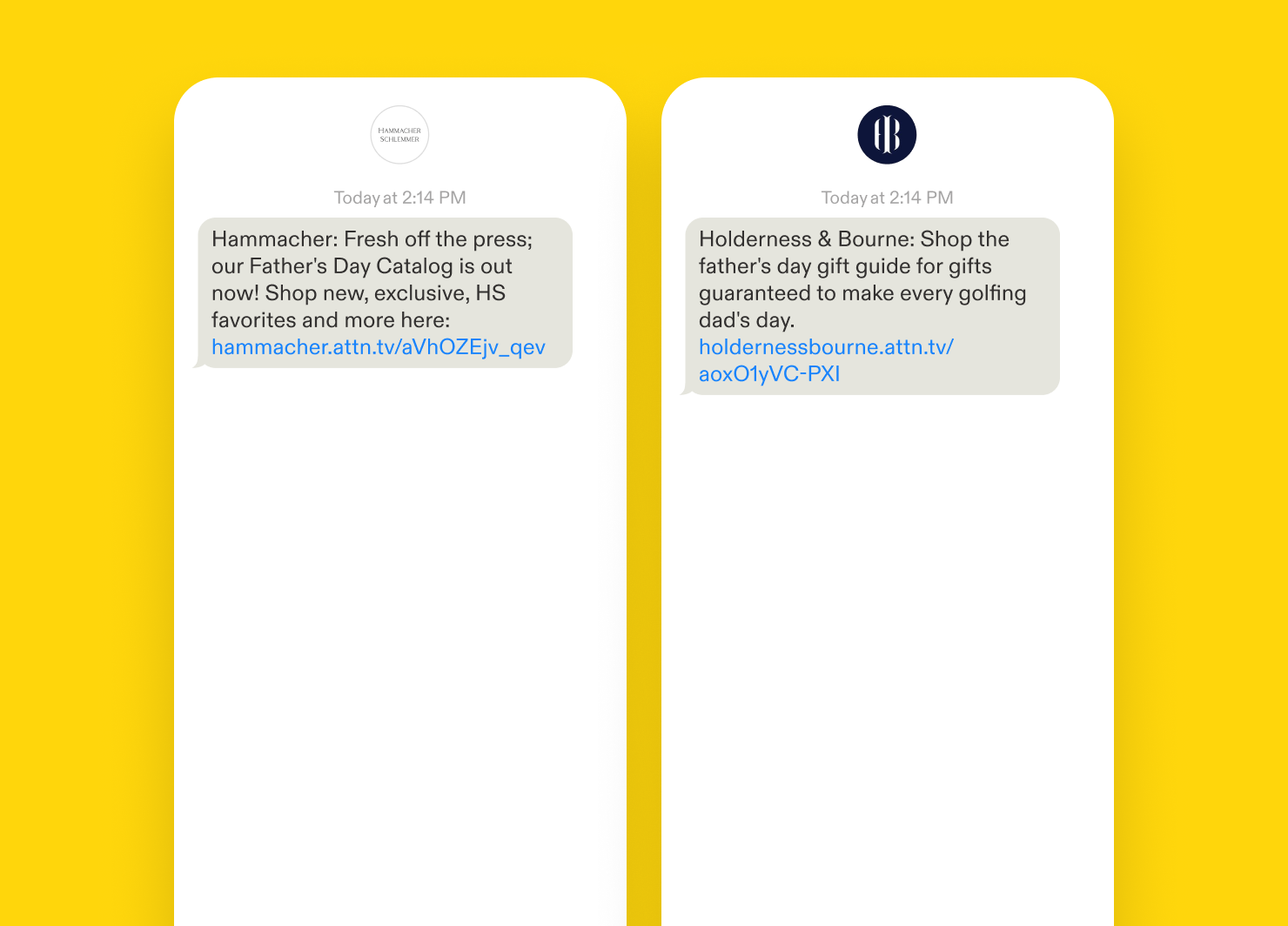
Make it better with Attentive: Use Journeys to trigger this message based on browsing behavior, and layer in AI Pro product recommendations so each shopper sees something relevant to them.
2. Graduation: Celebrate the moment
Not every message needs urgency to perform. In moments like this, leading with recognition instead of promotion can make your brand feel more thoughtful—and more memorable.
Why it works: Emotional relevance beats urgency.
Example:
Big congrats to the grads 🎓
We put together a few meaningful gift ideas to celebrate:
{{link}}
3. National Trails Day: Community-led picks
Shoppers trust other people more than they trust brands. Pulling in community recommendations makes the message feel less like marketing and more like advice from someone who’s actually done it before.
Why it works: It’s advice, not a pitch.
Example:
Hitting the trails this summer? 🌲
Here are 5 hiking gear recs from our trailblazer community:
{{link}}
Make it better with Attentive: Use AI Pro to personalize recommendations and segmentation to target outdoor enthusiasts or recent activewear shoppers.
Bonus: Turn Messages Into Conversations
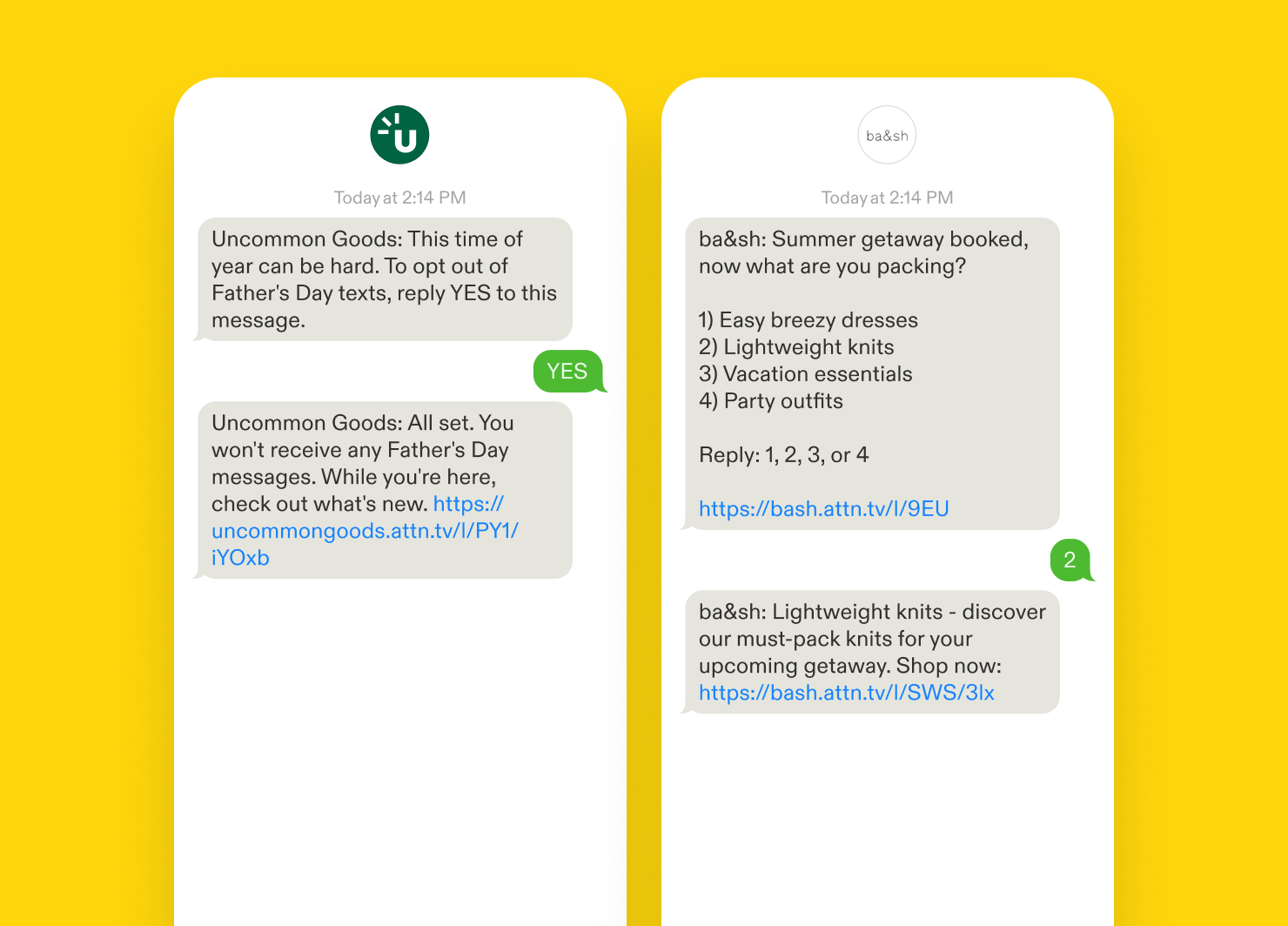
June is a great time to experiment with Two-Way SMS.
The month is full of decision-heavy moments—gifting, travel, events. Giving customers a way to ask for help directly can reduce friction and make the experience feel more personal.
Example:
Need help picking a Father’s Day gift?
Text us who you’re shopping for—we’ve got ideas 👀
This turns a campaign into a conversation—and often leads to higher conversion and stronger customer relationships.
June email strategies and examples: Give people a reason to care
Email is where you can slow down and actually say something.
1. The “Summer Starter Kit” (or your version of it)
This doesn’t have to be a literal “starter kit.” Think of it as a way to kick off summer with something that feels fresh—whether that’s introducing a new collection, building around a specific activity, or showing how your products fit into real-life moments. When it’s framed as inspiration instead of a checklist, it feels more like content people want to explore.
Why it works: Feels like content, not marketing.
Subject lines:
- “Your summer starts here ☀️”
- “Everything you’ll need this June”
- “How We’re Doing Summer This Year”
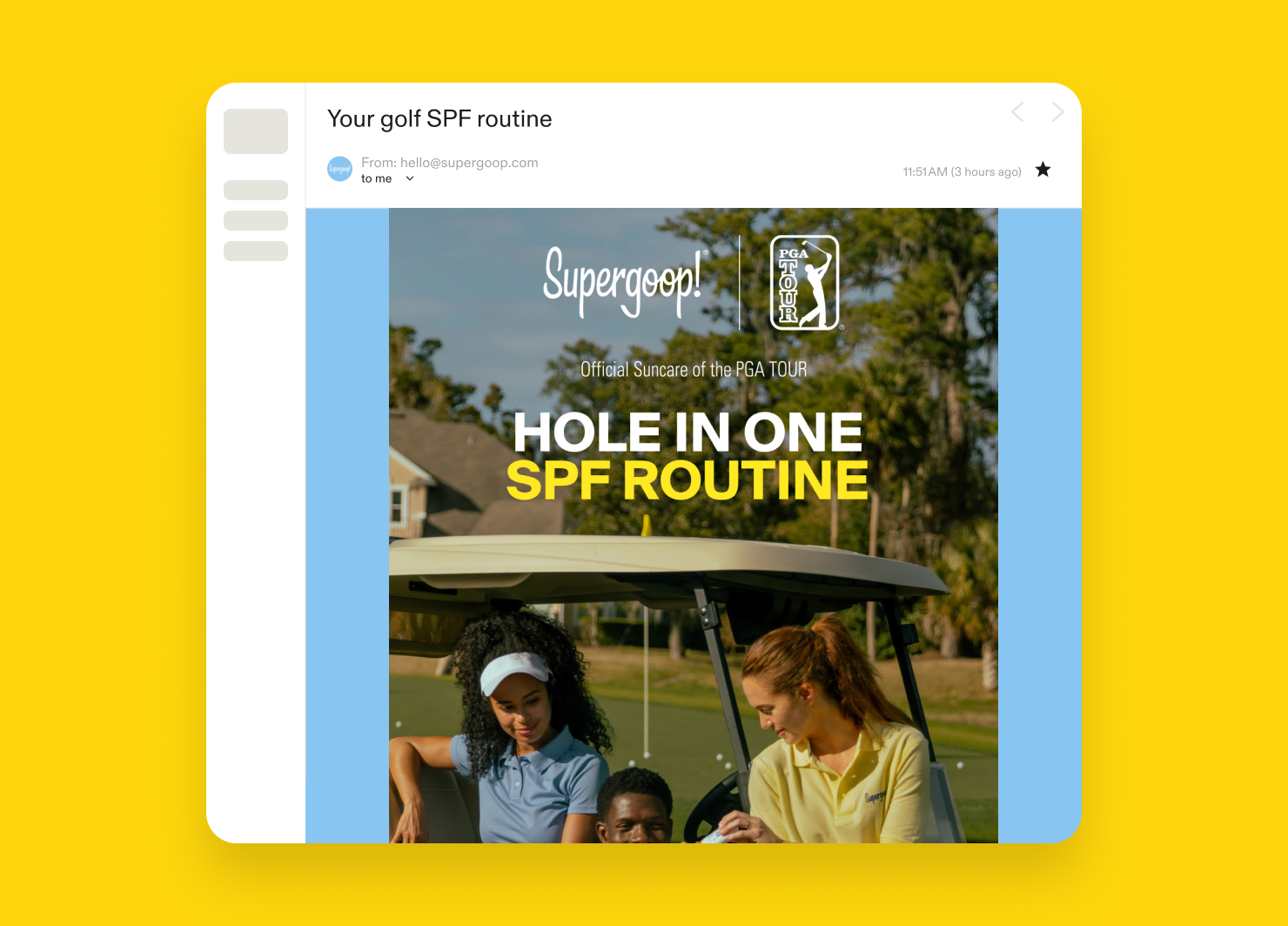
Make it better with Attentive: Use AI Pro to dynamically tailor product selections based on each subscriber’s preferences.
2. Pride Month: Lead with authenticity
Why it works: Customers can tell what’s real.
Subject line:
- “Pride, beyond the logo 🌈”
Focus on stories, creators, and real commitments—not promos.
3. Father’s Day: The anti-gift guide
Traditional gift guides can feel repetitive. A slightly unexpected angle gives people a reason to engage—and makes your brand feel more relatable.
Why it works: Breaks through the noise.
Subject line:
- “Gifts for the dad who doesn’t want anything”
4. Juneteenth: Lead with action, not promotion
This is a moment where depth matters more than reach. Taking the time to share what your brand is doing—and where customers can learn or contribute—makes the message more meaningful.
Why it works: Email gives space for nuance.
Subject lines:
- “More than a moment”
- “What we’re doing—and how you can join”
Tone:
Today, we’re taking time to reflect, learn, and celebrate.
We’re highlighting Black-owned businesses, sharing organizations we support, and providing resources for continued learning.
Because this work doesn’t start or stop today.
Orchestration tip: Use email as your primary channel to share deeper storytelling, supported by thoughtful segmentation to ensure the message reaches the right audience in the right way.
June push strategies and examples: Timing is the strategy
Push works when it feels like it couldn’t have been sent at any other moment.
1. Last-minute Father’s Day save
Push works especially well in those “almost forgot” moments. It’s less about discovery and more about giving customers a quick, easy way to take action.
Still need a gift?
You’ve got time—we’ve got options 🎁
2. First day of summer
Seasonal shifts are simple but powerful triggers. A message like this works because it aligns with how people are already feeling that day.
Summer officially starts today ☀️
Ready for it?
3. FIFA kickoff moment
These messages are all about timing. When you hit the exact moment something is happening, even the simplest message can feel relevant.
It’s kickoff time ⚽
Ready?
4. (Skip push for Juneteenth)
Not every message belongs in every channel. Recognizing when to hold back can be just as important as knowing when to send.
Final thought: June is about showing up differently
You don’t need to say more this month.
You need to say things that matter.
The brands that stand out in June:
- Anticipate needs instead of reacting
- Show up in real moments—not just campaigns
- Speak like humans, not marketers
- Know when not to send something
If every message answers the question “Why does this matter to me right now?”—you’re doing it right.
And with the right tools in place, doing it right becomes a lot easier to scale.

.png)
.png)