
March's packed calendar isn't just noise—it's your opportunity to show up authentically when and where your audience is paying attention.
March 2026 is different. Women's History Month spans the entire 31 days. The Oscars and March Madness Selection Sunday hit on the same night (March 15). Spring arrives with renewed consumer energy. And if you're in retail, food and beverage, or entertainment and media, you're sitting on one of the year's richest months for authentic connection—if you plan for it.
The brands that thrive this month won't treat these moments like checkbox holidays. They'll build real campaigns that resonate, measure what matters, and show subscribers they understand what they care about.
Here's your playbook: the dates worth building around, benchmarks that tell you if you're on track, and strategies you can start using today.
Key marketing dates in March
March looks busier than it actually is—and that's the opportunity. While other brands scramble to hit every date on the calendar, you can be strategic about the moments that matter most to your audience.
The brands winning this month? They're not everywhere. They're showing up authentically at the right moments, with messaging that feels relevant instead of reactive.
Quick reference: March marketing holidays
- Women’s History Month
- March Madness
- March 2: Paris Fashion Week
- March 4: Holi Festival
- March 5: World Book Day
- March 8: International Women’s Day
- March 8: Daylight Savings Time starts
- March 14: Pi Day
- March 15: Mother’s Day (UK)
- March 15: Academy Awards
- March 17: St. Patrick’s Day
- March 20: First Day of Spring
- March 20: Nowruz
- March 20: Eid al-Fitr
- March 21: World Poetry Day
- March 25: Click Frenzy Travel (AU)
- March 29: The start of British Summer Time
Ready to connect with food lovers as spring arrives? Dive into our food holidays calendar to uncover fresh campaign ideas perfect for March and beyond. Then map out your entire year with our text messaging marketing calendar, featuring essential dates and seasonal strategies for every month ahead.
March SMS and email benchmarks by industry
Understanding what success looks like starts with knowing your benchmarks. The data below provides a performance baseline for March across three key verticals: Retail & Ecommerce, Food & Beverage, and Entertainment & Media.
Think of these numbers as your starting point—not rigid goals, but guideposts that help you set realistic expectations, identify where you're excelling, and pinpoint areas where you can improve.
March SMS Benchmarks
March Email Benchmarks
What you need to know:
Food and beverage brands crush it with SMS because the offers are immediate and personal—flash sales on today's specials, limited-time deals, event reminders. If you're in F&B, SMS isn't optional. It's one of your strongest plays.
Entertainment and Media's 5.51% SMS CVR looks low, but here's the context: Entertainment and media brands use SMS for awareness and reminders ("your show starts in 1 hour"), not direct purchases. Lower conversion doesn't mean underperformance—it means you're using the channel differently.
For SMS, that 21.65% CVR in Retail/Ecomm tells you March is working. Spring brings renewed spending as shoppers move past post-holiday saving mode. If you're in retail, this is your window.
March SMS strategies and examples
SMS is your direct line when timing matters. In March, with major cultural moments converging and spring energy hitting, the brands that win are the ones treating subscribers like humans, not lists.
Strategy 1: Event-based urgency that feels authentic
March gives you real moments—not manufactured ones. Use them strategically to create genuine urgency without the usual pushy sales tactics.
Why this works:
- Subscribers already care: When March Madness, the Oscars, or St. Patrick's Day are already on their radar, your message feels relevant instead of random.
- Timing creates natural urgency: These aren't fake deadlines—they're real cultural moments with built-in excitement.
- Higher engagement during event windows: CTRs spike when you send in the hours before major events, because people are actively planning.
Copy-and-paste messaging ideas for March
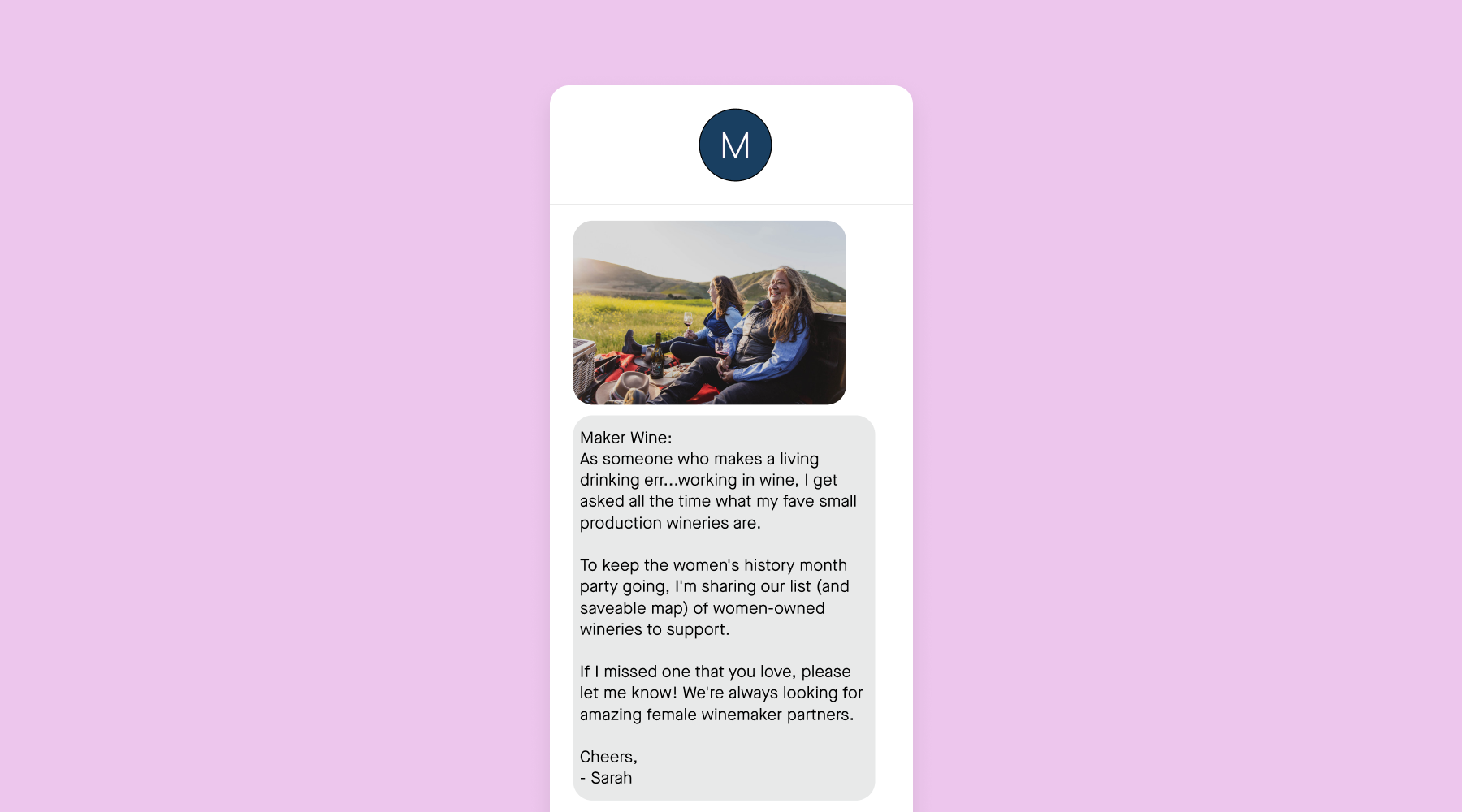
International Women's Day (March 8)
- "Celebrating brilliance in every form. Shop our Women's History Month collection → [link] 💜"
- "This week honors the women who inspire us. Enjoy an extra 15% off all weekend → [link]"
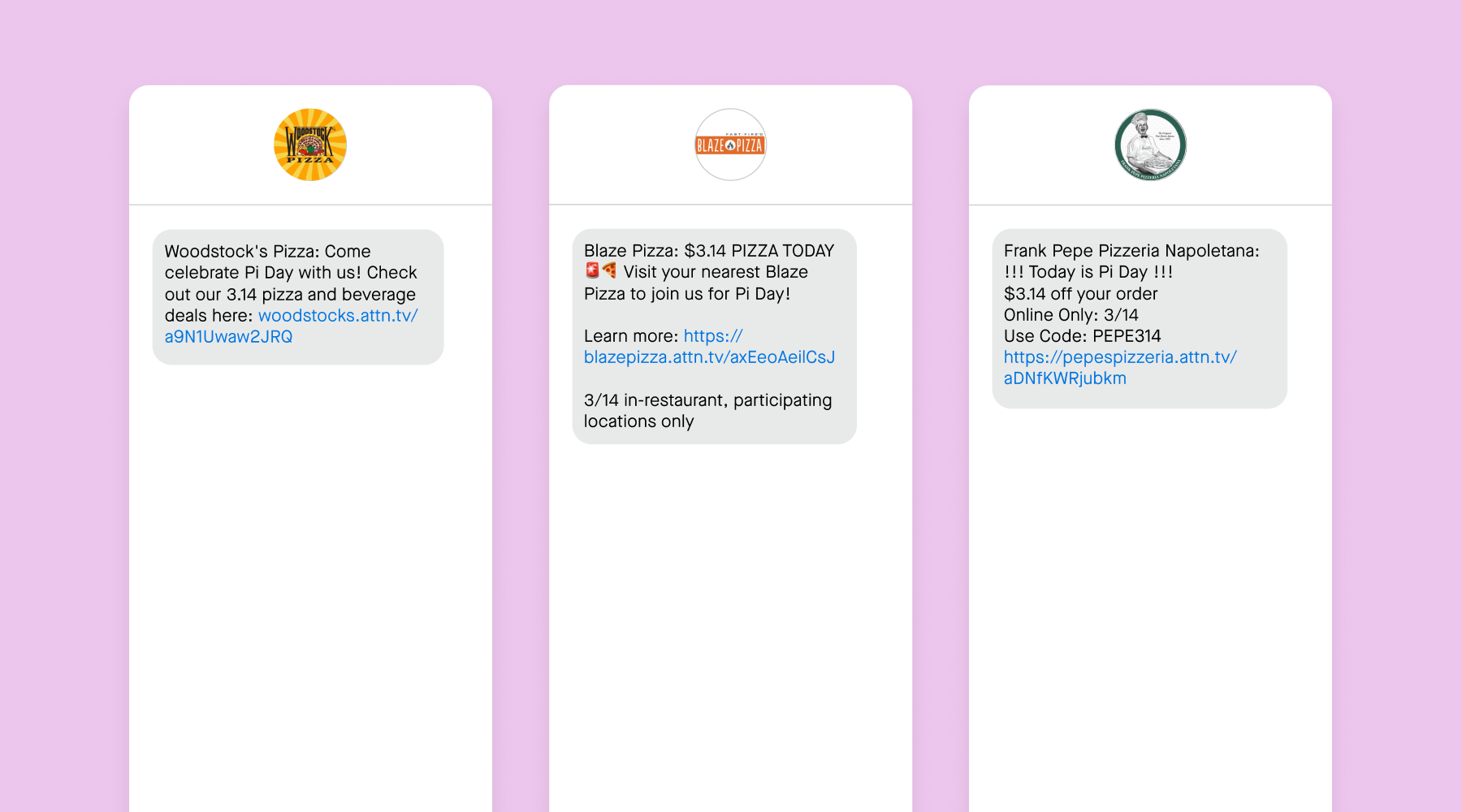
Pi Day (March 14)
- "It's 3.14! Grab any large pizza for $14 today only → [link] 🍕"
- "Celebrate Pi Day the right way: hot pizza, cold drinks, unbeatable deals → [link]"
March Madness (March 15–Onward)
- "Your bracket, your rules. Fill it out and win → [link] 🏀"
- "The madness starts NOW. Grab game-day snacks before they're gone → [link]"
St. Patrick's Day (March 17)
- "Green light on savings 🍀 Shop our St. Patrick's Day deals before midnight → [link]"
- "Sip into savings this St. Patrick's Day. Enjoy 20% off all day → [link]"
First Day of Spring (March 20)
- "Spring has arrived—and so have fresh deals. Shop the new season → [link] 🌸"
- "New season, new possibilities. Our spring collection just dropped → [link]"
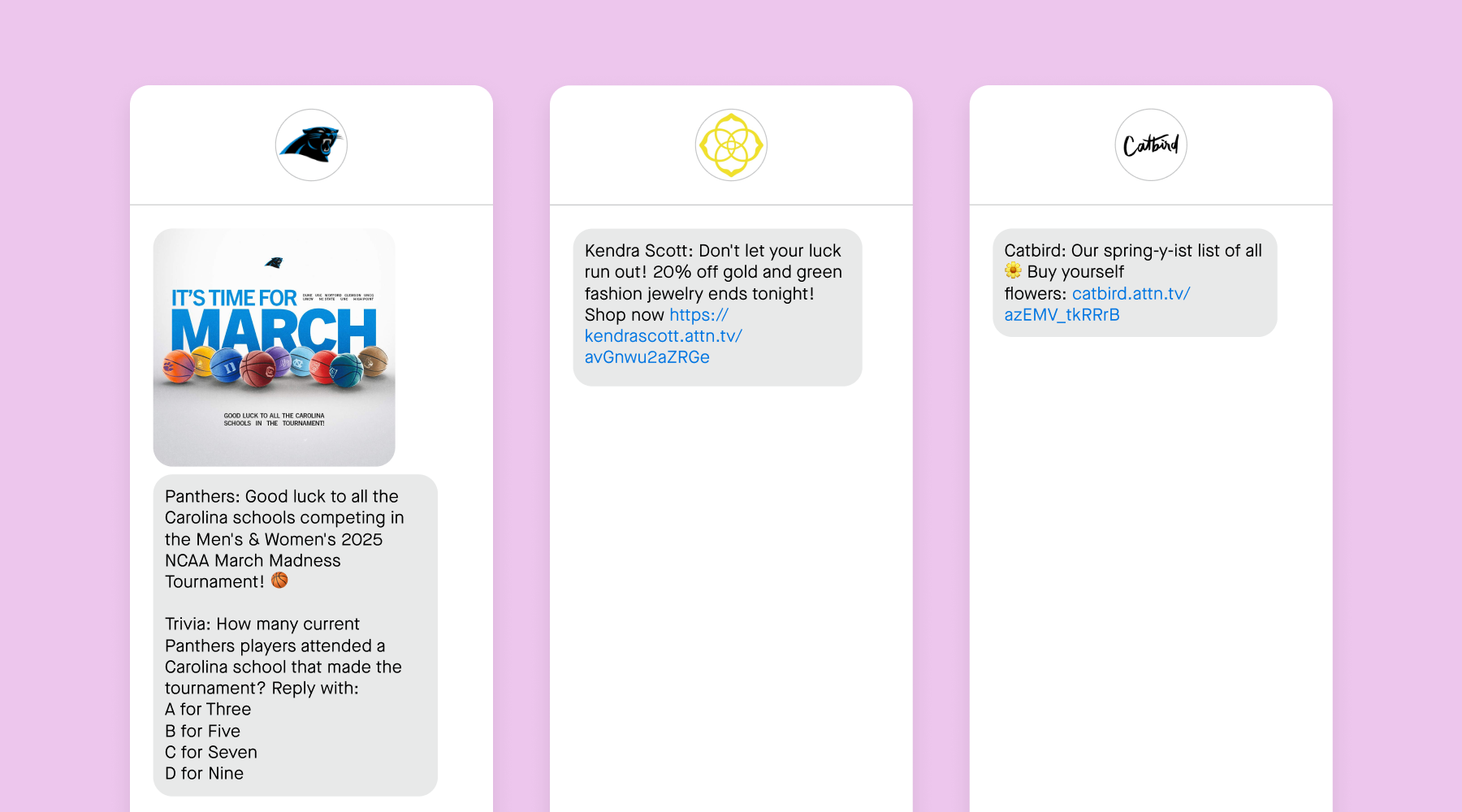
SMS Best Practices For March:
Timing drives results. For time-sensitive events like Selection Sunday or St. Patrick's Day, morning sends (before 10 a.m.) consistently outperform evening messages. Your customers plan their days in the morning—that's when your message creates the most impact.
Brevity wins attention. If your message extends beyond one line on most phones, it's time to edit. Keeping your SMS under 160 characters ensures you're sending a single-message text and maximizing engagement.
Smart segmentation amplifies relevance. Sending one generic SMS to your entire list will feel impersonal to everyone. When you have the data, use it to deliver targeted, relevant messages that drive better results.
March email strategies and examples
Email gives you the space to tell compelling stories and build genuine connections. While SMS excels at brevity and urgency, email allows you to provide context, showcase your products beautifully, and demonstrate that your brand represents more than just transactions.
Strategy 1: Women's History Month as a story series (not a checkbox)
The biggest mistake brands make with Women's History Month? Treating it like a one-day promo instead of the 31-day opportunity it actually is.
Why this works:
- Authenticity over performance: When you tell real stories throughout the month, subscribers can tell you actually care (and they engage with brands they trust).
- Multiple touchpoints build connection: A series keeps your brand top-of-mind without feeling repetitive or sales-focused.
- The culmination email converts: By March 8, you've built context—your product offer feels like part of the story, not a random discount.
.png)
Your 3-email series:
Email 1 (Early March) - The Spotlight: Feature a woman who shaped your brand, inspired your team, or represents what you stand for. Real story, no sales pitch. Let the narrative do the work.
Email 2 (March 8 or just before) - The Collection: Bring it together with a curated selection or a cause-aligned offer (like donating proceeds to women's empowerment organizations). The product comes last—after you've earned the right to sell.
Email 3 (Mid-March) - The Connection: Keep the momentum going by highlighting women-owned products in your line, suppliers you work with, or communities you support. Make it about who you partner with and why that matters.
Strategy 2: The March 15 double-header (Oscars and March Madness)
Two massive cultural events on the same night. Most brands will try to cram both into one email. Don't.
Why this works:
- Segmentation shows you understand your audience: Entertainment fans care about the Oscars. Sports fans care about brackets. Generic messages disappoint both groups.
- A/B testing reveals what your list actually wants: If you can't segment cleanly, test subject lines and let engagement tell you where your audience leans.
- Afternoon timing captures both crowds: Send early enough to drive action before events start, late enough that people are already thinking about their evening plans.
Email subject lines and themes:
Oscars-focused:
- Subject: "Dressed like you're presenting (even if you're just streaming)"
- Theme: Red carpet-inspired style, watch party hosting essentials
March Madness-focused:
- Subject: "Your bracket's about to be busted—but your snack game doesn't have to be"
- Theme: Game-watching essentials, team gear, last-minute party supplies
Strategy 3: St. Patrick's Day done right (lighthearted, not lazy)
St. Patrick's Day is one of the easiest holidays to execute—if you keep it simple and fun.
Why this works:
- Low stakes = creative freedom: You don't need a grand strategy. Playful, on-brand messaging works.
- "Green" is an easy creative hook: Whether it's green products, green deals, or green drinks, the theme practically writes itself.
- Flash sale urgency fits the holiday: Limited-time St. Patrick's Day offers feel natural and drive same-day action.
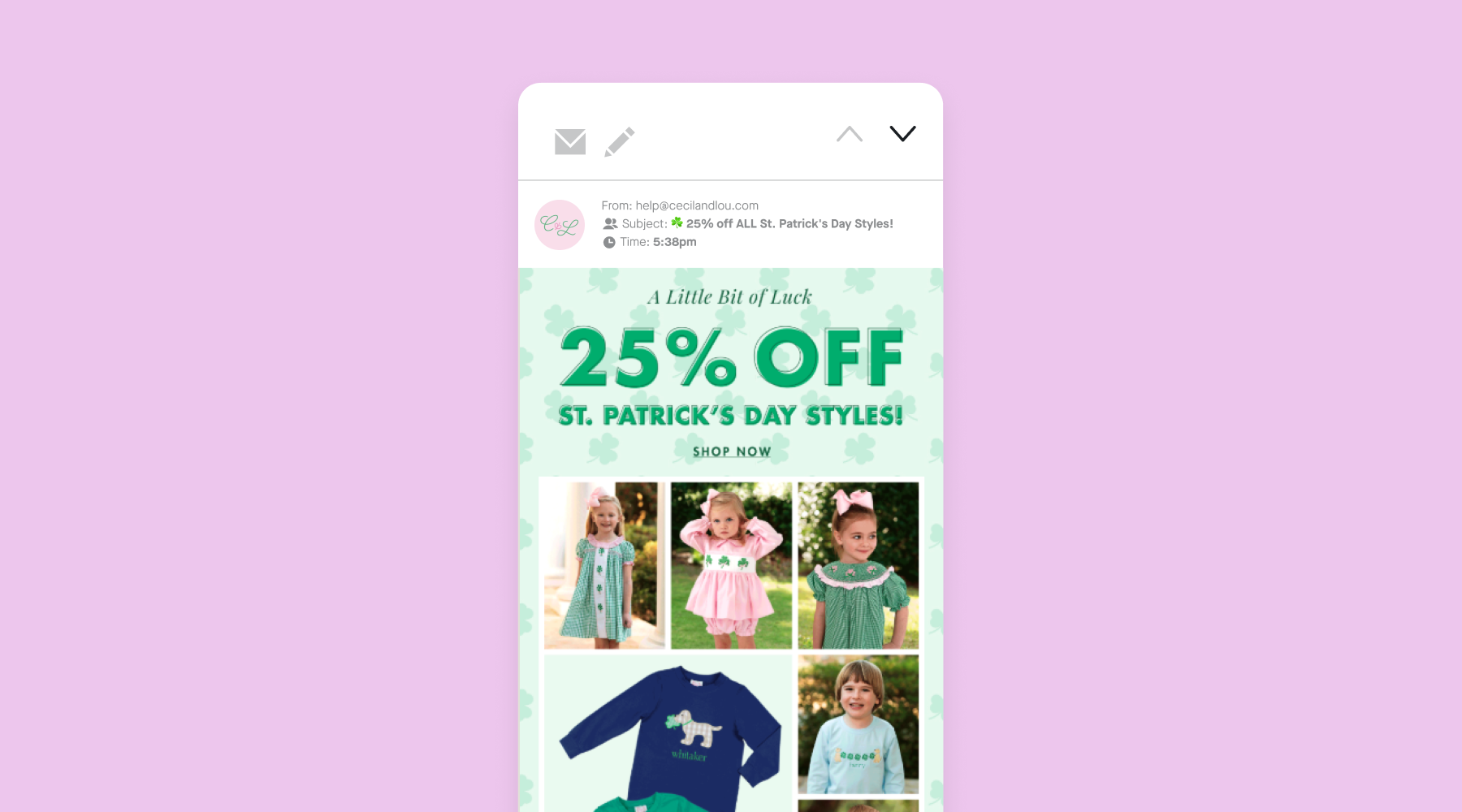
Email subject lines and themes:
- Subject: "Green means go (shop our St. Patrick's Day flash sale)"
- Subject: "Luck of the order: 20% off ends at midnight 🍀"
- Theme: Flash sales, Irish-inspired products (for F&B), or lighthearted "lucky finds" positioning
Email strategy notes for March:
Embrace the self-gifting angle for International Women's Day. It's not just about buying for others—women treat themselves on this day. If your audience skews female, lean into self-care and self-reward messaging. Most brands miss this.
Subject lines matter more than ever. With Apple's Mail Privacy Protection making open rates unreliable, click-throughs and conversions are your real signal. Your subject line needs to set accurate expectations so people who open actually want to click. Stay specific. "Your March deals" is forgettable. "Oscars night snacks—20% off" isn't.
Design for mobile first. Over half of email opens happen on phones. Short preview text, clean layouts, and big tap targets. If your email looks great on desktop and chaotic on iPhone, you're losing half your audience before they reach your CTA.
March push strategies and examples
Push notifications represent your most direct connection to your audience—and in 2026, they remain one of marketing's most underutilized channels.
While brands compete intensely for attention in email and SMS inboxes, push notifications enjoy relatively open territory, giving your messages better visibility odds. The key consideration is that push notifications work best for brief, high-urgency moments. They're not designed for storytelling—they're designed for strategic nudges. For March, that means deploying push notifications tactically around moments where timing creates everything.
Strategy 1: Lifestyle moments that show you pay attention
Push notifications work when they're helpful, not just promotional. March gives you perfect lifestyle hooks—like Daylight Saving Time—where showing up at the right moment earns you engagement instead of annoyance.
Why this works:
- You're relevant, not random: Sending a coffee offer the morning people lose an hour of sleep? That's helpful. Sending it on a random Tuesday? That's noise.
- Low effort, high personality: These messages require minimal creative lift but show subscribers your brand gets their life.
- Timing creates the value: The same message sent two days later is worthless. Sent at the right moment, it converts.
Copy-and-paste messaging ideas
Daylight Saving Time (March 8 - morning send):
- "Don't forget to spring forward 🌅 And while you're at it, grab a coffee to power through that lost hour → [link]"
March Madness – Bracket Deadline (March 15 - evening before):
- "Fill your bracket before it locks → [link] 🏀"
March Madness – Game Days:
- "Madness starts NOW. Grab game-day snacks before they're gone → [link]"
St. Patrick's Day Flash Sale (March 17 - 2-3 hours before end):
- "⏰ 3 hours left on our St. Patrick's Day deals → [link]"
First Day of Spring (March 20 - morning send):
- "🌸 It's officially spring. Shop the new season → [link]"
Strategy 2: March Madness as a multi-day push strategy
March Madness isn't one event—it's weeks of games, upsets, and real-time energy. Push is built for this kind of sustained, timely engagement.
Why this works:
- Real-time energy = real-time engagement: During games, people are glued to their phones. Your push shows up when they're most receptive.
- Multiple touchpoints without fatigue: Spaced over tournament days, game-day pushes feel like part of the experience, not spam.
- Segmentation opportunity: If you know who your sports fans are, send bracket reminders and game-day deals to them specifically—don't blast your whole list.
Push notification success tips for March:
Make every tap count. If someone taps your push and lands on your homepage instead of the exact product you mentioned, you wasted the moment. Deep link to the specific destination. Every time.
Respect attention. Push fatigue leads to opt-outs, which you can't easily recover. For most brands, 2–4 push notifications per week is sustainable. March gives you enough moments to fill that without being repetitive. Choose strategically.
March isn't just about showing up—it's about showing up right
Women's History Month. March Madness. The Oscars. Spring's arrival. March 2026 hands you more authentic connection opportunities than almost any other month. But only if you treat them like opportunities to build relationships, not just hit quotas.
The brands that win this month? They're the ones who plan ahead, message strategically, and remember that every text, email, and push is a chance to show subscribers they understand what matters to them.
You've got the dates. You've got the benchmarks. You've got ready-to-use campaign ideas. Now use them to build something that lasts beyond March.
Need more inspiration? Check out Texts We Love.
.png)
.png)