

July marketing is all about the holidays. From 4th of July campaigns to preparing for BFCM, now is the time to grow your lists and optimize your messages.
July sits in a unique moment on the retail calendar.
Consumers are balancing vacations, summer shopping, and early back-to-school purchases, while marketers are already looking ahead to BFCM and the holiday season. At the same time, brands are competing for attention across Independence Day promotions, summer clearance events, and seasonal shopping moments.
That creates a challenge: How do you stay relevant without overwhelming your audience?
The brands that perform best in July aren't necessarily the ones sending the most campaigns. They're the ones using customer behavior, engagement signals, and smart segmentation to create more relevant experiences across channels.
Just as importantly, they're using July and August to prepare for the months that matter most.
{{pistachio-one}}
July SMS and email marketing benchmarks
Email:
SMS:
*Averages as of June 24, 2026
While July isn't traditionally viewed as a major promotional month, brands continue to increase messaging volume year over year. That's largely driven by more sophisticated lifecycle marketing, triggered messaging, and customer journeys that keep subscribers engaged even when there isn't a major holiday on the calendar.
The takeaway: July isn't a month to go quiet. It's a month to get smarter.
July marketing calendar and key retail holidays
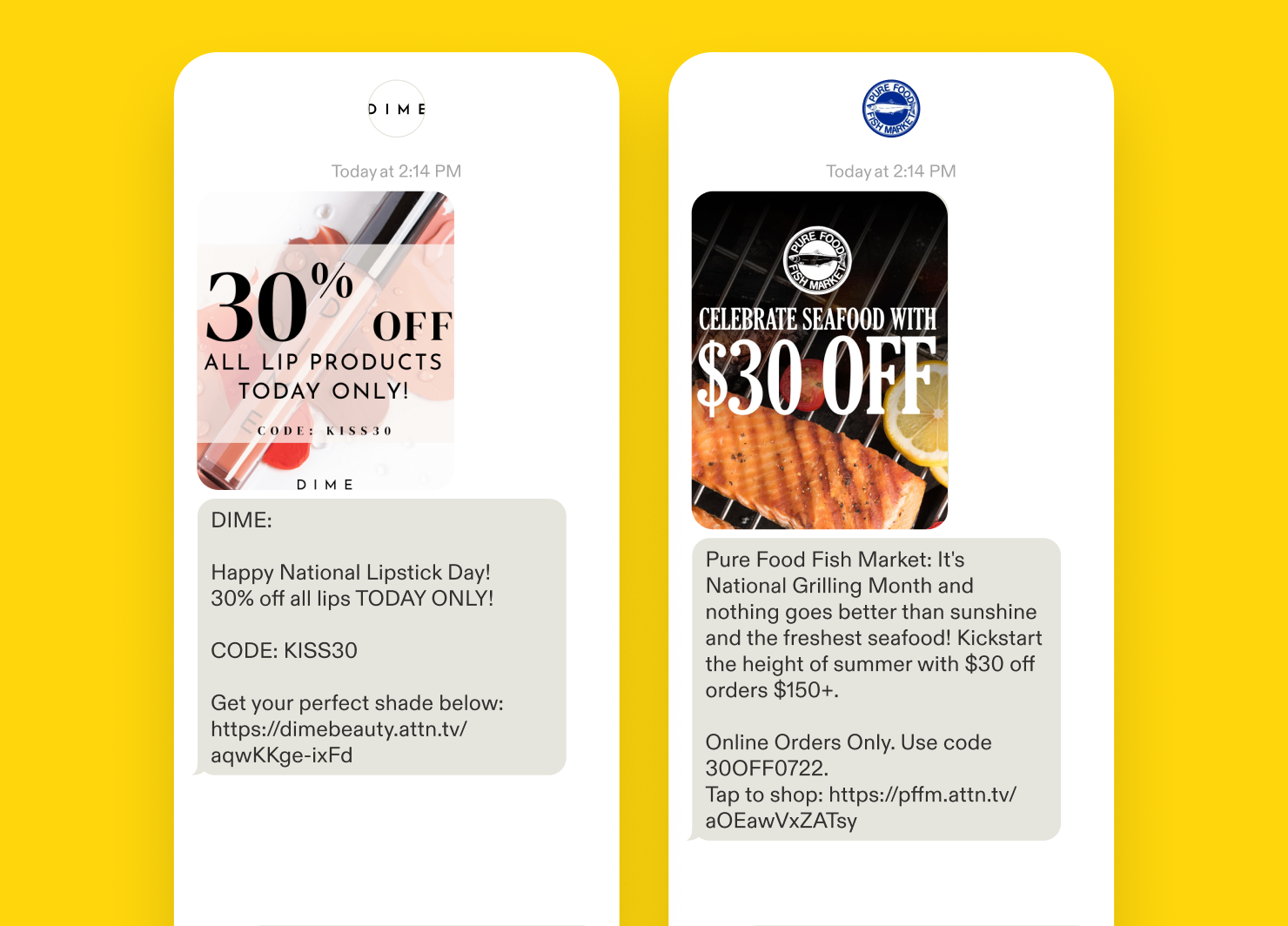
Rather than building campaigns around every holiday on the calendar, focus on the moments most likely to influence customer behavior.
Some moments deserve a full campaign. Others are better suited for targeted sends to specific audiences. The key is understanding which opportunities align with your customers, products, and goals.
Major retail moments
Campaign opportunities by moment
Before adding a moment to your marketing calendar, ask:
- Does this align with your audience?
- Is there a natural connection to your products?
- Would this resonate with a specific customer segment?
- Does this deserve a full campaign or a smaller targeted send?
The goal is relevance, not volume.
Why July 4 deserves extra attention this year
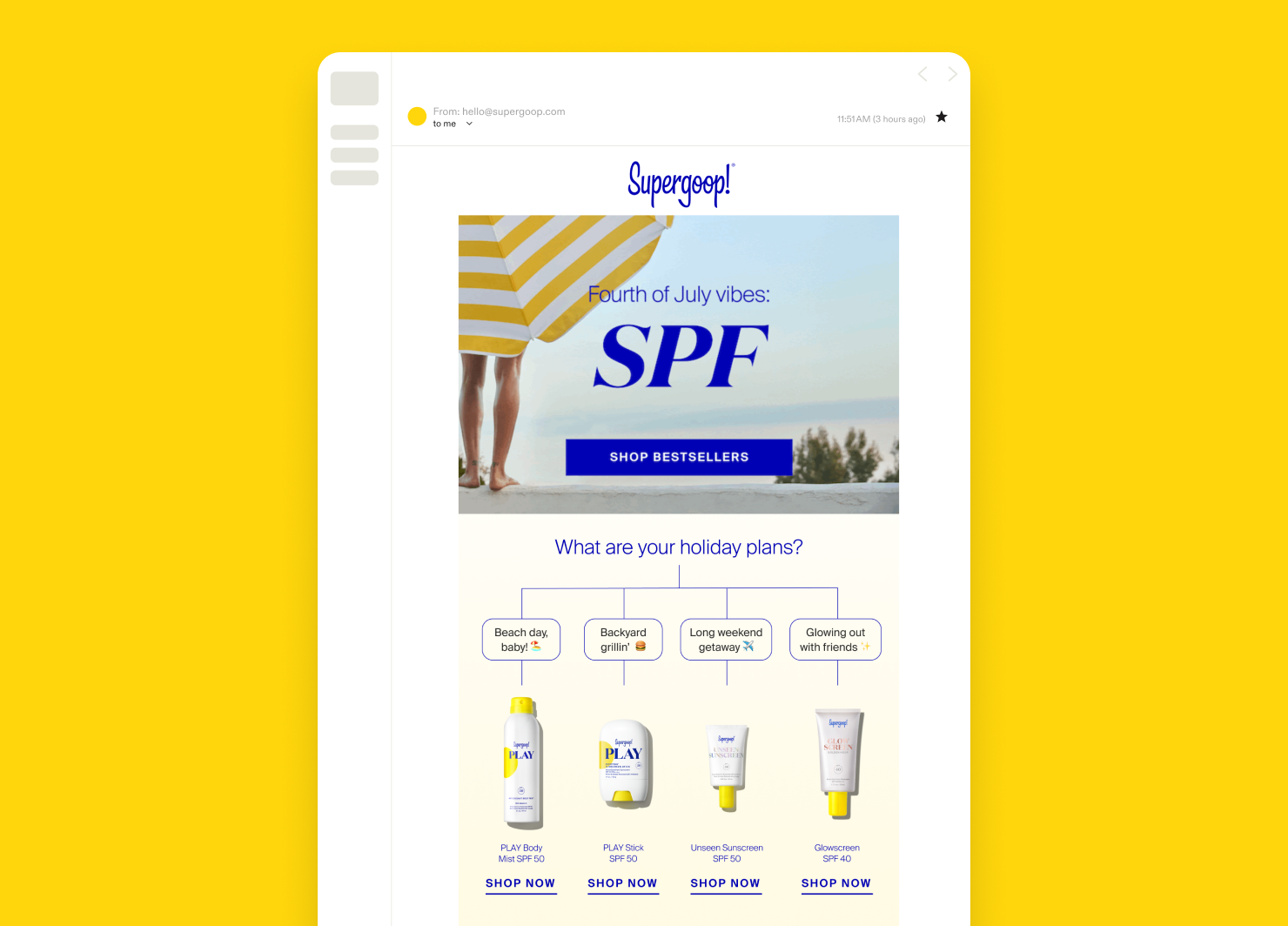
Independence Day is always one of the biggest promotional weekends of the summer, but this year brands have an additional opportunity to tap into the excitement surrounding the United States' 250th anniversary.
For some brands, that may mean commemorative products, Americana-inspired collections, or community-focused campaigns. For others, it may simply mean leaning into the themes consumers already associate with the holiday—family gatherings, summer travel, outdoor entertaining, and shared traditions.
The key is authenticity. Not every brand needs a patriotic campaign, but most brands can find a way to connect their products to how consumers are celebrating the long holiday weekend.
The July strategy framework
Many brands approach July as a collection of individual campaigns.
The highest-performing brands approach it as preparation for the second half of the year.
Build around flagship moments—not one-off sends
Large retail events like July 4 deserve more than a single promotional blast.
Instead, create momentum throughout the customer journey.
Two to three weeks before
- Warm engaged subscribers
- Highlight seasonal collections
- Introduce early-access opportunities
- Use email to build excitement and product discovery
One week before
- Increase urgency
- Segment based on browsing behavior and engagement
- Test countdown messaging
- Prioritize your most engaged subscribers
During the event
- Use SMS for urgency and conversion
- Use email for merchandising and product discovery
- Adjust messaging based on customer engagement
After the event
- Re-engage browsers who didn't purchase
- Cross-sell recent purchasers
- Analyze performance and customer behavior
The goal isn't simply to send more messages. It's to create a connected customer journey.
Segment by engagement—not just demographics
July can quickly become a high-volume promotional month.
Instead of sending every campaign to your entire audience, segment based on behavior and intent.
Back-to-school campaigns provide a great example.
Rather than sending the same promotion to everyone, consider collecting zero-party data that helps identify:
- Parents
- Teachers
- College students
Each audience has different needs, budgets, and purchase behaviors. The more relevant the message, the stronger the likelihood of conversion.
For brands looking to improve segmentation, summer is an ideal time to test sign-up experiences that gather a small amount of additional customer information. Even two to four optional questions can unlock more relevant messaging throughout the back-to-school season and beyond.
Use AI to create more relevant summer messaging
Summer shopping behavior varies widely.
Some shoppers are focused on travel. Others are planning for back-to-school, outdoor entertaining, beauty routines, or seasonal wardrobe refreshes.
Instead of promoting the same products to every subscriber, use behavioral signals and AI-powered personalization to create messaging that feels more relevant.
This could include:
- Personalized product recommendations
- Dynamic content based on browsing behavior
- Subject line and copy testing
- Smarter audience prioritization
- Send-time optimization
- Seasonal product recommendations
The future of personalization isn't simply more automation. It's using customer signals to make every interaction feel more useful.
Don't forget about list growth
July and August are actually some of the most important list-growth months of the year.
Every subscriber acquired before BFCM has multiple opportunities to engage with your brand before peak shopping season arrives.
Last year, subscribers who joined marketing lists during the summer accounted for 31% of brands' Cyber Week revenue.
Use this time to test:
- Gamified sign-up experiences
- Giveaways and sweepstakes
- VIP and early-access programs
- Zero-party data collection
- AI-powered acquisition tools
Different acquisition strategies can also attract different types of subscribers. Gamified experiences may resonate with younger audiences, while VIP access, exclusivity, and early shopping opportunities often drive higher-intent signups that can lead to stronger long-term retention.
The larger and more qualified your audience is heading into Q4, the greater your revenue opportunity becomes.
July is really about preparing for BFCM
While consumers are enjoying summer, marketers should already be preparing for peak season.
Now is the ideal time to:
- Audit first-half performance
- Review segmentation strategies
- Refresh automated journeys
- Test promotional offers
- Optimize creative assets
- Experiment with send times and CTAs
Use July and August as your testing ground.
July arrives quicker than any marketer or supporting tech stack can imagine. It’s the optimal time to evaluate what has worked in the first half of the year, what optimizations can be taken advantage of in the second half of the year, and what new functionalities can help us target and convert subscribers that may be thinking of going dormant until the bigger sales around BFCM.
- Trish Yuse, Sr. Customer Success Manager at Attentive
Which incentives perform best?
- Free shipping?
- Tiered discounts?
- Gifts with purchase?
- Buy-one-get-one offers?
The insights you gather now will help shape a stronger holiday strategy later.
Use July and August to test CTAs, send times, and incentive structures. What promotions best resonate with your audience? Free shipping, tiered discounts, BOGOs, or GWPs? Use these months to gather real insights so your BFCM promo strategy isn’t based on guesswork or assumptions.
- Elizabeth Abolt, Lead CSM, Strategic at Attentive
The brands that see the biggest returns during Cyber Week aren't building their strategy in November. They're using the summer months to learn what resonates with their audience and scaling those learnings into Q4.
Final thoughts
July marketing success comes down to relevance.
The brands creating the strongest customer experiences aren't necessarily sending the most campaigns. They're using engagement data, customer behavior, and personalization to deliver the right message at the right moment.
As you plan your July strategy:
- Focus on segmentation over volume
- Balance major retail moments with niche opportunities
- Prioritize list growth ahead of BFCM
- Use July as a testing ground for Q4
- Give every channel a clear purpose
The result is a more thoughtful marketing strategy that drives stronger engagement, conversion, and long-term loyalty.
The brands that win during the holiday season don't start preparing in October.
They start in July.
.png)
.png)