

AI-referred traffic to U.S. retail sites was up 62% YoY in July 2026, according to Adobe. Generative AI is changing how shoppers decide what to buy—and it’s calling for a shift in how brands earn their business.
This shift brings a valuable audience to brands. Adobe’s report shows that retail visitors arriving from AI:
Spend more time engaging with retailers
They spent 59% more time on site and viewed 22% more pages per visit than visitors from other sources.
Convert at a higher rate
Their conversion rate was 60% higher than non-AI traffic.
Generate more revenue per visit
Each visit delivered 53% more revenue than non-AI traffic.
At the same time, more of the decision-making may happen before a shopper reaches a brand’s website. But brands still have influence over those decisions.
Detailed product information and third-party coverage can impact how AI presents your products. The website experience can give shoppers the confidence to buy. And the messages that follow can bring customers back.
We surveyed more than 3,000 consumers to understand how shoppers use AI and how their brand relationships differ from those who don’t use AI. Use the findings and recommendations to focus your marketing efforts where they can make the greatest difference.


The Chapters
1. Shopping with AI is the new normal for many
2. AI influences product choice
3. Inside the AI shopping conversations guiding purchase decisions
4. 93% still seek proof beyond AI while deciding whether to buy
5. How much of the purchase will shoppers hand over to AI?
6. AI-assisted purchases can be the start of lasting loyalty
7. Brands can influence the next AI shopping conversation
Take Action: How to earn shoppers’ purchase in the age of AI
The next era: Marketing that adapts to each customer
Executive Summary
68% of consumers have used a general AI chatbot for shopping in the past three months. Their responses show how AI influences buying decisions—and where brands and retailers continue to play a role.
AI is embedded in everyday shopping decisions.
63% of AI-assisted shoppers used a chatbot for at least half the products they shopped for online in the past three months—and that share grows with younger generations.
Purchases largely happen outside the chatbot—and shoppers prefer it that way.
10% of purchasers completed their purchase within AI during the experience they described. Looking ahead, 60% of AI-assisted shoppers prefer to buy through the website or app where the product is sold—giving brands and retailers an opportunity to turn the purchase into an ongoing relationship.
AI impacts which products make the shortlist.
71% of AI-assisted shoppers say AI meaningfully affected which products they considered or chose at least half the times they used it to shop.
AI-assisted purchases can grow into lasting brand relationships.
62% of AI-assisted shoppers say they’ve bought a different product or brand instead of their usual choice because of AI. Yet among purchasers in the recent AI-assisted shopping experience they described, 44% had already purchased again from the same brand or retailer. And among first-time customers, 73% took an action to stay connected during or after that experience—giving brands an opportunity to build an ongoing relationship.
AI helps shoppers move closer to purchase.
66% of AI-assisted shoppers ended up purchasing a product during a recent AI-assisted shopping experience. 80% of them bought a product recommended by AI.
AI-assisted shoppers expect more personalization.
72% agreed with at least five of seven statements about personalization, compared with 41% of shoppers who did not use AI for shopping. Those expectations span recognition, relevant product guidance, and brand messages.
Shoppers still seek proof outside AI—and sellers help provide it.
In the recent shopping experience they described, 93% sought outside information or proof while deciding whether to purchase. 64% of them referred to a seller’s website, app, or physical store to find these details.
Brand messages can influence the next AI conversation.
24% of AI-assisted shoppers say a brand or retailer message prompted them to ask a chatbot about a product, brand, or category in the past three months. Marketing messages can influence the ideas and criteria shoppers bring into those conversations
AI is embedded in everyday shopping decisions.
63% of AI-assisted shoppers used a chatbot for at least half the products they shopped for online in the past three months—and that share grows with younger generations.
AI impacts which products make the shortlist.
71% of AI-assisted shoppers say AI meaningfully affected which products they considered or chose at least half the times they used it to shop.
AI helps shoppers move closer to purchase.
66% of AI-assisted shoppers ended up purchasing a product during a recent AI-assisted shopping experience. 80% of them bought a product recommended by AI.
Shoppers still seek proof outside AI—and sellers help provide it.
In the recent shopping experience they described, 93% sought outside information or proof while deciding whether to purchase. 64% of them referred to a seller’s website, app, or physical store to find these details.
Purchases largely happen outside the chatbot—and shoppers prefer it that way.
10% of purchasers completed their purchase within AI during the experience they described. Looking ahead, 60% of AI-assisted shoppers prefer to buy through the website or app where the product is sold—giving brands and retailers an opportunity to turn the purchase into an ongoing relationship.
AI-assisted purchases can grow into lasting brand relationships.
62% of AI-assisted shoppers say they’ve bought a different product or brand instead of their usual choice because of AI. Yet among purchasers in the recent AI-assisted shopping experience they described, 44% had already purchased again from the same brand or retailer. And among first-time customers, 73% took an action to stay connected during or after that experience—giving brands an opportunity to build an ongoing relationship.
AI-assisted shoppers expect more personalization.
72% agreed with at least five of seven statements about personalization, compared with 41% of shoppers who did not use AI for shopping. Those expectations span recognition, relevant product guidance, and brand messages.
Brand messages can influence the next AI conversation.
24% of AI-assisted shoppers say a brand or retailer message prompted them to ask a chatbot about a product, brand, or category in the past three months. Marketing messages can influence the ideas and criteria shoppers bring into those conversations

Shopping with AI is the new normal for many
AI-assisted shopping is taking hold in retail. Many use it regularly, and younger generations lead adoption. Others remain skeptical of AI chatbots or see little reason to change their habits. But the differences extend beyond AI use itself. AI-assisted shoppers consult more sources and explore more options before deciding what to buy. The differences continue to their expectations and relationships with brands.
63% of AI-assisted shoppers use AI for at least half of their online shopping
68% of consumers surveyed used a general AI chatbot (such as ChatGPT, Gemini, Claude, or Perplexity) for at least one shopping task in the past three months. We call this group AI-assisted shoppers.
And it’s not just an occasional habit.
61% of AI-assisted shoppers use AI tools for shopping at least once a week, and 90% do so at least monthly.
What’s more, AI plays a role in a substantial share of their online shopping. 63% of AI-assisted shoppers used a chatbot for at least half of the products they shopped for online in the past three months.
AI-assisted shoppers are more research-oriented
They explore more broadly to land on the products they want to buy:
- They consult more sources. AI-assisted shoppers used an average of 3.8 sources other than AI in the past three months, compared with 2.6 among shoppers who didn’t use AI for shopping.
- They explore more options. When shopping for a type of product they haven’t purchased before, AI-assisted shoppers are more likely to explore many products before narrowing down their options (36%) than those who did not use AI for shopping (27%).
Shoppers who did not use AI for shopping are more likely to make their decisions with minimal research (22% vs. 12% of AI-assisted shoppers).
Barriers to AI shopping: Habit and trust
The 32% of consumers who did not use AI for shopping in the past three months cited:
- Awareness or habit (64%). They hadn’t thought to use AI for shopping, didn’t know how it would help, or preferred the sources they already use.
- Accuracy or bias (48%). They didn’t trust chatbots to provide accurate information or unbiased recommendations.
- Privacy (27%). They were concerned about sharing personal information or preferences with an AI chatbot.
- Ethics (16%). They were concerned about the ethical or moral implications of using AI.
Most shoppers who did not use AI for shopping don’t expect to start soon: 71% say they’re unlikely to use it in the next 12 months, while 10% say they’re likely to.
For these shoppers, brands need to continue to make it easy to discover, research, and buy products on familiar channels.
Younger shoppers lead the shift to AI-assisted shopping
About four in five Gen Z (83%) and Millennial (81%) respondents used AI for a shopping task in the past three months—compared with 69% of Gen X and 45% of Baby Boomers.
Younger AI-assisted shoppers also bring AI into more of their online shopping. In the past three months, 75% of Gen Z and 72% of Millennials used a chatbot for at least half of the products they shopped for online. Among Gen X and Baby Boomer AI-assisted shoppers, that share was 57% and 38%, respectively.
Among shoppers who did not use AI for shopping, Gen Z respondents were more likely than Baby Boomers to cite accuracy or bias (61% vs. 50%) and ethical concerns (43% vs. 10%).
Together, these findings suggest that AI use in shopping will continue to grow, and trust and ethics could become the primary barriers to wider AI adoption over time.
AI-assisted shoppers do more research
AI-assisted shoppers do more research
AI shopping adoption is highest among younger generations

AI influences product
choice
For 85% of AI-assisted shoppers, making the right choice felt very or extremely important in a recent shopping experience they described. As shoppers turn to AI to weigh their options on these important decisions, they give it a role in defining what features matter and which products are worth considering.
88% of AI-assisted shoppers use AI to evaluate products
Among AI-assisted shoppers, 88% used a chatbot for at least one evaluation task in the past three months, such as asking questions about a product, comparing options, summarizing reviews, or narrowing down what to buy.
AI also helps shoppers work out what they’re looking for. 58% used it for discovery, whether to get product recommendations or figure out which type of product could meet a need.
And 67% used AI for purchase enablement: to find deals, locate a seller, or complete a purchase within the chatbot.
Shoppers use AI to navigate a wide range of products
Clothing, electronics, and health or wellness products lead the categories shoppers used AI to shop for in the past three months.
These figures show which categories shoppers used AI to shop for, not how much of their shopping in each category involved AI.
71% of AI-assisted shoppers say AI impacts what they consider or choose at least half the time
When it comes to shoppers’ shortlists, AI is taking on an impactful role. 71% of AI-assisted shoppers say a chatbot meaningfully affected which products or brands they seriously considered or chose at least half the times they used it to shop in the past three months.
That impact is more common among shoppers who use AI across more of their online shopping.
Among those who used an AI chatbot for most or all of the products they shopped for online, 96% say it affected their consideration or choice at least half the time—compared to 40% of those who used it for just some of their shopping.
For brands, this means it’s more important to make enough information available to LLMs (large language models) so they know what sets a product apart and who it’s for—and can make the case for it to the right shoppers.

“It's when there's a specific problem you have and you're researching it. You might not even be looking for a product, you're looking for a solution. And if AI is going to recommend something, for the consumer that solves their problem—but for the merchant, you need to make sure you're actually showing up there.”
John Surdakowski
Founder & CEO

Inside the AI shopping conversations guiding purchase decisions
Shoppers can make decisions inside AI conversations that brands can’t see or personalize. But knowing what happens in these conversations can help brands ensure their product is showing up in the right ways and understand what state these shoppers are arriving in when they get to the website.
We asked shoppers to recap one recent AI-assisted shopping experience. This data clues brands in about the needs and product details that matter in those conversations—and what shoppers may already have decided before visiting a brand’s website.
Most come to AI conversations without a specific product or brand in mind
For the experience they described, 63% of AI-assisted shoppers had not yet identified specific products or brands when they turned to the chatbot.
While evaluation was the most widely reported task across shoppers, most entered the AI conversation they described during discovery.
Before shoppers turned to AI, their own needs and research were the most common prompts to start shopping:
- 45%: Self-directed shopping—a need they recognized, a product or brand they already knew, or a search result
- 29%: Retail and marketing touchpoints—a brand, retailer, or marketplace website or app, a physical store, or an ad or marketing message
- 20%: Social and personal influences—social media, a creator, an online community, or a friend or family member’s recommendation
Shoppers share context, not just desired features
Nearly all AI-assisted shoppers (98%) gave the chatbot more than a general request during that experience.
Budget (46%) and desired features (40%) were the most common details shoppers shared. Clear pricing and feature information on product pages address those basics.
But they’re also sharing contextual information. More than half (52%) also shared personal preferences or details relevant to the purchase, such as their style, interests, size, health needs, or living space.
This impacts the type of information brands can provide on products. Beyond features, you can make contextual associations for your product clearer: who it’s for, what needs it meets, and how it fits different preferences.
AI can help shoppers choose—or validate products they already like
95% of AI-assisted shoppers say the chatbot meaningfully affected the products or brands they considered during that experience:
- 47%: Narrowed their options
- 46%: Had an existing preference confirmed
- 39%: Encountered products or brands they hadn’t considered
- 22%: Changed their preferred product or brand
So AI’s influence can work in favor of a product shoppers already prefer. Reinforcing an existing preference was more than twice as common as changing one (46% vs. 22%).
If that reassurance carries through to purchase, it could mean more satisfied customers, fewer returns, and stronger loyalty because their choice has been validated by AI.
More than half moved closer to purchase after using AI
AI is proving to be an effective tool for shoppers. In the experience they described, 54% of AI-assisted shoppers were further along in their shopping decision immediately after using the chatbot.
Others stayed at the same stage (30%), moved back to an earlier stage (13%), or decided to stop shopping for the product (2%).
This is a simplification, too. Even if a shopper stayed at the same stage or moved backwards, they may have gained more information that’s informing their decision.
66% purchased a product—and most of them bought a product the chatbot recommended
Most shoppers (66%) did end up purchasing a product during this shopping journey, even if it was some time after the AI conversation they described.
An additional 21% had decided what to buy but hadn’t pulled the trigger yet.
And those that purchased were heavily influenced by their conversation. Among shoppers who bought something during the AI-assisted experience they described:
- 80%: Bought a product the chatbot recommended
- 11%: Bought a product it hadn’t recommended
- 9%: Said the chatbot hadn’t recommended any products
Percentages are rounded independently; totals and combined figures may differ from the sum of displayed values.
Bought a product the chatbot recommended
Bought a product it hadn’t recommended
Said the chatbot hadn’t recommended any products
Percentages may not total 100% due to rounding.
Shoppers could select up to three reasons. Other and none of these responses are not shown.

“Because AI-assisted shoppers arrive with more of their decision already made, they may buy without getting to know your brand. So your post-purchase journey has more work to do. Recognize that they’ve already purchased, help them get value from that product, and introduce what else you offer. Email and SMS can build the familiarity that didn’t develop before checkout.”
Nikki Tooman
Co-Founder

93% still seek proof beyond AI while deciding whether to buy

Shoppers may be doing less research outside AI, but brands still have an opportunity to help shoppers feel confident in a purchase decision.
Among AI-assisted shoppers who sought outside proof. Shoppers could use multiple sources but selected one as most influential.
Confidence in AI doesn’t eliminate the need for outside proof
For the shopping experience they described, 68% of AI-assisted shoppers were very or completely confident in the chatbot’s guidance before checking other sources.
Yet, 93% looked for information or proof outside the chatbot while deciding whether to buy.
These groups overlap: 63% of AI-assisted shoppers were highly confident in the chatbot’s information and still checked elsewhere.
Sellers are the most influential source of outside proof
Among shoppers who sought outside proof, 64% visited a seller’s website, app, or physical store. For 41%, one of those seller sources was the most influential in deciding whether to buy.
Search was the most-used individual source (54%) and the one most often named most influential (28%).
This shows the importance of continuing to invest in traditional channels.
Shoppers verify reviews, prices, and product details outside of AI
How much of the purchase will shoppers hand over to AI?
Brands and retailers retain control of the purchase for the majority of shoppers.

Brands and sellers still own the purchase
And most would prefer their purchases stay off AI chatbots
Comfort drops as AI gains autonomy
Bought from a retailer or marketplace that sells products from multiple brands
Bought directly from the company
Completed the purchase within the AI chatbot
recent AI-assisted shopping experience
AI-assisted purchases can be the start of lasting loyalty
AI-assisted shoppers feel loyal to more brands, yet many have also switched because of a chatbot’s recommendation.
Even with that openness to alternatives, brands have a clear opportunity to earn and foster their loyalty. These shoppers are open to connecting with brands after a purchase and many return to shop again

Shoppers could select up to three reasons. Other and none of these responses are not shown.
Shoppers with high personalization expectations
used AI
didn't use AI
AI-assisted shoppers are loyal to more brands
But AI prompts shoppers to make a switch
While AI-assisted shoppers tend to have longer lists of go-to brands, 62% of them said they’ve bought a different product or brand instead of their usual choice because of an AI chatbot. Another 23% have seriously considered switching.
Switching was even more common among AI-assisted shoppers loyal to six or more brands or retailers (78% vs. 55% of those loyal to one to five).
And switching was more common among shoppers who used AI more frequently:
That openness also creates an opportunity to win new customers. But regardless of whether you’re trying to earn new customers or keep existing ones, brands benefit from making a strong case through the context they provide around their product.
Yet nearly half have already made a repeat purchase
Many shoppers had already returned to the same brand or seller after the purchase they described:
- 44%: Made another purchase
- 28%: Browsed again without purchasing
Another 24% hadn’t returned yet but expected to.
Existing customers were more likely to have repurchased than first-time customers (48% vs. 28%).
A product that delivers gives shoppers the strongest reason to come back
Purchasers most often said product satisfaction would encourage them to return directly to the brand or retailer:
- 55%: Product meets or exceeds expectations
- 37%: Great customer service or returns/exchanges
- 36%: Good deals or promotions
- 29%: Relevant product recommendations
- 27%: Helpful information about using or caring for the product
- 23%: Loyalty rewards or member benefits
- 19%: Remembered preferences and past purchases
- 9%: Exclusive access to products or special offers
- 8%: Easy reordering or replenishment
Shoppers could select up to three reasons. Other and none-of-these responses are not shown.
Brands can increase the likelihood of product satisfaction with post-purchase content that educates customers on the materials or process, shows them how to use or care for it, and inspires different ways to enjoy it.
Direct relationships give brands a chance to earn loyalty
Among shoppers whose AI-assisted experience ended in a purchase, 69% took at least one action to stay connected with the brand or retailer during or after that experience.
Most purchasers (79%) had bought from the same brand or retailer before, while 19% were new customers. Among those new customers, 73% took an action to stay connected.
AI-assisted shoppers have higher personalization expectations
We asked all shoppers how strongly they agreed or disagreed with seven personalization statements about product guidance, recognition, and brand messages. 72% of AI-assisted shoppers agree with at least five, compared with 41% of shoppers who did not use AI for shopping.
AI-assisted shoppers are more likely to agree with every statement. The largest gap is in expecting brands to remember what shoppers have browsed, clicked, or bought when messaging them:
This makes sense. Shoppers who get tailored guidance from their AI chatbots may find a generic shopping interaction less useful.
Meeting these expectations calls for a more refined brand experience—one where brands remember shoppers’ interactions to send messages that feel relevant and recommend products that fit their needs.

"There's no point in us trying to get your first order if you're not going to love it and you're going to churn. We're spending money to get you as a customer, and that only works for our business model if you're there after the second, third, fourth order."
Emily Pfeiffer
Associate Manager, Lifecycle Marketing

Brands can influence the next AI shopping conversation
Just because brands don’t have visibility into AI shopping conversations doesn’t mean they can’t influence them.
Brand messages can introduce products and explain which features matter before shoppers turn to AI. Shoppers may bring those ideas and criteria into their next conversation, giving brands a way to influence the options they ask a chatbot to evaluate.

Only 18% of AI-assisted shoppers start with AI for familiar categories
AI’s widespread use doesn’t mean it’s always the first stop. In the recent shopping experience AI-assisted shoppers described, 34% were very familiar with the type of product they were shopping for and 51% were somewhat familiar.
Only 9% said it was their first time shopping for this type of product.
Yet when asked where they typically begin shopping in a familiar category, only 18% chose an AI chatbot.
41% of AI-assisted shoppers say they are most likely to begin with a retailer, marketplace, or product brand they already know.
That includes 24% who would start with a known retailer or marketplace and 17% who would go directly to a familiar product brand.
Another 22% would begin with a search engine.
That means brands can introduce products and establish preferences that shoppers may later bring into an AI conversation.
AI-assisted shoppers give brands a way to reach them
AI-assisted shoppers are signed up to receive messages from more brands across all three channels: email, text messages, and push notifications compared to shoppers who did not use AI for shopping.
In total, 92% of AI-assisted shoppers subscribe to brand emails vs. 72% of those who don’t use AI. And 76% subscribe to text messages, compared to 50% of those who don’t use AI.
These connection points give brands repeated opportunities to introduce products, explain their benefits, and stay in consideration before shoppers ask AI what to buy.
24% of AI-assisted shoppers say brand messages prompted them to consult AI
AI-assisted shoppers also admitted to being more impacted by brand messages than shoppers who don’t use AI.
88% of AI-assisted shoppers say a direct brand or retailer message prompted them to take at least one of the shopping-related actions listed in the survey in the past three months, compared with 59% of shoppers who did not use AI for shopping.
The responses span shopping the brand, researching products, purchasing, and more:
Among AI-assisted shoppers, 24% say a message prompted them to ask a chatbot about a product, brand, or category.
For brands, the opportunity is to introduce useful information and ideas that shoppers can bring into an AI conversation—and may influence what they value in their next purchase.

"Welcome, post-purchase and abandon-triggered messages are already our highest-converting owned-channel moments, so we're using that same logic to shape what happens next. A retention channel message doesn't just ask someone to come back, it hands them the specific product language, comparisons, and proof points we want repeated back when they open an AI chat."
Michelle Casey
VP, Strategy

Take action:
How to earn shoppers’ purchase in the age of AI
AI is influencing which products shoppers consider, while websites, retailers, reviews, and direct messages continue to shape their decisions. Focus on helping shoppers discover and evaluate your products, buy with confidence, and find reasons to return.





1
Expand on product information to help AI recommend and evaluate your products
Shoppers give AI specific needs and preferences to help them find and evaluate products. Make sure you’re providing enough information so that your products get surfaced in relevant conversations and the LLM can make accurate evaluations.

Close gaps in product information
Ensure your PDPs include thorough features and specs on each product. Then add relevant preference-related descriptors like “pet-friendly” or “good for sensitive skin”. Use customer questions, reviews, and return reasons to improve information on PDPs and in FAQs.
Explain broader context beyond the PDP
Use buying guides, blog posts, and help content to answer broader questions. For example, an activewear brand could explain which fabrics suit different activities.
Keep marketplace listings up-to-date
When something changes on your website, update it everywhere else your brand sells. Some shoppers may ask an AI chatbot to look for options on a website they’re already familiar with.
Help shoppers compare options
Explain meaningful differences within your range and, where useful, against competitors.

"You start to build pictures of, okay, we thought this product was for this, but we actually saw that yoga was popping over here. This consumer is really into yoga. Well, we should surface more of that on the PDP. We should have a blog, some content about different types of yoga poses, and maybe that will in turn surface us within someone in ChatGPT who's searching for how do I recover from doing a hard pigeon or a hard warrior series."

2
Build coverage beyond your website
McKinsey reports that a brand’s own website typically represents only 5–10% of the sources referenced by AI-powered search—which also draw on publishers, affiliates, and user-generated content.
Independent reviews and expert coverage can help shoppers—and LLMs—understand which needs your products meet and why your products are worth choosing.
Focus on publishers that already cover your category. That coverage can increase brand visibility through traditional partnership efforts while giving AI more information to draw on in relevant shopping conversations.
"We've watched as our ChatGPT traffic has ticked up, and as people are coming in we'll see there's a mention in this article or this affiliate space over here. That's influencing how this product is showing up within ChatGPT."
Caitlin Berzok
Senior Vice President, Digital
Interview with The CMO Wire by Attentive

3
Give shoppers the confidence to complete their purchase
Even shoppers who trust AI’s advice often look for additional proof before buying. Help them confirm their choice quickly.
Make reviews useful
Offer search or filters so shoppers can find relevant feedback. Add an AI-generated summary of common themes at the top.
Make buying details easy to find
Show stock availability, shipping costs, delivery estimates, and return terms right on the PDP.
4
Increase AOV by helping shoppers discover more of what you offer
In the AI-assisted shopping experience they described, 87% of shoppers either purchased a product or had decided what they wanted to buy—so they’re coming in with high intent.
But a shopper focused on one product may not know what else you have to offer. Encourage higher cart values by helping them discover useful additions through well-placed cross-sells:

Product pages
Show complementary items or “complete the look” bundles below the add-to-cart CTA.
In-cart
Pair any cross-sell recommendations with a progress bar towards free shipping, discount incentives, or gifts.
Immediately after purchase
Offer complementary products or bestsellers at an exclusive discount right after they purchase—with just a click to add to the order they placed.
5
Build direct relationships that earn the next purchase
AI-assisted shoppers subscribe to more brands, and many purchasers return to shop again. Use email and SMS to build familiarity and trust between purchases, giving customers a reason to choose you again.
Add more sign-up opportunities
Look for gaps on PDPs, in checkout, and after purchase. Use AI-powered list growth tools to personalize when and how your sign-up units appear based on shopper behavior. In your units, give shoppers a clear reason to subscribe to email and SMS, such as useful advice, stock alerts, or exclusive offers.
Help customers fall in love with their purchase
Use post-purchase emails and texts to share setup tips, care guidance, and inspiration for what they bought. Helping customers get more out of their purchase gives them a reason to keep your product and stay connected.
Recommend the next purchase
Use what customers have bought and browsed to suggest another product that fits their interests or needs.

"A lot of brands are hesitant to talk about returns, but it actually creates a lot of trust and value with the consumer. We've seen triple the click-through rates on those emails, and those customers in general go on to buy one additional time per year."
Carla J. Donahue
Sr. Director of Lifecycle
Interview with The CMO Wire by Attentive

6
Use AI to deliver the personalization shoppers expect
AI-assisted shoppers have higher personalization expectations that call for brands to go beyond broad segments and preset journeys. Instead, respond with more relevant messages aligned to each customer’s interests and behavior as they change.
Start by recognizing the customer
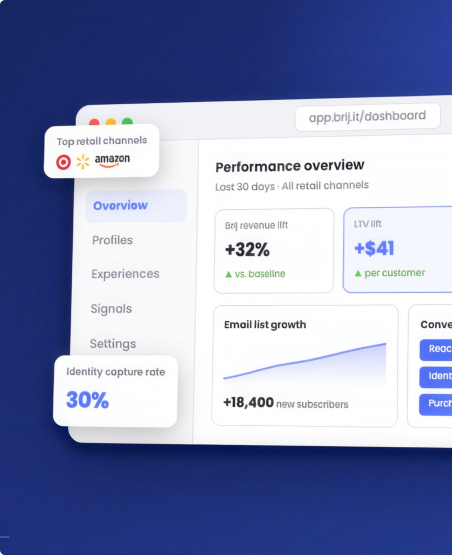
Personalization depends on knowing who you’re interacting with and understanding their interests and behavior. Connect what shoppers browse, click, and buy across visits and channels so each interaction builds on the last.
Move from fixed rules to adaptive personalization
Use AI to interpret signals across browsing, purchases, engagement and stated preferences. With your team setting the strategy, AI can continuously adjust audiences, product recommendations, message content, timing, and frequency as each shopper’s interests and behavior change.

"LLMs are adding another layer of disconnection between a brand and the customer. It will be that much more important for brands to control their own narrative and own first-party data to have that direct relationship."
Kait Stephens
CEO & Co-Founder
Interview with The CMO Wire by Attentive
7
Influence the next AI-assisted purchase
Teach shoppers what to bring to their next conversation
You can use marketing campaigns on direct channels to share about features that matter for different needs and connect those features to your products’ strengths.For example, a travel backpack brand could show how its features support certain types of trips. That guidance gives shoppers criteria they may bring into an AI conversation when deciding what to buy.
The next era:
Marketing that adapts to each customer
Shoppers are turning to AI to help them navigate the plethora of options at their fingertips for tailored guidance. They want brands to make shopping easier and more personal too: remembering their interactions, offering relevant recommendations, and making it simpler to find the right products.
Meeting those expectations starts with connecting what each customer has browsed, bought, and shared with your brand. Then using that context to decide which products to recommend and what message will be most relevant.
Making those decisions for every customer—as their behavior changes—is where AI agents can help. Marketers set the goals and the guardrails; AI agents help put that strategy into practice by adjusting content, recommendations, timing, and frequency for each individual shopper.
More relevant experiences help keep subscribers engaged and encourage shoppers’ next purchase—driving more revenue for brands.






That’s the thinking behind Attentive AI™ and the identity foundation that supports it:
Signal
is the foundation that connects browsing activity and engagement across visits and devices to shopper profiles, giving brands more context for the next interaction.
AI Grow
adapts when and how sign-up units appear based on shopper behavior, helping brands earn email and SMS subscriptions.
AI Journeys
personalizes the content, product recommendations, and timing of triggered messages as shoppers interact with your brand.
AI Pro
helps recognize more visitors, refine campaign audiences, tailor send times, and create messages in brand voice.

Together, these capabilities help brands make email, SMS, and push more responsive to the people receiving them. Wherever a shopping journey begins, the goal is to give customers a reason to choose your brand again.
Want to hear how brands are already applying this? Watch the webinar for a conversation with DSW, Cole Haan, and The Vitamin Shoppe on what these findings mean for acquisition, loyalty, and retention.
Methodology
The 2026 Attentive State of AI in Retail survey was conducted online through Rep Data from August 12–14, 2026. The final analytical sample included 3,054 US adults age 18 and older who reported browsing, researching, comparing, or purchasing a product in the past three months.
Results were weighted to US Census Bureau Vintage 2025 population benchmarks. “AI-assisted shoppers” refers to respondents who reported using a general AI chatbot for at least one of nine shopping-related activities listed in the survey during the preceding three months. Questions about a particular shopping experience asked AI-assisted shoppers to describe one recent experience. Generational comparisons cover Gen Z ages 18-29, Millennials ages 30-45, Gen X ages 46-61, and Baby Boomers ages 62-80.
Percentages may not total 100% because of rounding.
This report also includes perspectives from industry leaders interviewed for The CMO Wire by Attentive. Quotes are attributed to the speakers throughout the report and sourced from interviews for the following articles:
How Therabody Uses Connected-Product Behavior To Reveal What Consumers Actually Need
From TikTok Halos to AI Tollbooths, the New Omnichannel Reality Stresses the Need for First-Party Ownership
D2C Baby Food Delivery Brand Little Spoon Cracks The Code Of Long-Term Customer Trust Over Short-Term Promo Volume
Using Zero Party Data At First Contact Beats An Upsell On The Metrics That Matter