

.png)
.png)
The Chapters
1. Who shops with AI—and how often
2. The shopping decisions people bring to AI
3. How shoppers make decisions in AI conversations
4. Shoppers still look beyond AI for proof
5. Where shoppers buy—and how much they’re willing to let AI handle
6. Turning an AI-assisted purchase into a lasting relationship
7. Brands can influence the next AI-assisted purchase
Who shops with AI—
and how often
Shoppers can use AI to discover products, compare options, and find the best price—all before a brand knows they’re in market. But other sources still have influence. AI-assisted shoppers also turn to social media, word-of-mouth, editorial review websites, retailer websites and stores, and search engines.
.png)
Most AI-assisted shoppers use AI for at least half the products they shop for online
68% of consumers surveyed used a general AI chatbot (such as ChatGPT, Gemini, Claude, or Perplexity) for at least one shopping task in the past three months. We call this group AI-assisted shoppers.
61% of AI-assisted shoppers use AI tools for shopping at least once a week, and 90% do so at least monthly.
What’s more, AI plays a role in a substantial share of their online shopping. Nearly two-thirds of AI-assisted shoppers (63%) used a chatbot for at least half of the products they shopped for online in the past three months.
AI-assisted shoppers are more research-oriented
68% of consumers surveyed used a general AI chatbot (such as ChatGPT, Gemini, Claude, or Perplexity) for at least one shopping task in the past three months. We call this group AI-assisted shoppers.
61% of AI-assisted shoppers use AI tools for shopping at least once a week, and 90% do so at least monthly.
What’s more, AI plays a role in a substantial share of their online shopping. Nearly two-thirds of AI-assisted shoppers (63%) used a chatbot for at least half of the products they shopped for online in the past three months.
Shoppers who don’t use AI for shopping cite habit and trust concerns
68% of consumers surveyed used a general AI chatbot (such as ChatGPT, Gemini, Claude, or Perplexity) for at least one shopping task in the past three months. We call this group AI-assisted shoppers.
61% of AI-assisted shoppers use AI tools for shopping at least once a week, and 90% do so at least monthly.
What’s more, AI plays a role in a substantial share of their online shopping. Nearly two-thirds of AI-assisted shoppers (63%) used a chatbot for at least half of the products they shopped for online in the past three months.
What younger generations reveal about the future of AI in shopping
68% of consumers surveyed used a general AI chatbot (such as ChatGPT, Gemini, Claude, or Perplexity) for at least one shopping task in the past three months. We call this group AI-assisted shoppers.
61% of AI-assisted shoppers use AI tools for shopping at least once a week, and 90% do so at least monthly.
What’s more, AI plays a role in a substantial share of their online shopping. Nearly two-thirds of AI-assisted shoppers (63%) used a chatbot for at least half of the products they shopped for online in the past three months.
The shopping decisions
people bring to AI
For 85% of AI-assisted shoppers, making the right choice felt important in a recent shopping experience they described. As shoppers turn to AI to weigh their options on these important decisions, they give it a role in defining what a good choice looks like.
AI supports shoppers across the journey
—from discovery to purchase
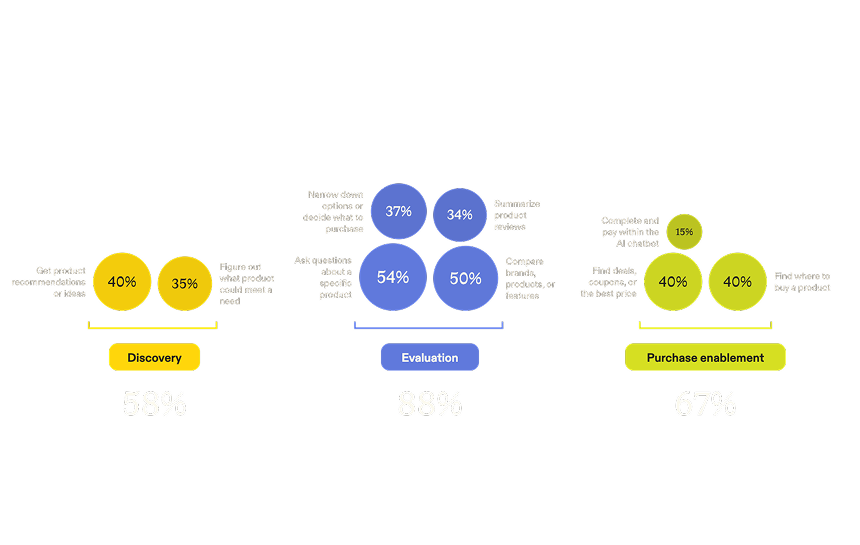
Evaluation is the most widely reported use of AI for shopping
68% of consumers surveyed used a general AI chatbot (such as ChatGPT, Gemini, Claude, or Perplexity) for at least one shopping task in the past three months. We call this group AI-assisted shoppers.
61% of AI-assisted shoppers use AI tools for shopping at least once a week, and 90% do so at least monthly.
What’s more, AI plays a role in a substantial share of their online shopping. Nearly two-thirds of AI-assisted shoppers (63%) used a chatbot for at least half of the products they shopped for online in the past three months.
AI-assisted shoppers are more research-oriented
68% of consumers surveyed used a general AI chatbot (such as ChatGPT, Gemini, Claude, or Perplexity) for at least one shopping task in the past three months. We call this group AI-assisted shoppers.
61% of AI-assisted shoppers use AI tools for shopping at least once a week, and 90% do so at least monthly.
What’s more, AI plays a role in a substantial share of their online shopping. Nearly two-thirds of AI-assisted shoppers (63%) used a chatbot for at least half of the products they shopped for online in the past three months.
AI often influences which products and brands shoppers consider or choose
68% of consumers surveyed used a general AI chatbot (such as ChatGPT, Gemini, Claude, or Perplexity) for at least one shopping task in the past three months. We call this group AI-assisted shoppers.
61% of AI-assisted shoppers use AI tools for shopping at least once a week, and 90% do so at least monthly.
What’s more, AI plays a role in a substantial share of their online shopping. Nearly two-thirds of AI-assisted shoppers (63%) used a chatbot for at least half of the products they shopped for online in the past three months.
How shoppers make decisions
in AI conversations
.png)
Shoppers can make decisions inside AI conversations that brands can’t see or personalize. We asked shoppers to recap one recent AI-assisted shopping experience. This data clues brands in about the needs and product details that matter in those conversations—and what shoppers may already have decided before visiting a brand’s website.
Shoppers bring specific needs and preferences into the conversation
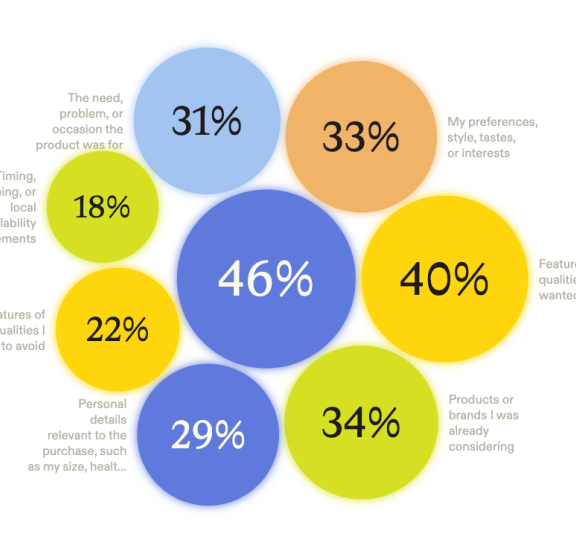
Nearly all AI-assisted shoppers (98%) gave the chatbot more than a general request during that experience.
Budget (46%) and desired features (40%) were the most common details shoppers shared. Clear pricing and feature information on product pages address those basics.
But more than half (52%) also shared personal preferences or details relevant to the purchase, such as their tastes, size, health needs, household, or living space.
Brands can make that context more explicit on their websites: who a product is for, which needs it meets, and how it fits different preferences.
Shoppers bring specific needs and preferences into the conversation
68% of consumers surveyed used a general AI chatbot (such as ChatGPT, Gemini, Claude, or Perplexity) for at least one shopping task in the past three months. We call this group AI-assisted shoppers.
61% of AI-assisted shoppers use AI tools for shopping at least once a week, and 90% do so at least monthly.
What’s more, AI plays a role in a substantial share of their online shopping. Nearly two-thirds of AI-assisted shoppers (63%) used a chatbot for at least half of the products they shopped for online in the past three months.
AI helps shoppers narrow their options and confirm existing preferences
68% of consumers surveyed used a general AI chatbot (such as ChatGPT, Gemini, Claude, or Perplexity) for at least one shopping task in the past three months. We call this group AI-assisted shoppers.
61% of AI-assisted shoppers use AI tools for shopping at least once a week, and 90% do so at least monthly.
What’s more, AI plays a role in a substantial share of their online shopping. Nearly two-thirds of AI-assisted shoppers (63%) used a chatbot for at least half of the products they shopped for online in the past three months.
More than half have moved forward in their shopping journey after using AI
68% of consumers surveyed used a general AI chatbot (such as ChatGPT, Gemini, Claude, or Perplexity) for at least one shopping task in the past three months. We call this group AI-assisted shoppers.
61% of AI-assisted shoppers use AI tools for shopping at least once a week, and 90% do so at least monthly.
What’s more, AI plays a role in a substantial share of their online shopping. Nearly two-thirds of AI-assisted shoppers (63%) used a chatbot for at least half of the products they shopped for online in the past three months.
Half say AI reduced the research they did elsewhere
68% of consumers surveyed used a general AI chatbot (such as ChatGPT, Gemini, Claude, or Perplexity) for at least one shopping task in the past three months. We call this group AI-assisted shoppers.
61% of AI-assisted shoppers use AI tools for shopping at least once a week, and 90% do so at least monthly.
What’s more, AI plays a role in a substantial share of their online shopping. Nearly two-thirds of AI-assisted shoppers (63%) used a chatbot for at least half of the products they shopped for online in the past three months.
Shoppers give AI both product criteria
and personal context
Shoppers still look beyond AI
for proof
.png)
While shoppers may be doing less research outside AI, brands still have an opportunity to help shoppers feel confident in a purchase decision.
Confidence in AI doesn’t eliminate the need for outside proo
For the shopping experience they described, 68% of AI-assisted shoppers were very or completely confident in the chatbot’s guidance before checking other sources.
Yet 93% looked for information or proof outside the chatbot while deciding whether to buy.
These groups overlap: 63% of AI-assisted shoppers were highly confident in the chatbot’s information and still checked elsewhere.
Shoppers bring specific needs and preferences into the conversation
68% of consumers surveyed used a general AI chatbot (such as ChatGPT, Gemini, Claude, or Perplexity) for at least one shopping task in the past three months. We call this group AI-assisted shoppers.
61% of AI-assisted shoppers use AI tools for shopping at least once a week, and 90% do so at least monthly.
What’s more, AI plays a role in a substantial share of their online shopping. Nearly two-thirds of AI-assisted shoppers (63%) used a chatbot for at least half of the products they shopped for online in the past three months.
AI helps shoppers narrow their options and confirm existing preferences
68% of consumers surveyed used a general AI chatbot (such as ChatGPT, Gemini, Claude, or Perplexity) for at least one shopping task in the past three months. We call this group AI-assisted shoppers.
61% of AI-assisted shoppers use AI tools for shopping at least once a week, and 90% do so at least monthly.
What’s more, AI plays a role in a substantial share of their online shopping. Nearly two-thirds of AI-assisted shoppers (63%) used a chatbot for at least half of the products they shopped for online in the past three months.
More than half have moved forward in their shopping journey after using AI
68% of consumers surveyed used a general AI chatbot (such as ChatGPT, Gemini, Claude, or Perplexity) for at least one shopping task in the past three months. We call this group AI-assisted shoppers.
61% of AI-assisted shoppers use AI tools for shopping at least once a week, and 90% do so at least monthly.
What’s more, AI plays a role in a substantial share of their online shopping. Nearly two-thirds of AI-assisted shoppers (63%) used a chatbot for at least half of the products they shopped for online in the past three months.
Half say AI reduced the research they did elsewhere
68% of consumers surveyed used a general AI chatbot (such as ChatGPT, Gemini, Claude, or Perplexity) for at least one shopping task in the past three months. We call this group AI-assisted shoppers.
61% of AI-assisted shoppers use AI tools for shopping at least once a week, and 90% do so at least monthly.
What’s more, AI plays a role in a substantial share of their online shopping. Nearly two-thirds of AI-assisted shoppers (63%) used a chatbot for at least half of the products they shopped for online in the past three months.
Where shoppers buy—and how much they’re willing to let AI handle
Brands and retailers still have a prominent role at checkout, even as some shoppers are comfortable letting AI place an order.
Shoppers bring specific needs and preferences into the conversation
For the shopping experience they described, 68% of AI-assisted shoppers were very or completely confident in the chatbot’s guidance before checking other sources.
Yet 93% looked for information or proof outside the chatbot while deciding whether to buy.
These groups overlap: 63% of AI-assisted shoppers were highly confident in the chatbot’s information and still checked elsewhere.
AI helps shoppers narrow their options and confirm existing preferences
68% of consumers surveyed used a general AI chatbot (such as ChatGPT, Gemini, Claude, or Perplexity) for at least one shopping task in the past three months. We call this group AI-assisted shoppers.
61% of AI-assisted shoppers use AI tools for shopping at least once a week, and 90% do so at least monthly.
What’s more, AI plays a role in a substantial share of their online shopping. Nearly two-thirds of AI-assisted shoppers (63%) used a chatbot for at least half of the products they shopped for online in the past three months.
More than half have moved forward in their shopping journey after using AI
68% of consumers surveyed used a general AI chatbot (such as ChatGPT, Gemini, Claude, or Perplexity) for at least one shopping task in the past three months. We call this group AI-assisted shoppers.
61% of AI-assisted shoppers use AI tools for shopping at least once a week, and 90% do so at least monthly.
What’s more, AI plays a role in a substantial share of their online shopping. Nearly two-thirds of AI-assisted shoppers (63%) used a chatbot for at least half of the products they shopped for online in the past three months.
Half say AI reduced the research they did elsewhere
68% of consumers surveyed used a general AI chatbot (such as ChatGPT, Gemini, Claude, or Perplexity) for at least one shopping task in the past three months. We call this group AI-assisted shoppers.
61% of AI-assisted shoppers use AI tools for shopping at least once a week, and 90% do so at least monthly.
What’s more, AI plays a role in a substantial share of their online shopping. Nearly two-thirds of AI-assisted shoppers (63%) used a chatbot for at least half of the products they shopped for online in the past three months.
Turning an AI-assisted purchase into a lasting relationship
Shoppers arriving from AI may spend less time on a brand’s website before buying—and learn less about the brand or what else it offers. This makes the late-stage buying journey and post-purchase experience more important for building familiarity and affinity.
People who shop with AI report loyalty to a broader set of brands
Shoppers bring specific needs and preferences into the conversation
Nearly all AI-assisted shoppers (98%) gave the chatbot more than a general request during that experience.
Budget (46%) and desired features (40%) were the most common details shoppers shared. Clear pricing and feature information on product pages address those basics.
But more than half (52%) also shared personal preferences or details relevant to the purchase, such as their tastes, size, health needs, household, or living space.
Brands can make that context more explicit on their websites: who a product is for, which needs it meets, and how it fits different preferences.
Shoppers bring specific needs and preferences into the conversation
68% of consumers surveyed used a general AI chatbot (such as ChatGPT, Gemini, Claude, or Perplexity) for at least one shopping task in the past three months. We call this group AI-assisted shoppers.
61% of AI-assisted shoppers use AI tools for shopping at least once a week, and 90% do so at least monthly.
What’s more, AI plays a role in a substantial share of their online shopping. Nearly two-thirds of AI-assisted shoppers (63%) used a chatbot for at least half of the products they shopped for online in the past three months.
AI helps shoppers narrow their options and confirm existing preferences
68% of consumers surveyed used a general AI chatbot (such as ChatGPT, Gemini, Claude, or Perplexity) for at least one shopping task in the past three months. We call this group AI-assisted shoppers.
61% of AI-assisted shoppers use AI tools for shopping at least once a week, and 90% do so at least monthly.
What’s more, AI plays a role in a substantial share of their online shopping. Nearly two-thirds of AI-assisted shoppers (63%) used a chatbot for at least half of the products they shopped for online in the past three months.
More than half have moved forward in their shopping journey after using AI
68% of consumers surveyed used a general AI chatbot (such as ChatGPT, Gemini, Claude, or Perplexity) for at least one shopping task in the past three months. We call this group AI-assisted shoppers.
61% of AI-assisted shoppers use AI tools for shopping at least once a week, and 90% do so at least monthly.
What’s more, AI plays a role in a substantial share of their online shopping. Nearly two-thirds of AI-assisted shoppers (63%) used a chatbot for at least half of the products they shopped for online in the past three months.
Half say AI reduced the research they did elsewhere
68% of consumers surveyed used a general AI chatbot (such as ChatGPT, Gemini, Claude, or Perplexity) for at least one shopping task in the past three months. We call this group AI-assisted shoppers.
61% of AI-assisted shoppers use AI tools for shopping at least once a week, and 90% do so at least monthly.
What’s more, AI plays a role in a substantial share of their online shopping. Nearly two-thirds of AI-assisted shoppers (63%) used a chatbot for at least half of the products they shopped for online in the past three months.
Brands can influence the next AI-assisted purchase
Just because brands don’t have visibility into AI shopping conversations doesn’t mean they can’t influence them.Brand messages can introduce products and explain which features matter before shoppers turn to AI. Shoppers may bring those ideas and criteria into their next conversation, giving brands a way to influence the options they ask a chatbot to evaluate.
Familiar brands and retailers remain important starting points
Nearly all AI-assisted shoppers (98%) gave the chatbot more than a general request during that experience.
Budget (46%) and desired features (40%) were the most common details shoppers shared. Clear pricing and feature information on product pages address those basics.
But more than half (52%) also shared personal preferences or details relevant to the purchase, such as their tastes, size, health needs, household, or living space.
Brands can make that context more explicit on their websites: who a product is for, which needs it meets, and how it fits different preferences.
Shoppers bring specific needs and preferences into the conversation
68% of consumers surveyed used a general AI chatbot (such as ChatGPT, Gemini, Claude, or Perplexity) for at least one shopping task in the past three months. We call this group AI-assisted shoppers.
61% of AI-assisted shoppers use AI tools for shopping at least once a week, and 90% do so at least monthly.
What’s more, AI plays a role in a substantial share of their online shopping. Nearly two-thirds of AI-assisted shoppers (63%) used a chatbot for at least half of the products they shopped for online in the past three months.
AI helps shoppers narrow their options and confirm existing preferences
68% of consumers surveyed used a general AI chatbot (such as ChatGPT, Gemini, Claude, or Perplexity) for at least one shopping task in the past three months. We call this group AI-assisted shoppers.
61% of AI-assisted shoppers use AI tools for shopping at least once a week, and 90% do so at least monthly.
What’s more, AI plays a role in a substantial share of their online shopping. Nearly two-thirds of AI-assisted shoppers (63%) used a chatbot for at least half of the products they shopped for online in the past three months.
More than half have moved forward in their shopping journey after using AI
68% of consumers surveyed used a general AI chatbot (such as ChatGPT, Gemini, Claude, or Perplexity) for at least one shopping task in the past three months. We call this group AI-assisted shoppers.
61% of AI-assisted shoppers use AI tools for shopping at least once a week, and 90% do so at least monthly.
What’s more, AI plays a role in a substantial share of their online shopping. Nearly two-thirds of AI-assisted shoppers (63%) used a chatbot for at least half of the products they shopped for online in the past three months.
Half say AI reduced the research they did elsewhere
68% of consumers surveyed used a general AI chatbot (such as ChatGPT, Gemini, Claude, or Perplexity) for at least one shopping task in the past three months. We call this group AI-assisted shoppers.
61% of AI-assisted shoppers use AI tools for shopping at least once a week, and 90% do so at least monthly.
What’s more, AI plays a role in a substantial share of their online shopping. Nearly two-thirds of AI-assisted shoppers (63%) used a chatbot for at least half of the products they shopped for online in the past three months.
of AI-assisted shoppers still prefer to complete checkout on a seller’s website or app
of shoppers who did not use AI for shopping.
Take action:
How to meet shoppers in the age of AI
AI is changing how shoppers discover products and decide what to buy. A shopper may research their options in a chatbot, arrive on your website with a product already in mind, and move quickly to checkout—spending little time getting to know your brand.
.png)





1
Expand on product information to help AI recommend and evaluate your products
Shoppers bring budgets, preferences, and specific needs into AI conversations. Give AI tools clear, useful information about your products and the situations they’re designed for across your website and amplify it through third-party sources.
Start with clear product details
Make sure your website includes thorough specs, features, benefits, use cases, and fit information on your products to enable LLMs to recommend your products when shoppers come to them with detailed requirements.
Add competitor comparisons
Shoppers use AI to compare their options and find the ideal solution for them. Your answers to what makes your product better than an alternative can be fuel for these types of conversations.
Build evidence on your website and off
When something changes on your website, update it everywhere else your brand sells. Some shoppers may ask an AI chatbot to look for options on a website they’re already familiar with.
Keep essential details up-to-date
Keep pricing and availability up-to-date for the shoppers who use AI to find products in stock and within their budget. Keep detailed policies, like your shipping, returns, and warranty policies, up-to-date too.
2
Build coverage beyond your website
Shoppers still look beyond AI for proof, and they leave conversations at different stages. Your website should help them compare, confirm, or buy from the page they land on.
Start your audit on a PDP, especially on mobile
Make reviews, product fit, delivery details, and returns easy to find. Include enough brand context to build confidence without requiring a trip to the homepage.
Offer the next useful step
Make reviews, product fit, delivery details, and returns easy to find. Include enough brand context to build confidence without requiring a trip to the homepage.
Address the unanswered question in follow-up
Make reviews, product fit, delivery details, and returns easy to find. Include enough brand context to build confidence without requiring a trip to the homepage.
3
Give shoppers the confidence to complete their purchase
AI-assisted shoppers subscribe to more brands across email, text, and app notifications. Make it easy to stay connected wherever their visit begins, with a clear reason to subscribe.
Check coverage and display rules
As shoppers may start their journey on different pages, consider where your sign-up units show up and how it adapts to their journey stage. If a shopper arrives on a PDP, instead of the generic popup on your home page, consider adapting it to the product they’re viewing. For shoppers who move quickly from product page to check out, add an opt-in option at checkout.
Test your approach for AI shoppers
AI shoppers come in more ready to buy as suggested by Adobe data. It may differ by industry, product, and brand, but it could be worth testing if you need as strong of an incentive to convert shoppers who are already coming in ready to buy.
4
Build direct relationships that earn the next purchase
Shoppers still look beyond AI for proof, and they leave conversations at different stages. Your website should help them compare, confirm, or buy from the page they land on.
Start your audit on a PDP, especially on mobile
Make reviews, product fit, delivery details, and returns easy to find. Include enough brand context to build confidence without requiring a trip to the homepage.
Offer the next useful step
Make reviews, product fit, delivery details, and returns easy to find. Include enough brand context to build confidence without requiring a trip to the homepage.
Address the unanswered question in follow-up
Make reviews, product fit, delivery details, and returns easy to find. Include enough brand context to build confidence without requiring a trip to the homepage.
5
Use AI to deliver the personalization shoppers expect
AI-assisted shoppers subscribe to more brands across email, text, and app notifications. Make it easy to stay connected wherever their visit begins, with a clear reason to subscribe.
Check coverage and display rules
As shoppers may start their journey on different pages, consider where your sign-up units show up and how it adapts to their journey stage. If a shopper arrives on a PDP, instead of the generic popup on your home page, consider adapting it to the product they’re viewing. For shoppers who move quickly from product page to check out, add an opt-in option at checkout.
Test your approach for AI shoppers
AI shoppers come in more ready to buy as suggested by Adobe data. It may differ by industry, product, and brand, but it could be worth testing if you need as strong of an incentive to convert shoppers who are already coming in ready to buy.
6
Influence the next AI-assisted purchase
AI-assisted shoppers subscribe to more brands across email, text, and app notifications. Make it easy to stay connected wherever their visit begins, with a clear reason to subscribe.
Check coverage and display rules
As shoppers may start their journey on different pages, consider where your sign-up units show up and how it adapts to their journey stage. If a shopper arrives on a PDP, instead of the generic popup on your home page, consider adapting it to the product they’re viewing. For shoppers who move quickly from product page to check out, add an opt-in option at checkout.
Test your approach for AI shoppers
AI shoppers come in more ready to buy as suggested by Adobe data. It may differ by industry, product, and brand, but it could be worth testing if you need as strong of an incentive to convert shoppers who are already coming in ready to buy.