


Here’s what marketers are asking Attentive about the new wave of mobile messaging.
2026 will be the year we get this RCS for Business show on the road. Many marketers find themselves navigating unfamiliar territory as this next generation of messaging begins to emerge. As more and more conversations are had, we're starting to hear similar questions across industries and verticals.
From implementation complexities to ROI concerns, the uncertainty is understandable. After all, adopting any new communication channel requires careful consideration, especially one that promises to fundamentally change how brands interact with their customers. Through our ongoing conversations with marketing teams across verticals, we've identified the most pressing questions that keep surfacing about RCS for Business.
We'll cut through the complexity and address these frequently-asked questions head-on, giving you the clarity needed to make informed decisions about incorporating RCS for Business into your marketing stack.
1. What is RCS messaging?
Rich Communication Services (RCS) is a messaging protocol that represents a direct upgrade to the universal SMS and MMS standards we've all been using for decades. RCS delivers current-generation support for both peer-to-peer messaging (think texting between friends) and application-to-peer messaging (brands communicating with customers).
The key difference? RCS supports larger and more dynamic file sends, which unlocks a whole new level of capability—high-quality images and videos, rich media carousels, message reactions, interactive buttons, and more. While SMS and MMS run over cellular networks, RCS operates over data networks, enabling these enhanced features that simply weren't possible before.
2. What is RCS for Business? How does it work?
RCS for Business is the business-to-consumer application of RCS messaging—an "A2P" (application-to-person) channel reserved exclusively for carrier-reviewed and approved brands. This verification ensures customers can trust the messages they receive.
What sets it apart? Rich, interactive features like verified sender IDs, product carousels, high-quality media, suggested replies, and interactive actions. And the platform continues to evolve—new capabilities like webview support and enhanced interactivity are actively being released, giving brands even more tools to create personalized subscriber experiences.
The result? Your text messages become interactive, visual conversations that drive engagement and revenue.
If you’re ready to see how that experience can come to life for your brand, explore Attentive’s RCS for Business.
3. What is an RCS for Business Agent?
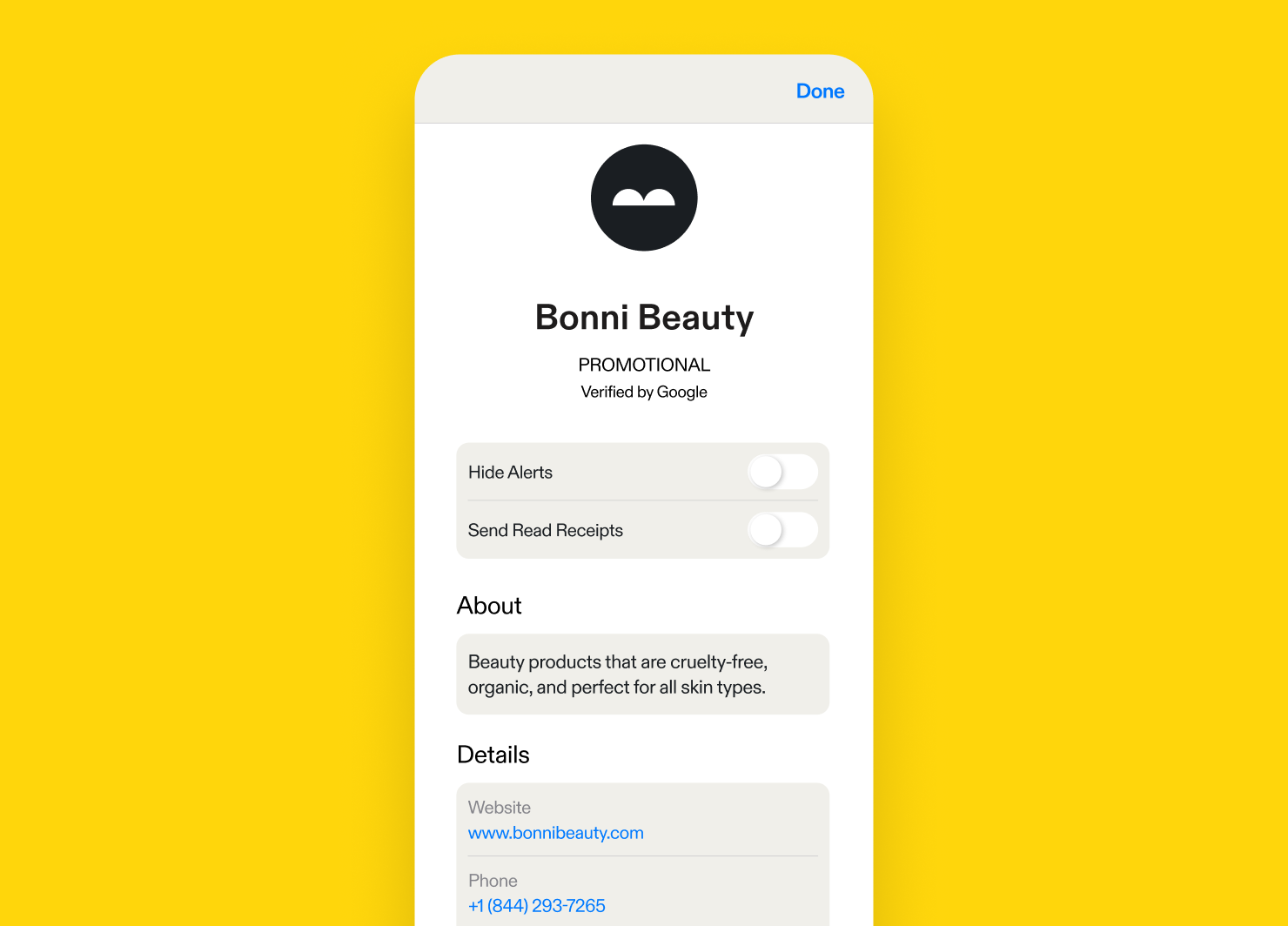
An RCS Agent is a branded sender that’s been verified by the carriers & Google, and includes pre-populated information about your brand (i.e. name, contact information, and more).
When receiving an RCS message as a subscriber, they’ll receive it from “Your Brand” instead of a long code or a shortcode, as was previously the experience with SMS & MMS. This means that every interaction with your brand through the text channel will be both branded, and trustworthy.
4. Which operating systems support RCS Business Messages?
The vast majority of devices in the US are now enabled to receive RCS messages:
Apple: Apple started supporting RCS with the release of iOS 18.1, and adoption has been swift—95% of Apple devices are now running iOS 18.1 or newer, meaning nearly all iPhone users can receive RCS messages.
Android: RCS has been the default messaging protocol on Android devices since 2018, giving the platform years of maturity and widespread compatibility.
Bottom line? The infrastructure is in place. The vast majority of your subscribers—regardless of whether they're on iPhone or Android—can now receive RCS messages, making it a viable channel for reaching your entire customer base.
5. What features does RCS for Business have that SMS or MMS don’t?
RCS for Business includes a whole host of messaging features that aren’t supported on SMS or MMS. These new features fall into three categories:
Branded threads
Verified Sender: Verification gives subscribers trust in the messages they receive which we’ve seen increase CVRs.
Custom Branding: Companies can keep brand consistency by embedding brand elements such as name, logo, and colors on screen without needing a contact card.
Interactive features
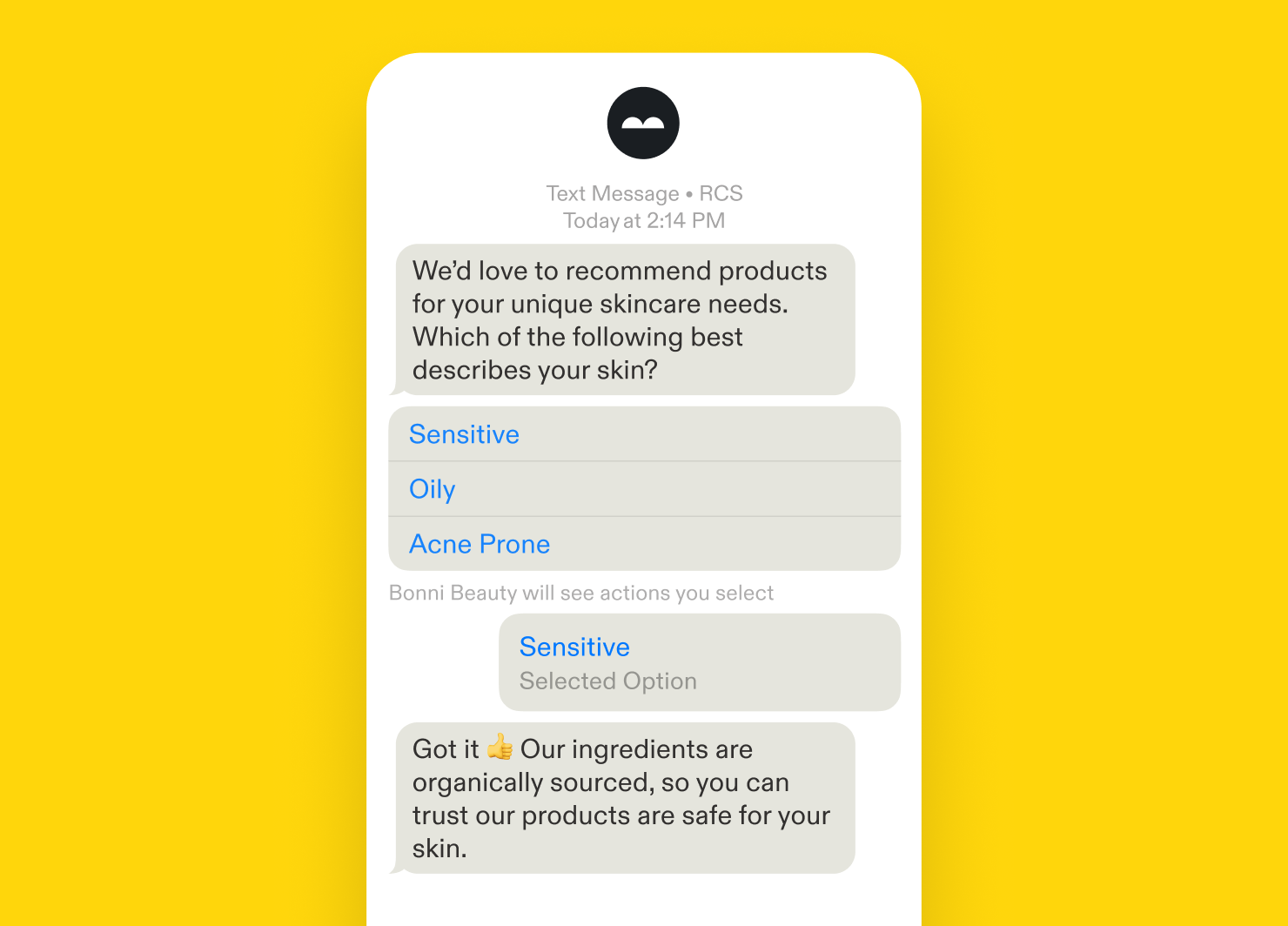
Suggested Replies and Actions: Clickable buttons embedded within the rich media card or displayed separately make it simple for the user to respond to the image or open the link in a web browser, or inside an app.
Rich media
Rich Media Cards: Including rich content like images, GIFs, documents, location info, and audio/video.
Rich Media Carousels: Combining rich media cards into a single interactive unit allows businesses to provide a chat-app experience in the messaging inbox without installing additional apps.
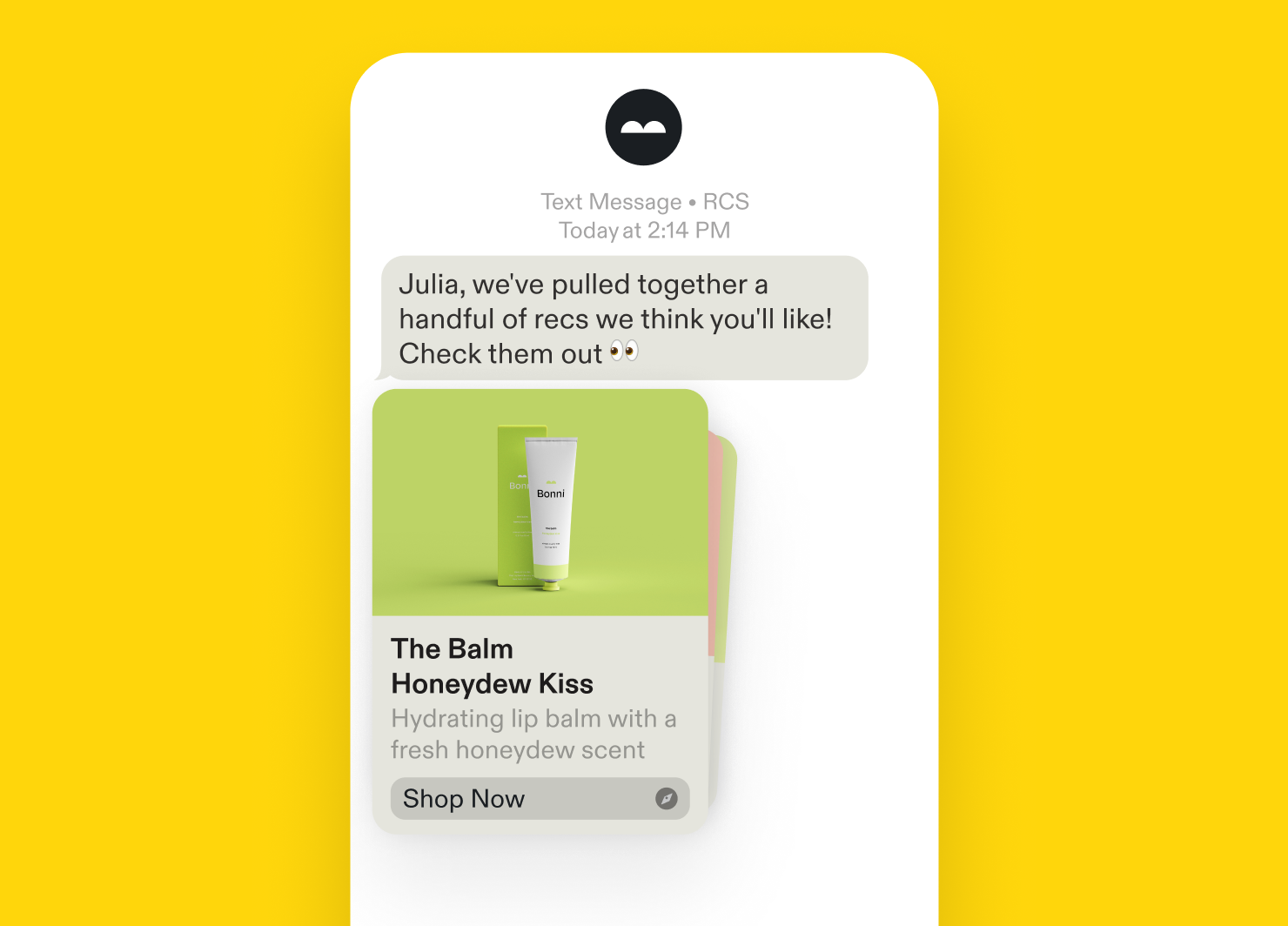
One thing to note about the rich media capabilities, is the fact that the new max file size will be 100MB, compare that to the 500KB today. This alone will give brands the ability to send more engaging pieces of content.
The most exciting thing about RCS for Business is that it’s a rapidly evolving channel. New features and capabilities will be developed as the channel continues to evolve.
6. Why are we (and the rest of the industry) so excited about it?
AI-powered RCS unlocks truly engaging, interactive shopping experiences that simply weren't possible with traditional SMS. It's the first channel that brings the full online shopping experience directly into messaging—complete with rich visuals, interactivity, and seamless checkout.
Here's what makes RCS transformative for 1:1 engagement at scale:
Deeper shopper insights. Collect detailed first-party data through suggested replies that feel natural to customers, giving you a clearer picture of preferences and intent without creating friction.
Enhanced discovery and consideration. Display products dynamically with rich media carousels, high-quality images, and interactive elements that make browsing feel native to the messaging experience.
Frictionless mobile checkout. Guide customers through checkout directly in their messaging app—no redirects, no app downloads, just a smooth path to purchase that reduces cart abandonment.
Meaningful post-purchase engagement. Create personalized follow-ups that keep the conversation going, building loyalty and encouraging repeat purchases.
This is the first truly significant, generational shift in mobile messaging since SMS and MMS launched decades ago. RCS has the potential to completely transform how brands connect with customers—turning simple text messages into rich, interactive experiences that drive engagement and revenue.
7. What is the RCS experience like as a shopper?
First, RCS is a fully branded and trustworthy experience. Instead of receiving a message from a short or long code, subscribers will receive a message from what’s called an “RCS Agent.” An RCS Agent is a branded sender that’s been verified by the carriers and Google, and includes pre-populated information about your brand (i.e., name, contact card, etc.).
Second, it's more engaging. It unlocks a number of new content types that we expect to improve a subscriber’s experience when interacting with a brand. This includes new features like rich media cards (with clear CTAs), full-resolution video and images, and multi-product “swipeable” carousels.
Third, RCS for Business is a more personalized and interactive experience. New features, like suggested replies and suggested actions make it easy and intuitive to encourage subscribers to engage with experiences (and, as a result, capture valuable first-party data).
8. Are RCS Business Messages the same on Android and iOS?
While the RCS for Business protocol is standardized across the industry, the actual UI/UX experience differs slightly between Android and iOS (similarly to how SMS/MMS display slightly different across the two operating systems). All functionality available on one operating system will be available on the other, but the experience varies ever-so slightly.
Now that both Android and iOS devices support RCS for Business, brands have an unprecedented opportunity to reach virtually all smartphone users with more engaging, personalized, and trustworthy messaging experiences. As this technology continues to evolve and new capabilities emerge, particularly when combined with AI-driven personalization, RCS for Business isn't just another channel—it's the foundation for the next generation of customer engagement.
For brands looking to stay ahead of the curve in mobile marketing, understanding and implementing RCS for Business isn't just an option—it's becoming an essential strategy for future success.
Looking to learn more about RCS for Business? Check out our RCS Content Hub where you can find more articles like the below: