
From holiday gifting to last-minute delivery and post-Christmas shopping, here’s how to keep your December campaigns relevant as customer needs change.
There comes a point in December when the question isn't what to buy. It's what can still arrive on or before December 25.
Until then, customers have time to browse gift guides, compare products, and find something they'll feel good about giving. But as shipping deadlines pass, even the most thoughtful recommendation can fall short if it won't arrive in time.
And the shift doesn't end on December 25. Gift cards get redeemed, post-holiday sales begin, and customers start shopping for themselves again.
For marketers, December calls for more than a calendar full of holiday campaigns. It means knowing when to shift from gift discovery to delivery certainty, when to offer a different way to shop, and when to move on from gifting altogether.
The opportunity is to make each message useful for what customers can actually do next.
Here are the December moments, strategies, and campaign ideas to help you do that.
December marketing calendar: key dates and shopping moments
December has plenty of marketing opportunities, but the most important dates aren't always holidays. Shipping deadlines, inventory availability, and the final days for holiday pickup can matter just as much.
Shipping deadlines vary by retailer, carrier, product, and destination. Confirm your actual fulfillment dates before building campaigns around them.
You don't need a campaign for every occasion. Focus on the moments that genuinely change what your customers need.
1. Help customers finish their holiday shopping
By December, many shoppers have already spent weeks browsing gifts, comparing products, and making purchases. Others are still figuring out what to buy.
Plan now to use what customers browse and buy during Cyber Week to make December recommendations more useful.
- Browsed gifts but didn't purchase? Bring back relevant products or recommend similar options.
- Purchased from a gifting collection? Suggest complementary gifts or other categories they may still be shopping.
- Repeatedly viewed one product? Highlight relevant reviews, product details, or availability.
- Already completed a purchase? Adjust follow-up messages so they aren't repeatedly receiving promotions for something they just bought.
AI Journeys can help brands use browsing and purchase signals to personalize what customers see rather than sending everyone the same holiday gift guide.
And don't underestimate the value of making decisions easier.
An email organized around "Gifts Under $50" or "For the Person Who Has Everything" gives someone a useful place to start. An SMS featuring products from a category they've already explored can help them pick up where they left off.
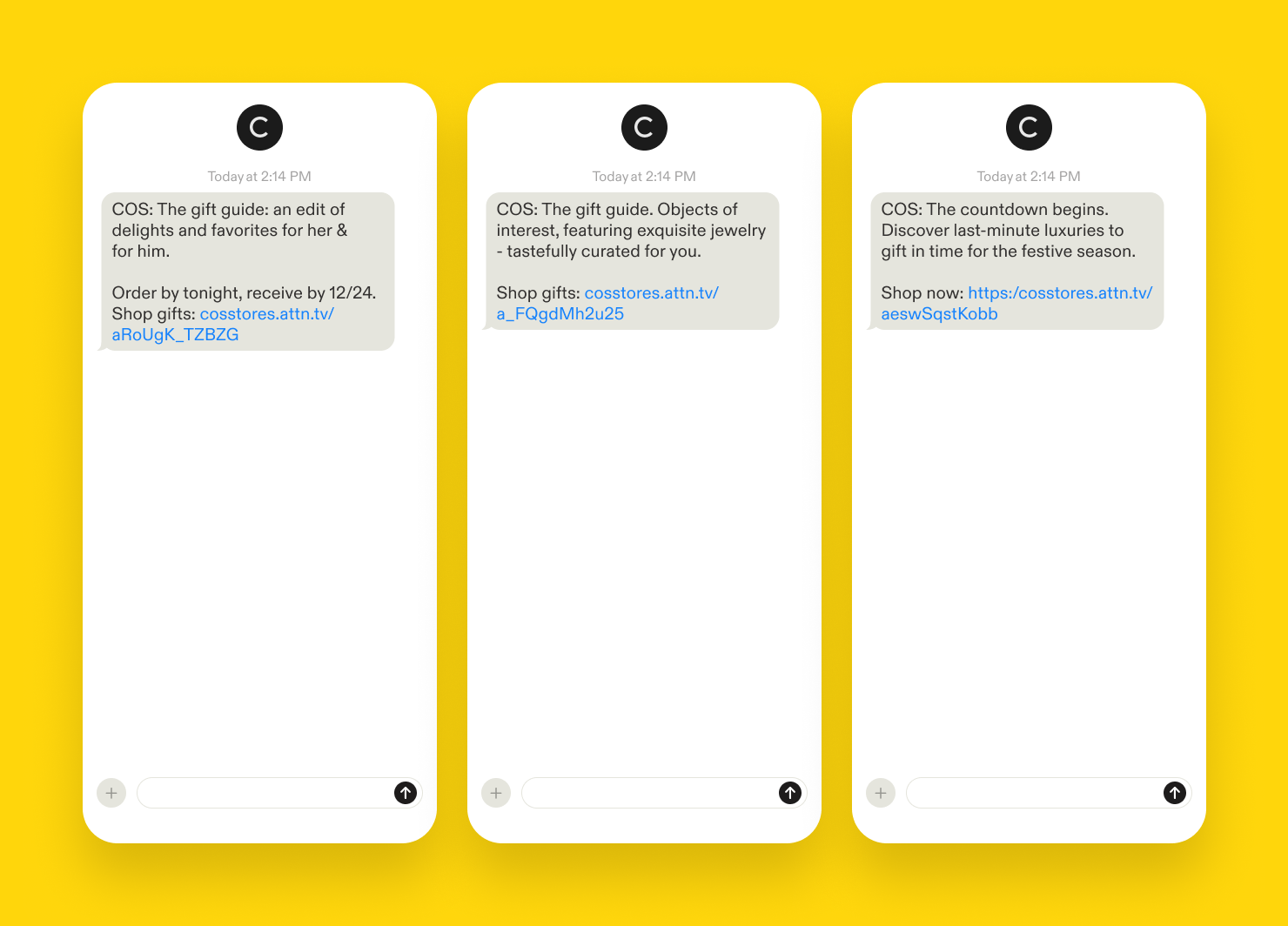
The goal is to make finishing their list easier, not simply remind them that the holidays are approaching.
2. Make delivery certainty part of your messaging
As the holidays get closer, a product's arrival date can become just as important as the product itself.
Someone shopping for a gift on December 5 may have several shipping options. By December 20, those options could be very different.
Your messaging should reflect that.
Before shipping deadlines:
- Highlight products eligible for holiday delivery.
- Share accurate ordering deadlines.
- Recommend giftable products based on customer interest.
- Use SMS or push for timely reminders when a deadline is approaching.
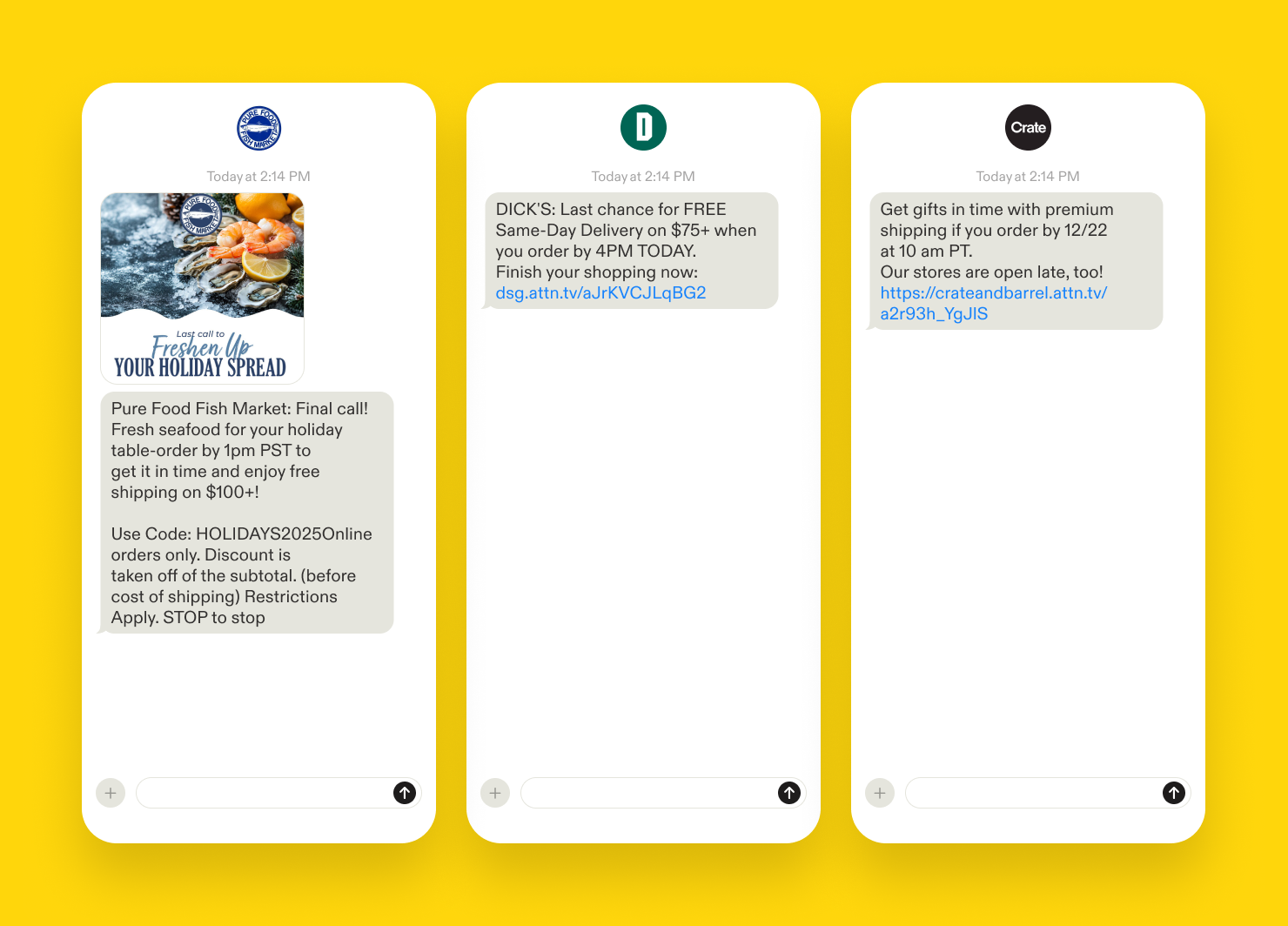
After standard shipping deadlines:
- Stop positioning ineligible products as gifts that will arrive before Christmas.
- Highlight expedited shipping where available.
- Feature products eligible for local pickup.
- Introduce digital gift cards or other instantly available options.
This is where personalization needs more than customer interest alone.
A shopper may have viewed a product three times, but if it won't arrive before Christmas, another recommendation for that item may not help them finish their shopping.
Customer behavior, product availability, and fulfillment information should work together to determine what gets promoted.
The best last-chance message doesn't just create urgency. It gives customers an option they can still act on.
3. Give last-minute shoppers options, not just urgency
As Christmas approaches, holiday messaging naturally shifts toward countdowns, shipping deadlines, and last-chance reminders.
But "Hurry, time is running out" only goes so far. Customers also need to know what they can still buy, how they'll receive it, and whether it will arrive when they need it.
As delivery windows close, make the remaining options easier to find. That might mean highlighting products eligible for expedited shipping, promoting local pickup, or introducing digital gifts that don't require shipping at all.
The channels you use can support different parts of that experience.
Email: Introduce last-minute gifting options and clearly explain how customers can receive them.
SMS: Communicate a verified ordering or pickup deadline to relevant subscribers.
Push: Highlight an available last-minute option or notify interested shoppers when a product returns to stock.
A message that says "Order by 2 PM for pickup tomorrow" gives customers more useful information than another generic "Last Chance!" headline.
Urgency gets someone's attention. Knowing they still have options gives them a reason to act.
4. Put Cyber Week learnings to work in December
December campaigns need to be ready before Cyber Week wraps up. And once the results come in, there's an opportunity to use what you've learned to inform the campaigns and journeys still ahead.
Start by looking at which messages, offers, and audiences performed best. Did certain product categories generate more interest than expected? Were customers more responsive to early access or last-chance reminders? Which campaigns brought in new shoppers who may be worth re-engaging?
Those insights can help you decide what to carry into December, whether that's a successful creative approach, a personalized follow-up, or a journey built around what customers have already shown interest in.
AI can also help make that work easier. For example, Attentive MCP connects tools like Claude and ChatGPT to approved Attentive data and workflows, allowing marketers to retrieve campaign reporting and prepare follow-up campaigns or journeys for review.
{{pistachio-one}}
Use those findings to decide which approaches deserve another look in December, while keeping your customers' changing needs in mind.
As AI becomes a bigger part of how marketers analyze performance and plan what's next, there's an opportunity to spend less time gathering information and more time acting on what you've learned.

5. Don't let December end on Christmas Day
The days between Christmas and New Year's have their own shopping opportunities.
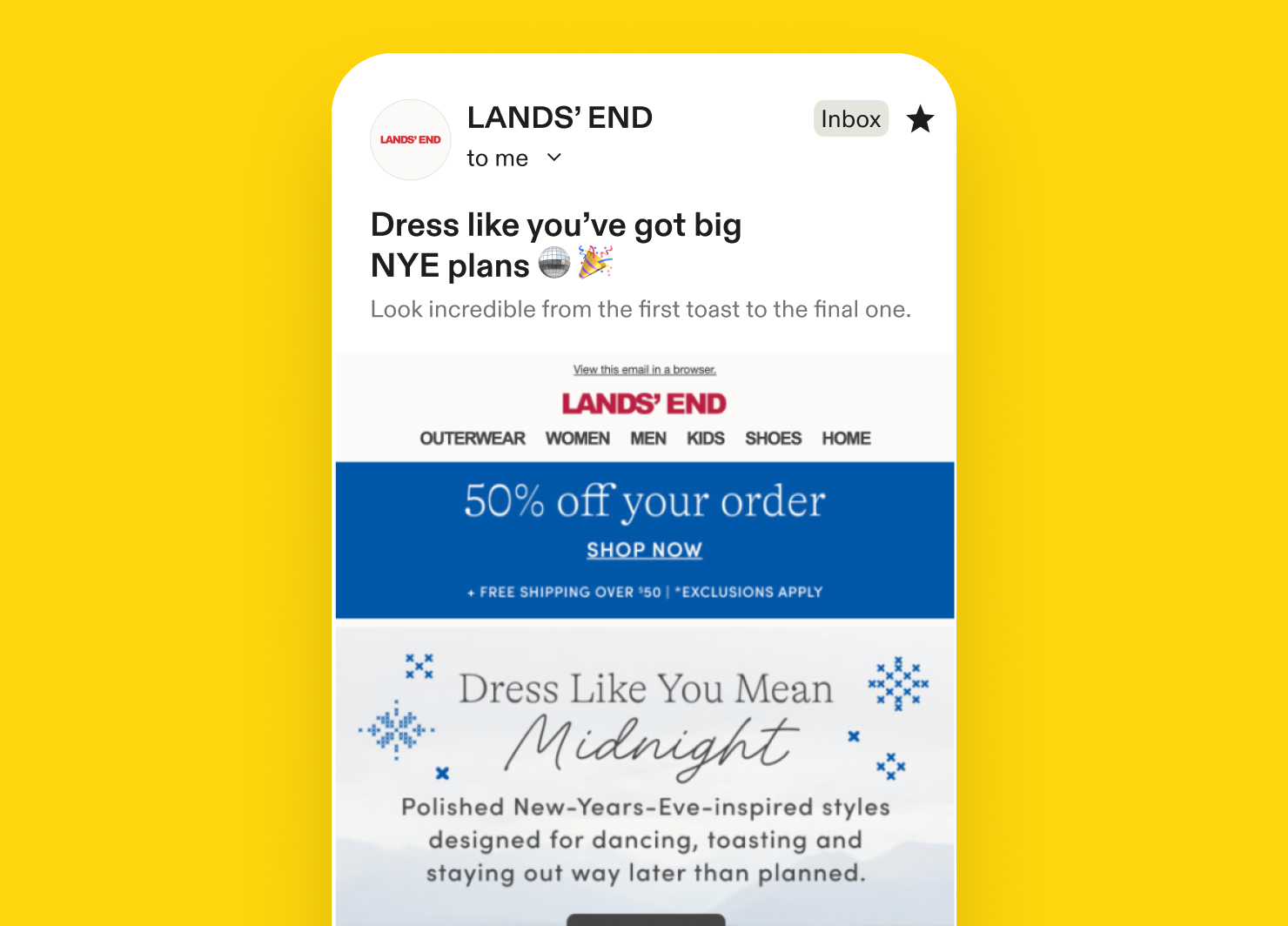
Holiday gifting may be winding down, but customers are redeeming gift cards, making exchanges, shopping post-holiday promotions, preparing for New Year's Eve, or buying things they didn't receive as gifts.
For some brands, it's also a natural moment to shift from gifting to self-purchase.
Consider what customers might want next:
- Gift-card holders: Help them explore products within their available balance or favorite categories.
- Recent gift purchasers: Share relevant complementary products or useful post-purchase content.
- Post-holiday shoppers: Introduce seasonal promotions or products they've previously shown interest in.
- New Cyber Week customers: Continue the relationship with product education, loyalty benefits, or relevant recommendations.
- New Year's shoppers: Highlight products connected to celebrations, organization, wellness, or January routines.
A customer who bought during Cyber Week doesn't necessarily need another sitewide promotion. Someone who was given a gift card may be ready to check out your brand for the first time or purchase that item they’ve had their eye on.
Use those differences to help determine what your next move will be.
December 26 isn't the end of the holiday marketing calendar. It's the beginning of a different conversation.
[image-modal-trigger-1] [data-bg="#FFC0CB"]
[image-modal-trigger-1]
[image-modal-source-1]

[image-modal-source-1]
December campaign ideas by customer moment
Looking for ideas to round out your December calendar? Start with what customers are trying to accomplish.
{{pistachio-two}}
Final thoughts
December marketing changes as the month goes on.
Early on, customers may need help choosing gifts. Closer to Christmas, they need to know what will arrive in time. And after the holiday, they may be shopping for entirely different reasons.
The most useful campaigns recognize those changes.
Use what customers have already told you, pay attention to what's still available, and make sure your next message helps with what they're trying to do now.
A good December strategy doesn't just follow the holiday calendar. It keeps up with the decisions customers are making along the way.