Recognizing more of your subscribers is one of the biggest growth levers available. Here’s how to build an identity foundation that maximizes results from the program you already have.
Subscribers show up as anonymous visitors more often than you’d expect.
As they browse on their phone, then their laptop, and return from an ad later, traditional platforms see a handful of strangers with weak intent instead of one shopper that’s ready to buy.
And privacy regulations and shortening cookie lifespans are amplifying the problem.
So customer profiles get fragmented, personalization loses accuracy, and the triggered messages that make up the majority of many brands’ email, SMS, and push revenue don’t fire.
The result? Missed opportunities to connect with customers and earn their business.
But when brands improve customer recognition, they see remarkable results: a 20% increase in conversion rates overall and 95% higher triggered email revenue.
To recognize more subscribers and earn more revenue, brands need to fundamentally rethink identity and adopt a solution that enables a high-performing messaging program.
Read on to learn the top three things to think about when looking for an identity solution.
1. Build identity graphs with a customer’s phone number at the center
75% of shoppers have at least two active personal email addresses.
So the most resilient identity solutions anchor on customer phone numbers. Unlike email addresses that shoppers cycle through or get hidden behind proxies, phone numbers are the most stable identifiers. 75% of consumers only have one number. They keep the same number for years—even decades—and they use it across all their other devices.
With a customer’s phone number at the center, you can create an identity graph—a web that links all of a customer’s IDs to a single unified profile.
That includes their phone number, email addresses, device information, location, browser, IP address, and third-party identifiers from integrations like their loyalty ID or ecommerce platform ID.
When any one of these identifiers appears, you can connect it back to the customer even when individual signals disappear (cookies expire, email addresses change, or the consumer switches devices).
2. Use server-side tracking to extend your recognition window
Cookie limitations don't have to mean starting from scratch every week.
When cookies are stored directly in a shopper’s browser (client-side), they’re subject to browser restrictions. Safari deletes them after seven days, and privacy modes used on any browser will block them completely.
But when identity data is processed and stored on secure servers (server-side) instead of the shopper’s browser, you can maintain recognition far beyond browser limits. These can last up to a year.
Plus, most traditional tags that are used to track consumer behavior are added to Google Tag Manager. The problem is that ad blockers block anything in Google Tag Manager, making customers anonymous again.
What to look for: A tracking solution that places a tag directly on your site, so you don’t lose traffic visibility from ad blockers or expired cookies—like the Enhanced Attentive Tag.
To be clear: This isn’t about circumventing privacy—it’s about maintaining the relationship with subscribers who’ve explicitly opted in to receive personalized messages from you.
Shoppers expect you to remember the interactions you share together. In our 2026 Personalization Trends report:
- 71% of shoppers said they expect brands to remember what they viewed or added to their cart if they switch devices or return later
- 74% said they’re more likely to purchase when a brand helps them pick up where they left off.
Server-side identity solutions make that possible by extending recognition.
3. Connect first-party data to unified customer profiles
With third-party cookies restricted, first-party data becomes your foundation for sustainable growth. The key is connecting this data to unified customer profiles.
When someone browses your new collection, abandons a cart, and tells you their style preferences in a quiz, these bits of information should build on each other to make your next interaction more relevant—not live in silos.
Successful brands keep building these profiles over time. Behavioral data accumulates naturally as shoppers engage with your brand. Zero-party data gets collected strategically at moments when customers can see clear value in sharing:
- An opt-in form that asks what product categories a shopper is interested in
- A quiz that gathers subscriber preferences while helping them find the right product
- A survey that delivers personalized gift recommendations ahead of BFCM while helping you understand their shopping intentions

With a modern identity solution, your data gets connected to the customer profile across all your touchpoints. Behavioral signals from browsing, message engagement, and purchases combine with preferences you gather from sign-up units, quizzes, and surveys.
With all this data in one place, SMS engagement informs email personalization, quiz data informs segmentation, and you can send the right triggered message at the right time for each subscriber. Every interaction strengthens the customer profile so you can send more relevant messages.
Put modern identity into practice
For brands looking to strengthen subscriber recognition, Attentive Signal brings these capabilities together in one place so you can:
- Resolve multiple identifiers into a single shopper profile
- Extend recognition beyond short-lived browser cookies with server-side tracking
- Power more relevant email and SMS campaigns with a full customer view
Learn more about Attentive Signal and get a demo.
Real results: Stronger identity means more behavioral flows, better personalization, and coordinated messages across channels
Once you’ve set up your identity foundation to recognize your subscribers and are gathering your data into unified customer profiles, the real value emerges. Every piece of customer data becomes actionable intelligence that lets you send more relevant messages and drive more revenue.
With strong identity resolution, your triggered journeys fire when customers take action, personalization becomes truly individualized, and cross-channel messaging works in harmony.
Send triggered messages at every opportunity
Triggered journeys drive the majority of email and SMS revenue, but they only work if they get sent to subscribers. And they only get sent to subscribers when you can identify who’s on your site.
When you improve identity resolution, the impact on triggered journeys is immediate and dramatic.
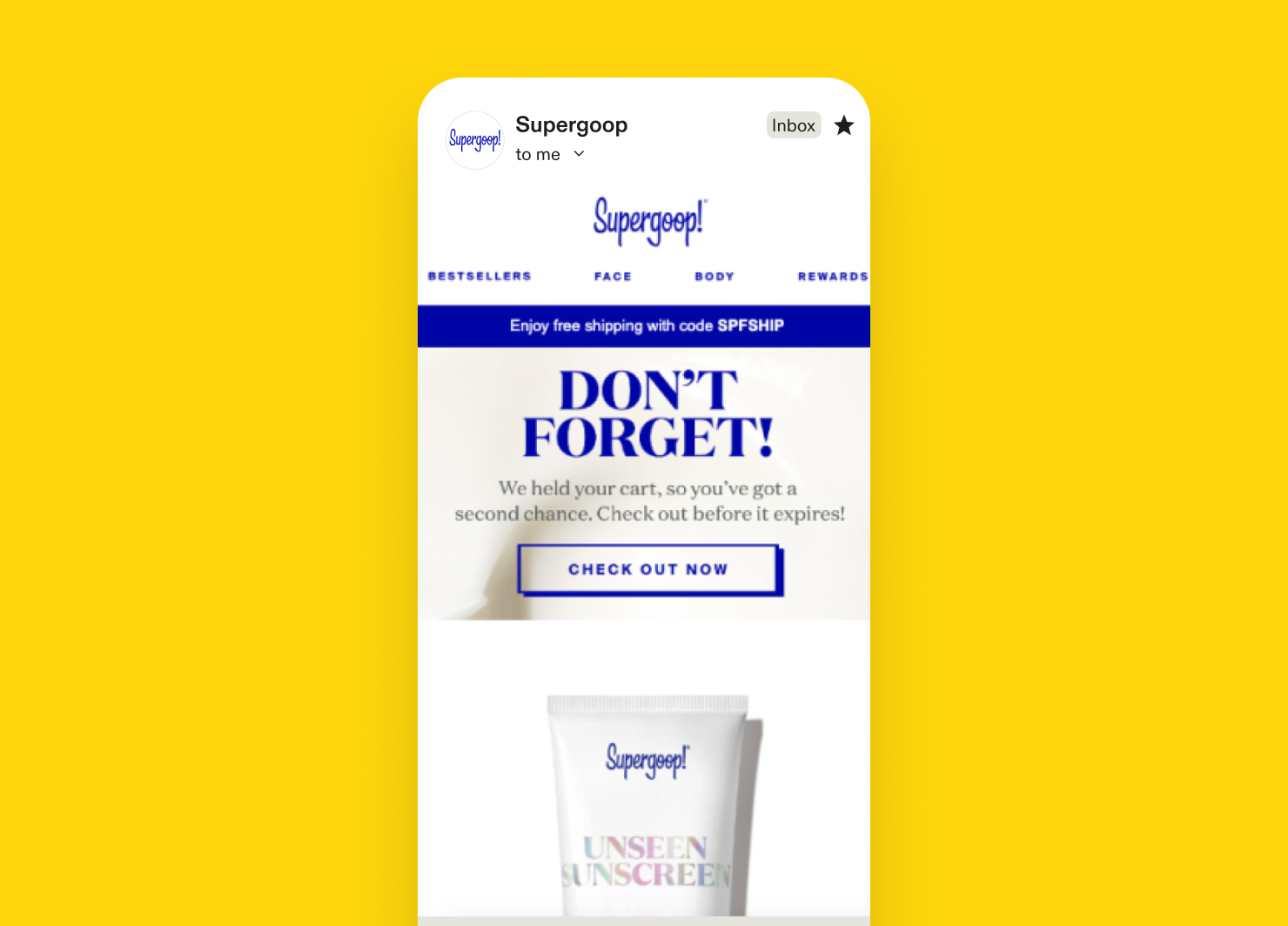
From better subscriber recognition alone, Supergoop! saw:
- 49% year-over-year increase in email journey deliveries
- 67% more revenue per send from top-performing email and SMS journeys
They weren't pouring time into making complex flows, optimizing send times, or A/B testing their messages to perfection. They were just recognizing more of the subscribers who were already shopping on their site and sending messages that match their customers' behavior.
More recognition means more triggered messages get sent. More triggered messages mean more revenue.
But send volume is just the beginning. Once you’re capturing these opportunities, you can make each message work harder through advanced personalization.
Make every message more relevant
According to the 2026 Attentive Marketer Pulse, brands that personalize are 3.5x as likely to report improved messaging performance year-over-year. So in addition to sending more triggered messages, a strong identity foundation helps you craft messages that resonate with shoppers—and drive action.
Because you’re identifying subscribers more consistently, you can tie their behavior back to their customer profile, rather than that behavior staying anonymous. These detailed profiles give AI engines the context they need to personalize messages accurately at scale.
With this unified customer view, AI-powered personalization engines can:
- Personalize entire journey flows
- Predict optimal send times for each customer
- Identify high-intent audiences for campaigns
The result: Every message becomes more relevant, driving measurably higher revenue for your brand.
Coordinate messages across channels more effectively
Aligning your email and SMS campaigns without unified customer profiles makes it easy for wires to get crossed. You might send an abandoned cart follow-up by text when that subscriber has already converted by email. Or continue emailing promotions to someone who only engages with your texts.
Not ideal for your ROI or subscriber retention, as 67% of shoppers are more likely to unsubscribe if they keep receiving reminders about a product after they’ve purchased it.
Consumers reward coordination when it feels connected rather than repetitive. From Attentive’s 2026 Personalization Trends report:
- 57% of shoppers are more likely to purchase when they see the same promotion across channels.
- But 73% want follow-up messages to add something new instead of repeating the same message.
Plus, the 2026 Attentive Marketer Pulse shows that well-coordinated messaging programs are 1.6x as likely to report improved performance year-over-year compared to programs without cross-channel coordination—jumping to 1.8x if coordination is personalized.
When you have complete customer profiles that connect all your customer data, you have a clearer picture of engagement and can send messages that match a shopper’s interactions with your brand.
That subscriber who never opens emails? They’re highly active via SMS, so send them more texts. The customer who browses extensively after receiving an email, but buys via text? You know which channel gets them interested and how to get them to purchase.
Being able to make smarter decisions about when and where to send messages prevents you from sending too many messages, saving money while preserving the customer relationship.
Dive deeper: Learn how to improve cross-channel coordination across email, SMS, and push to earn more revenue.
Your identity advantage starts with seeing the whole shopper
Your customers engage through multiple email addresses, devices, and channels—yet traditional platforms treat these as separate people, fragmenting your view and limiting your marketing impact.
As shoppers demand more relevant experiences—while privacy regulations tighten and cross-channel behavior becomes the norm—subscriber recognition becomes the foundation of a high-performing email and SMS program.
Attentive’s identity infrastructure is fundamentally different. Attentive Signal resolves a shopper’s identifiers into a single, unified profile. At its core, the Enhanced Attentive Tag provides durable server-side tracking, extending visibility beyond browser cookies that expire after seven days.
With that unified profile, you can market to people based on their full relationship with your brand, enabling you to:
- Trigger journeys you’d otherwise miss
- Personalize with greater accuracy
- Suppress repetitive messages
- Coordinate seamlessly across email, SMS, RCS, and push notifications
The impact is measurable: Attentive recognizes more returning visitors than traditional ESPs—driving 20% higher conversion rates overall and 95% more triggered email revenue.
Ready to recognize more visitors and grow your revenue? Learn more about Attentive Signal and book a demo.

.png)