

Most ecommerce brands think they have an omnichannel strategy—what they actually have is a multichannel presence, and knowing the difference changes everything.
Today's average consumer uses more than six touchpoints before making a purchase—switching between social media, search engines, brand websites, and marketplaces before they ever hit "buy."
The distinction between multichannel and omnichannel might sound like marketing jargon, but it represents a fundamental difference in how you think about and serve your customers. Multichannel is about being present in multiple places. Omnichannel is about making those places work as one.
Research shows that omnichannel shoppers spend 1.5 times more each month than single-channel buyers, and companies with strong omnichannel engagement strategies retain 89% of their customers compared to just 33% for those with softer strategies.
So which approach is right for your business?
The answer isn't as simple as "omnichannel is better." In fact, jumping to an omnichannel strategy before you're ready can drain resources and create more problems than it solves. The key is understanding what each approach actually means, recognizing where your business is today, and making the strategic choice that aligns with your goals, resources, and customer expectations.
Key takeaways
- The real difference between multichannel and omnichannel (and why it matters)
- How to evaluate which approach makes sense for your business stage and goals
- How leading brands are putting omnichannel into practice—and the results they're driving
- What it actually takes to evolve from a multichannel presence to a true omnichannel strategy
Because the real question isn't which channels you're on. It's whether your strategy is built around your channels, or around your customer.
What is multichannel marketing?
Multichannel marketing is the practice of reaching customers across multiple independent channels — each with its own data, messaging, and strategy — with the primary goal of maximizing reach.
But here's the key detail: each of those channels operates independently. They have their own inventory, their own messaging, their own promotions, and often their own team. A sale on Amazon doesn't automatically sync with your website. A customer who emails your support team is a stranger to your live chat agent. Each channel knows its own customers—but none of them know the customer.
Think of it like having stores in different malls. They carry similar products and fly the same logo, but walk into one and the staff has no idea you were just at another location yesterday.
The focus of a multichannel strategy is reach—getting your products and brand in front of as many people as possible, wherever they prefer to shop. And for a lot of businesses, especially those in growth mode or testing new platforms, that's exactly the right priority.
What is omnichannel marketing?
Omnichannel marketing is an integrated approach where every channel — SMS, email, push, and beyond — shares unified customer data and works together as one system, so every interaction builds on the last.
Where multichannel asks "where are our customers?" omnichannel asks "who is our customer, and what do they need at every stage of their journey?" The shift sounds subtle, but the operational difference is significant. In an omnichannel model, a customer who browses on mobile, purchases on desktop, and picks up in store isn't three different interactions—it's one continuous relationship.
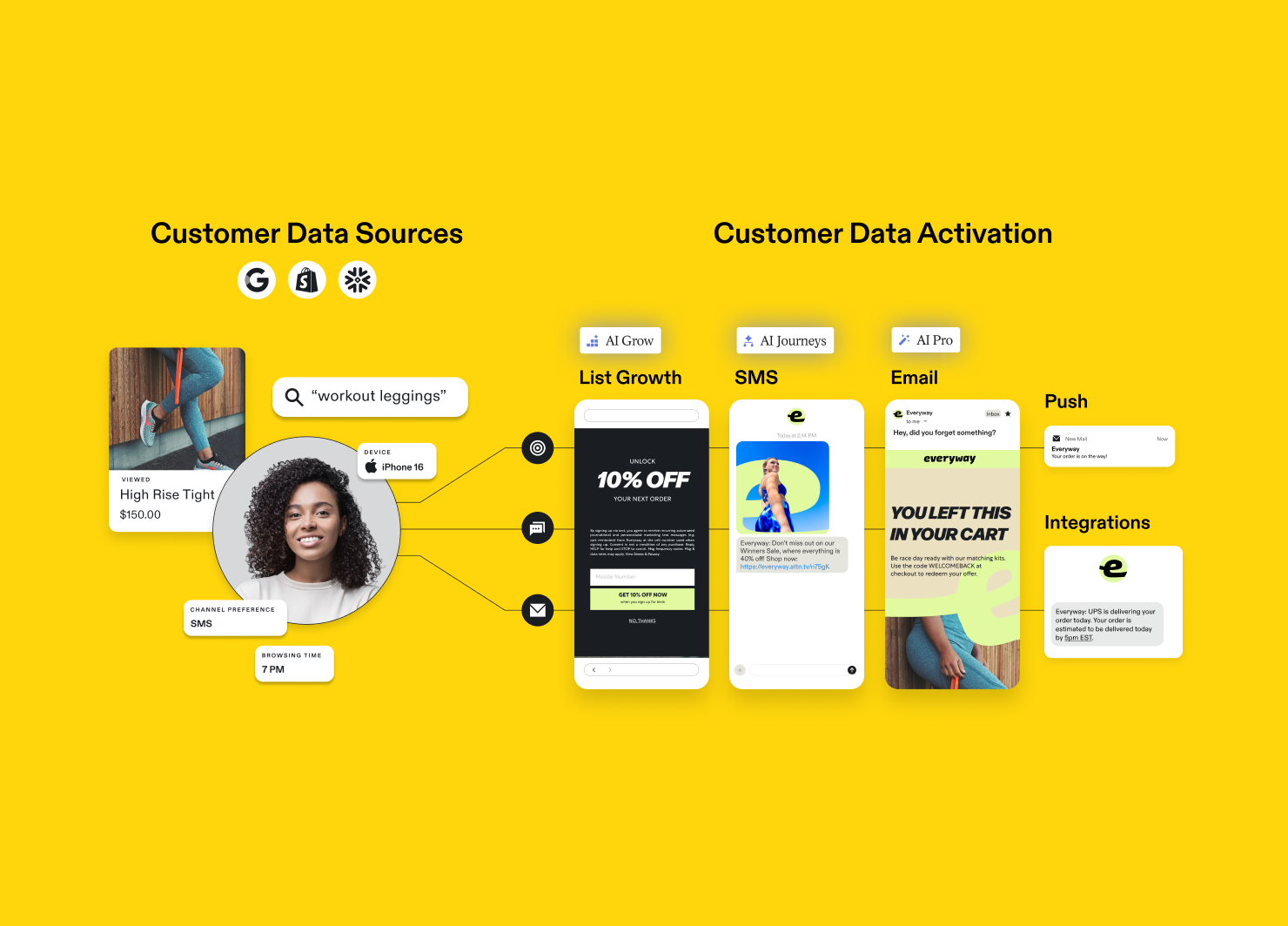
Think of it like one store with many doors. No matter which entrance a customer walks through, the experience is consistent, the staff knows who they are, and the conversation picks up right where it left off.
This kind of integration doesn't happen by accident. Omnichannel requires a shared technology backbone—a data hub, an identity graph, and a personalization engine that responds to behavior across channels, not just within them. The payoff, however, is a customer experience that feels effortless—and customers who notice that tend to stick around.
That's ultimately what separates omnichannel from multichannel: one strategy is built for coverage, the other is built for loyalty.
The key differences between omnichannel and multichannel marketing
When should I use omnichannel vs. multichannel?
Choosing between omnichannel and multichannel isn't about which strategy is better — it's about which one is right for your business, right now. Most ecommerce brands start multichannel and grow into omnichannel over time. But here's what's changed: that transition is no longer something you can plan for later.
Agentic AI — technology that doesn't just recommend actions but autonomously acts on them — is already the new standard. But here's what often gets missed: agentic AI is only as powerful as the foundation it runs on. Without connected channels and unified customer data underneath it, AI has nothing meaningful to act on.
Omnichannel is that foundation. SMS, email, RCS, and push working as one system. Agentic AI is what brings it to life, making millions of real-time decisions about who to reach, which channel to use, what to send, and what to suppress. Together, they're two layers of the same system — and brands still operating on siloed channels aren't just missing an optimization opportunity. They're missing the foundation that makes AI work in the first place. The window to build it is open, but it won't stay that way.
Key factors to consider
Before committing to either approach, it helps to get honest about where your business actually is. Are you focused on getting new customers, or keeping the ones you have? Does your tech stack respond to customer behavior in real time, or does it store data and wait to be told what to do with it?
And look at how your customers actually move. If they're bouncing between your SMS, email, and website before they buy, a disconnected experience isn't just a missed opportunity—it's actively costing you. When channels can't communicate, customers feel it, even if they can't name it.
When multichannel makes more sense
If you're in the earlier stages of building your ecommerce presence, multichannel is likely the right foundation. It lets you show up where your customers are shopping without requiring the infrastructure that omnichannel demands.
It also makes sense when your channels are genuinely serving different audiences. A brand running a premium DTC line alongside an entry-level Amazon presence isn't failing at omnichannel — they're being smart about channel fit. And if your primary goal right now is acquisition, multichannel gives you the reach to do that efficiently.
A good rule of thumb: if you're still asking "how do we get more customers?", multichannel is probably your answer. If you're asking "how do we keep the customers we have and grow their value?", it's time to think about omnichannel.
Of course, these aren't always permanent categories. Most brands that are multichannel today are omnichannel in the making — and the smartest ones are building toward integration before they feel the pressure to. Waiting until fragmentation is painful usually means you've already lost ground.
When omnichannel makes more sense
The brands making the strongest case for omnichannel right now aren't necessarily the biggest—they're the ones that have hit a wall. They're sending more messages, running more campaigns, doing more of everything, and results have stopped responding. That's not a volume problem. That's a fragmentation problem.
When channels operate in silos, they're blind to each other. An SMS goes out without knowing a customer just bought. An email campaign fires without knowing a customer already clicked through from push. The outcome is over-messaging, irrelevant content, and customers who start tuning you out. The data backs this up: 70% of consumers are disappointed when brand experiences aren't personalized, and repeat purchase rates drop when customers feel like they're getting a generic stream of messages rather than a real relationship.
Adding push notifications with Attentive to your channel mix can help you create more connected experiences, using each customer interaction to inform what comes next.
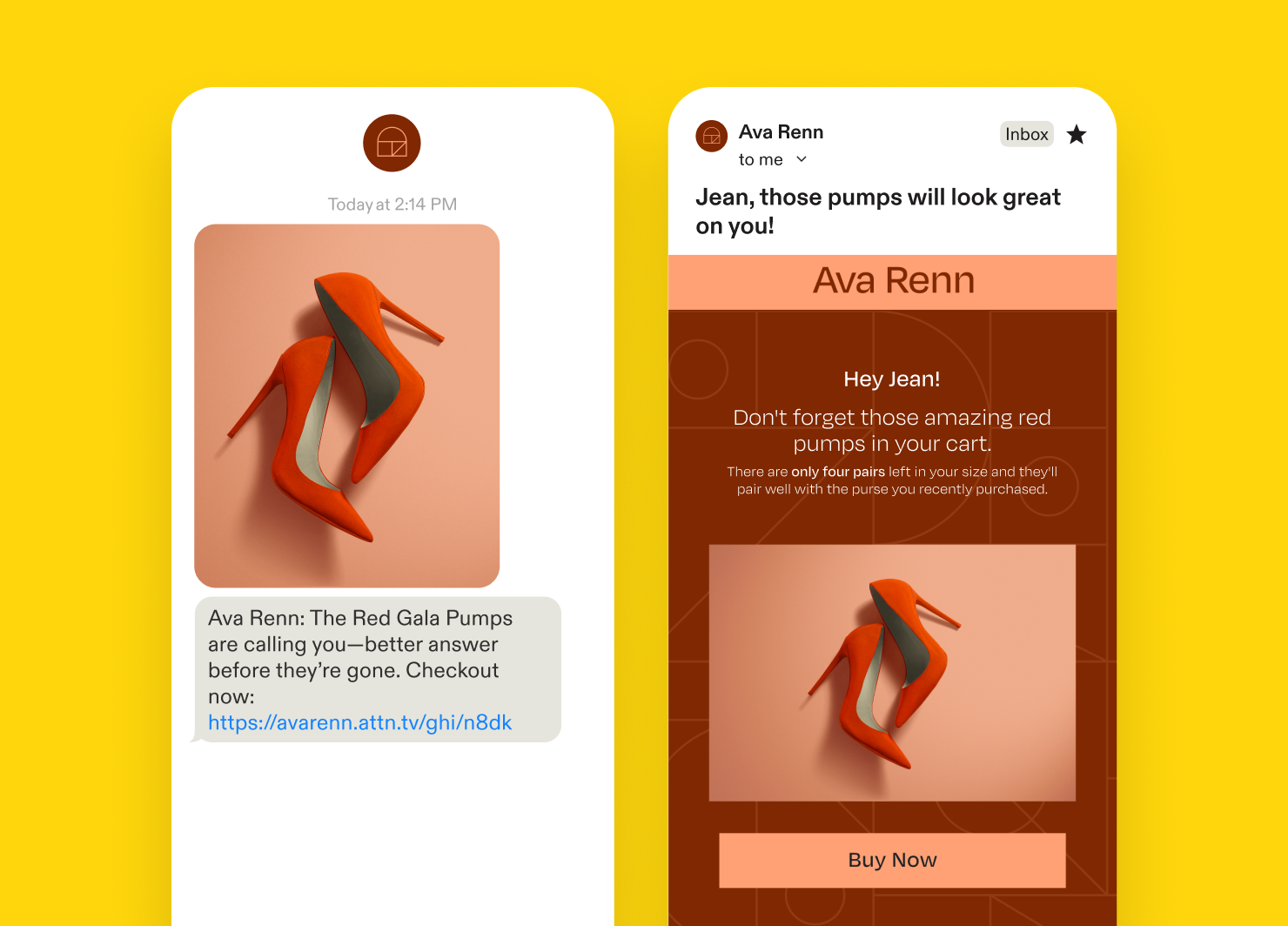
Omnichannel fixes this by making sure what happens in one channel immediately informs the next. When your channels share context, every interaction gets smarter—and instead of performance resetting with each send, it builds.
Identity is a big part of this too. Brands getting the most out of omnichannel know who their customers are across every touchpoint—not just within a single session or channel, but across devices, over time. Without that foundation, personalization is mostly guesswork.
A good rule of thumb: if your customers are already moving between your channels but the experience isn't following them, omnichannel isn't a nice-to-have—it's overdue.
How businesses operationally implement each
The difference between multichannel and omnichannel shows up in how teams are built just as much as how customers experience the brand.
In a multichannel setup, teams tend to organize around channels—SMS, email, paid each running their own playbook. It's manageable, but it produces siloed thinking and fragmented reporting. For the people doing the day-to-day work, it often means manual data syncing, reconciling reports across multiple platforms, and the constant risk of sending something stale—like a cart abandonment message that goes out after a customer has already purchased.
In an omnichannel setup, the whole organization orients around the customer. Success isn't measured by what one channel did—it's measured by what the customer did, and what they're worth over time. Teams work from the same data, align on the same story, and let every interaction inform the next.
The tooling has to match. Multichannel businesses can often manage with strong individual tools running in parallel. Omnichannel requires those tools to talk to each other—in real time, not on a delay. That's why more brands are moving away from stitched-together legacy stacks and toward unified platforms that can orchestrate across channels from one place.
Multichannel vs Omnichannel in Action: Real-World Examples
amika®: From Fragmented Lists to a Fully Connected Customer Experience
- 92% of subscribers engaged within 30 days of migration
- 74% conversion rate on high-intent triggered emails
- 35%+ CVR across multiple email campaigns
We finally have the identity resolution, deliverability, and lifecycle orchestration we were missing — and the confidence that our messages are reaching customers exactly when and how they want to be reached.
— Carah Campbell, Director of CRM + Data Intelligence, amika®

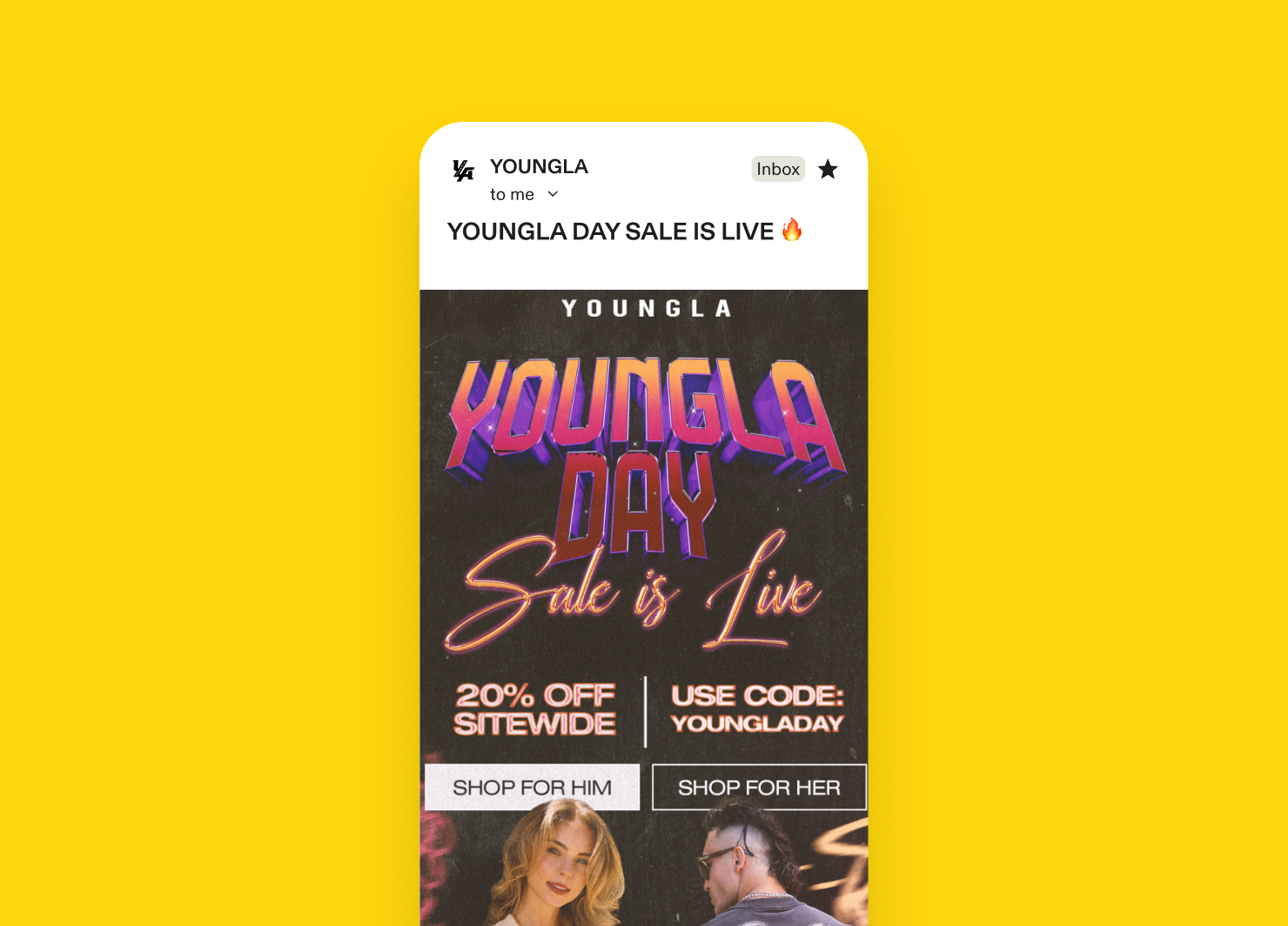
YoungLA: Turning Email and SMS into a Unified Revenue Engine
- 82% increase in email revenue
- 745% increase in SMS flow revenue
- 56% increase in total attributed revenue
With Attentive, we have the speed and reliability we need. Messages go out instantly, deliverability is consistent, and we don't have to worry about campaigns stalling during high-traffic moments.
— Sarina Vanmali, Director of Marketing, YoungLA
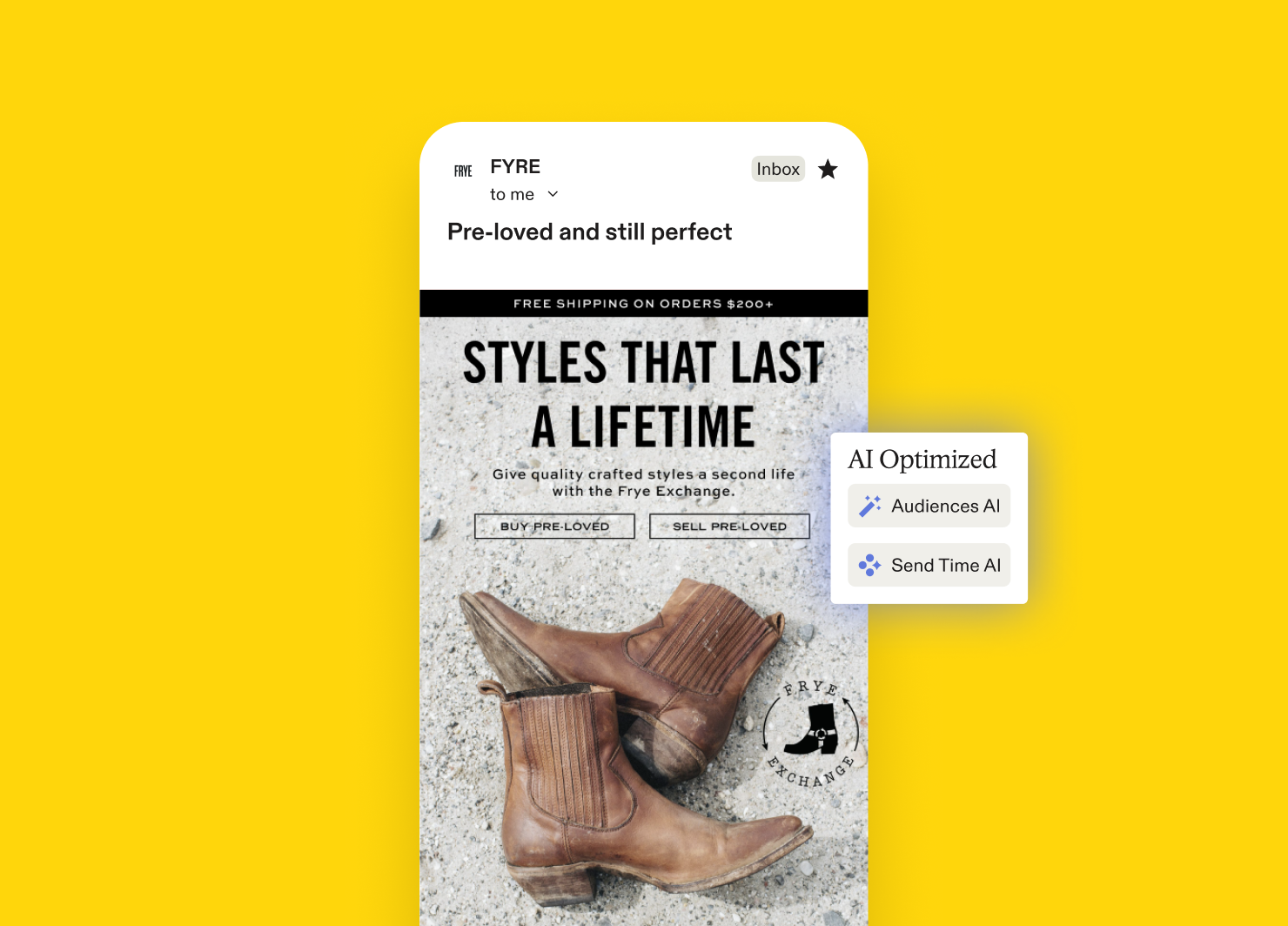
The Frye Company: A High-Stakes Migration That Paid Off
- 576% campaign revenue growth from email
- 124% increase in email journey conversion rate
- 353% growth in email campaign deliveries
I went into the migration with a lot of anxiety because fall is our most important season. The Attentive team took it very seriously and made the migration completely seamless.
— Cailyn Nikolis, Director of E-Commerce, The Frye Company
UNTUCKit: Building a Lifecycle Engine That Scales
- 25% year-over-year increase in revenue from triggered journeys
- 60% unique open rates across email journeys
- 30%+ lift in lifecycle-driven revenue within 6 months of migration
Consolidating both channels into Attentive has been transformative for our team. We tested at least six alternative solutions, and none could match Attentive's ability to power stronger engagement in both email and SMS.
— Shannen McLoughlin, Senior Director of CRM, UNTUCKit

Omnichannel and multichannel: Frequently asked questions
1. What is the difference between omnichannel and multichannel marketing?
The core difference is connection. Multichannel marketing means being present on multiple platforms—email, SMS, social, web—but each channel operates independently. Omnichannel connects those channels into one unified system where actions in one channel immediately inform the others, creating a coordinated customer experience rather than isolated touchpoints.
2. Is omnichannel better than multichannel?
Not universally—it depends on your business stage. Multichannel is the right foundation for brands still building presence, testing platforms, or focused on acquisition. Omnichannel is better for established brands with customer bases where retention and lifetime value matter most, but it requires the infrastructure and data to support it.
3. Why is omnichannel more effective than multichannel?
Performance compounds instead of resetting with every send. Each interaction makes the next one smarter—an SMS click improves email targeting, a browse event prevents irrelevant pushes, and purchases update every channel simultaneously. Brands with strong omnichannel strategies retain 89% of customers versus 33% for those with weaker cross-channel coordination.
4. What makes a strategy truly omnichannel?
Three things: unified identity (recognizing customers across all touchpoints), connected channels (where data flows between platforms in real time), and real-time intelligence (the system processes signals and acts immediately). Presence on multiple channels alone is just multichannel—true omnichannel requires integration and coordination across all three elements.
5. Can a company be both multichannel and omnichannel?
Yes, and most companies exist on a spectrum between the two. You might have integrated email and SMS while your marketplace presence runs independently—and that's fine. What matters is being intentional about where integration creates the most value and not confusing presence on multiple channels with true omnichannel coordination.
6. How does omnichannel improve customer experience?
Customers never have to repeat themselves and the brand experience feels continuous rather than fragmented. Browsing history informs emails, purchases update SMS sends, and support interactions carry context across touchpoints. This coherence drives customers to spend more, return more often, and churn less than in disconnected multichannel experiences.
Ready to see what true omnichannel coordination looks like?
.png)

.png)