.png)

Lifecycle stage, customer value, and product interest each answer a different question, and the holiday weekend is when running all three at once matters most.
Black Friday Cyber Monday puts every marketer under the same pressure: reach as many people as possible, as often as the calendar allows. That instinct is sound. It's the highest-intent shopping weekend of the year, and the math rewards showing up.
What gets lost in the volume is that your list holds people with very different relationships to your brand. The shopper who buys from you every month and the shopper who went quiet last February can both receive the same sitewide offer. One of them was going to buy anyway. The other needed a reason to come back, and a percentage off everything wasn't it.
In this post, we'll cover seven BFCM plays, the customer signal each one runs on, and how to measure what worked once the weekend is over.
Why audience precision matters most during BFCM
Broad sends earn their place during BFCM. When a message applies to everyone, like the sale going live, breadth is the right call and precision would only get in the way.
The cost shows up in everything else you send. At holiday volume, one message for everyone means:
- Spending margin on customers who would have converted without the discount
- Sending a first-time-buyer offer to someone who has bought from you many times over
- Treating a year of silence as a normal gap in purchase behavior
None of that is a reason to send less. It's a reason to decide who gets which version, which is a smaller and much more achievable project than it sounds.
Start with the question you're trying to answer
The most useful thing about lifecycle, value, and interest signals is that they answer different questions.
Pick the question first and the signal follows:
- RFM, short for recency, frequency, and monetary value: Who needs a different lifecycle strategy?
- Customer lifetime value (LTV): Who is worth greater investment?
- Product Affinity: Who should I promote this to?
These don't need to be combined. There's a strong pull, especially under holiday deadline pressure, toward building one master BFCM audience that layers lifecycle stage on top of value tier on top of category interest. That audience ends up small, fragile, and impossible to learn from after the weekend.
Run them in parallel instead. Your winback campaign can work off RFM while your category sends work off affinity, and neither has to wait for the other to be ready.
Seven audience strategies to use across BFCM
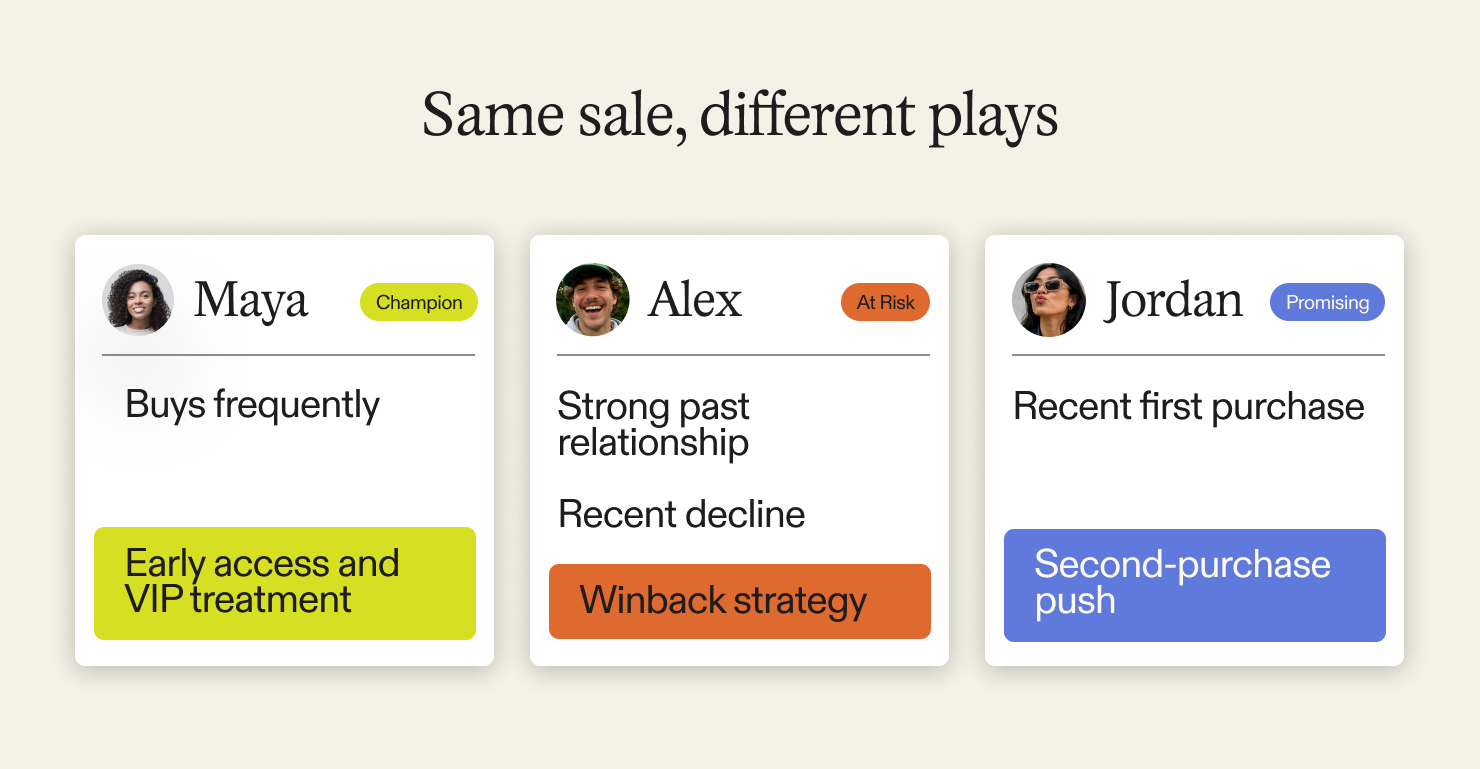
The first three plays all run on RFM, and they're the clearest illustration of why just one audience can't cover the weekend.
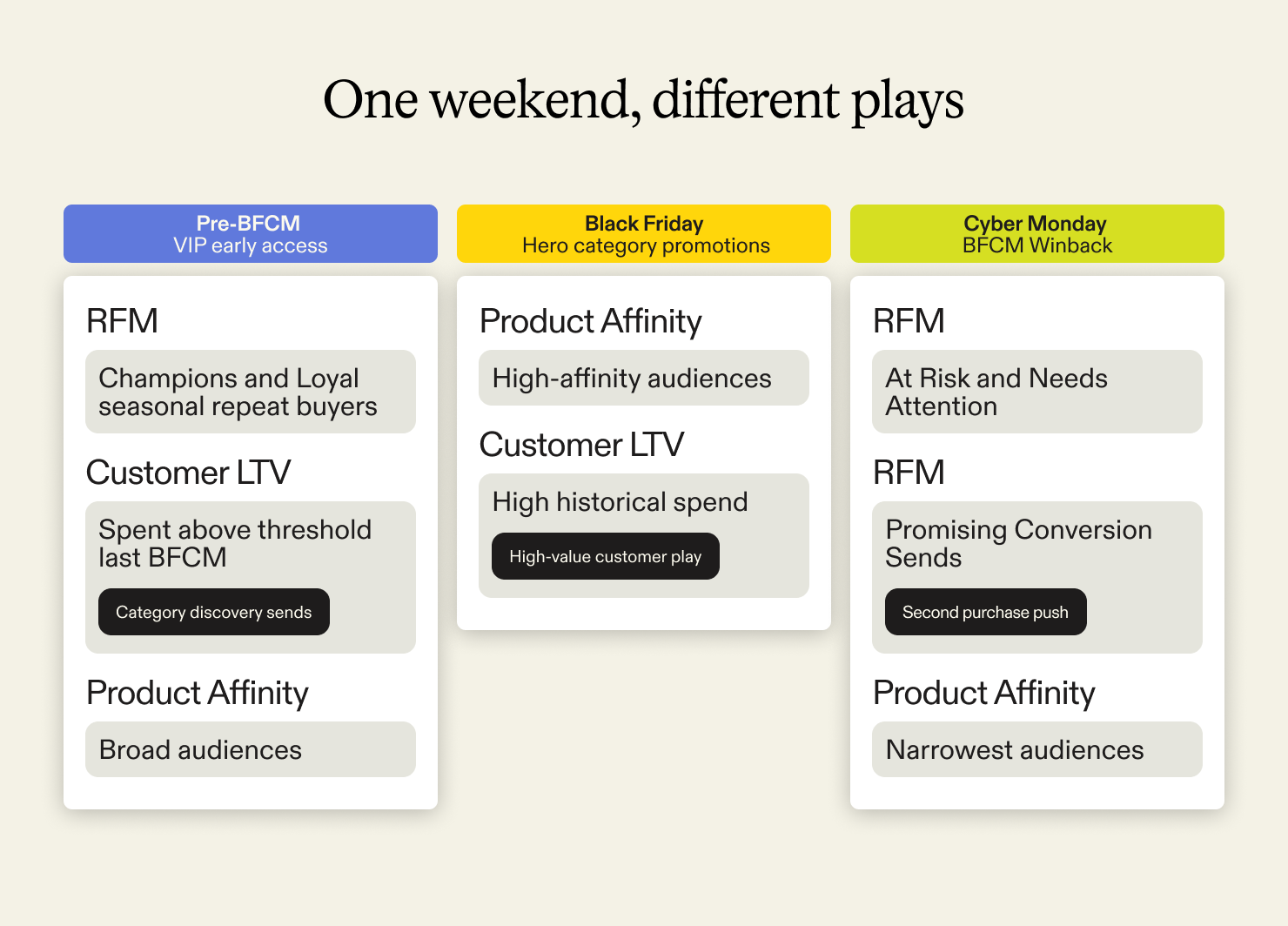
1. Reward your Champions and Loyal customers
Use RFM to find the customers with the strongest current relationships, then give them something the general list doesn't get:
- Opening the sale early, before the inventory picture gets complicated
- Offering a VIP experience rather than a deeper discount
- Easing off the promotional cadence instead of adding to it
That last one is the counterintuitive move. Your best customers are already going to shop. Sending them every sale message is more likely to cost you a subscriber than earn an extra order.
2. Turn BFCM into a winback moment
Target your At Risk and Needs Attention audiences with a campaign built specifically to bring them back, separate from your main promotional stream.
BFCM is the easiest winback window you get all year, because purchase intent is already elevated. Someone who ignored your last four campaigns is more willing to reconsider during a weekend when they're shopping anyway. The offer can be stronger here than you'd normally run, since the alternative is a subscriber who keeps drifting.
3. Use the sale to drive the second purchase
Your Promising customers bought once, recently, and haven't come back yet. The second purchase is where a buyer starts becoming a customer, and BFCM gives you the best reason you'll have to ask for it.
Position the sale as a reason to return rather than a reason to buy. These shoppers already know the product is good. What they don't have yet is the habit.
4. Find the shoppers who showed up last BFCM
Use time-bound spend to pull the customers who purchased, or spent above a threshold you set, during last year's BFCM window.
This audience is easy to overlook because it doesn't map to a lifecycle stage. Some of them are Champions. Some only ever buy from you in November. Either way, they've proven they shop this weekend, which makes them worth reaching whether or not they've been active since.
5. Decide where greater investment makes sense
Historical spend and predicted LTV help you answer a question the calendar makes urgent: where does the extra effort go?
That covers more than discount depth:
- Choosing who gets premium treatment or concierge-style service
- Deciding where higher-cost channels earn their place
- Setting how much retention investment follows the weekend
- Adjusting discount depth by what a customer is worth
Pro tip: The most overlooked use of value data during BFCM is deciding who doesn't need an incentive. Customers with high purchase intent and strong history will often convert on an announcement alone. Every discount you don't send to them is margin you keep.
6. Match category campaigns to customer interests
If your sale leads with hero categories, whether that's skincare, footwear, outerwear, or gifting, Product Affinity lets you build an audience of shoppers demonstrating interest in each one rather than sending the same merchandising story to your whole list.
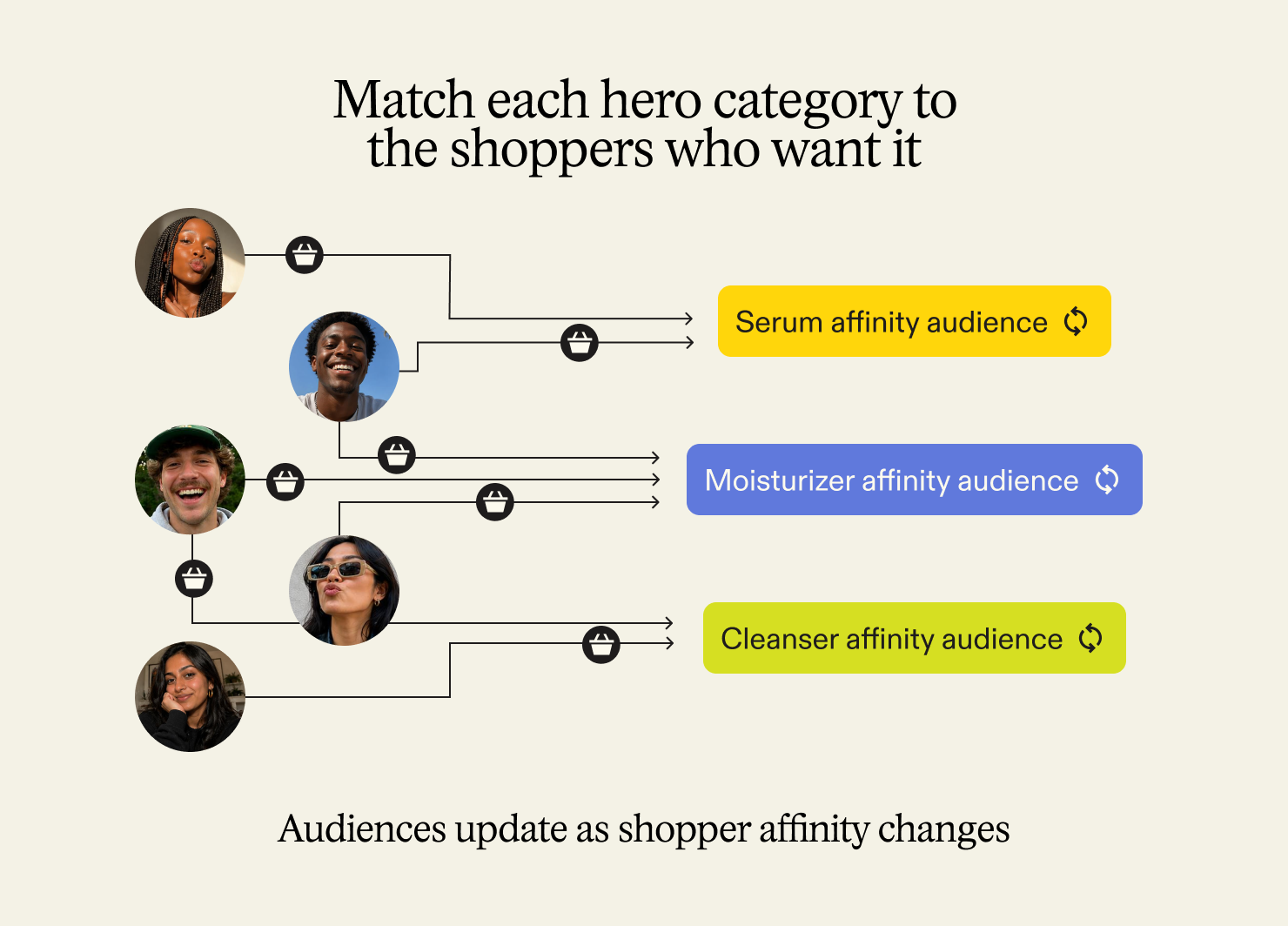
The advantage over a click-based audience is that affinity keeps updating. A shopper whose interest moved from cleansers to SPF over the past six months lands in the right category audience without anyone rewriting a filter, which matters during a weekend when nobody has time to maintain rules.
7. Adjust reach and precision through the weekend
Affinity strength gives you a dial rather than a switch. Use it to change the shape of your audience as the weekend progresses:
- Running broader affinity audiences early, when the goal is discovery and reach
- Tightening to higher-affinity audiences later, when the goal is conversion
Pro tip: This is also your best tool for message fatigue. Instead of cutting send frequency across the board late in the weekend, narrow the audience. Your highest-affinity shoppers can absorb another message about a category they care about; your broadest audience cannot.
One weekend, different audience strategies
Treat BFCM as a learning opportunity
Total holiday revenue tells you whether the weekend worked. It doesn't tell you which decisions worked, and that's the part worth carrying into next year.
Worth pulling once the weekend settles:
- Revenue per message by lifecycle group
- Conversion rate for targeted plays against your broad sends
- Repeat purchase rate from Promising customers you pushed toward a second order
- Reactivation rate from the At Risk and Needs Attention audiences
- Audience efficiency, meaning revenue relative to how many people you reached
This is where BFCM stops being a single revenue event. A winback campaign that outperformed your blast, or a category audience that converted well above your list average, is a finding you can build the next 10 months of lifecycle strategy on.
The best BFCM audience is the one that fits the decision
There's no version of this weekend where one perfect audience does all the work. The teams that get the most out of BFCM choose a signal per decision, run those plays alongside each other, and come out of the weekend knowing more than they did going in.
You already know which of the seven plays your program is missing. Start with that one.
Every one of these plays runs on signals your program is already generating. Learn more about AI Pro or request a personalized demo to see what yours are telling you before the weekend arrives.

.png)