
CRM leaders share six strategies to put into action this peak season—straight from Attentive’s exclusive London event, The Edit.
Black Friday and Cyber Monday are getting earlier, noisier, and more crowded. As inboxes fill up with identical discounts, marketers face a growing challenge: How do you drive peak-season revenue without diluting your brand or overwhelming your audience?
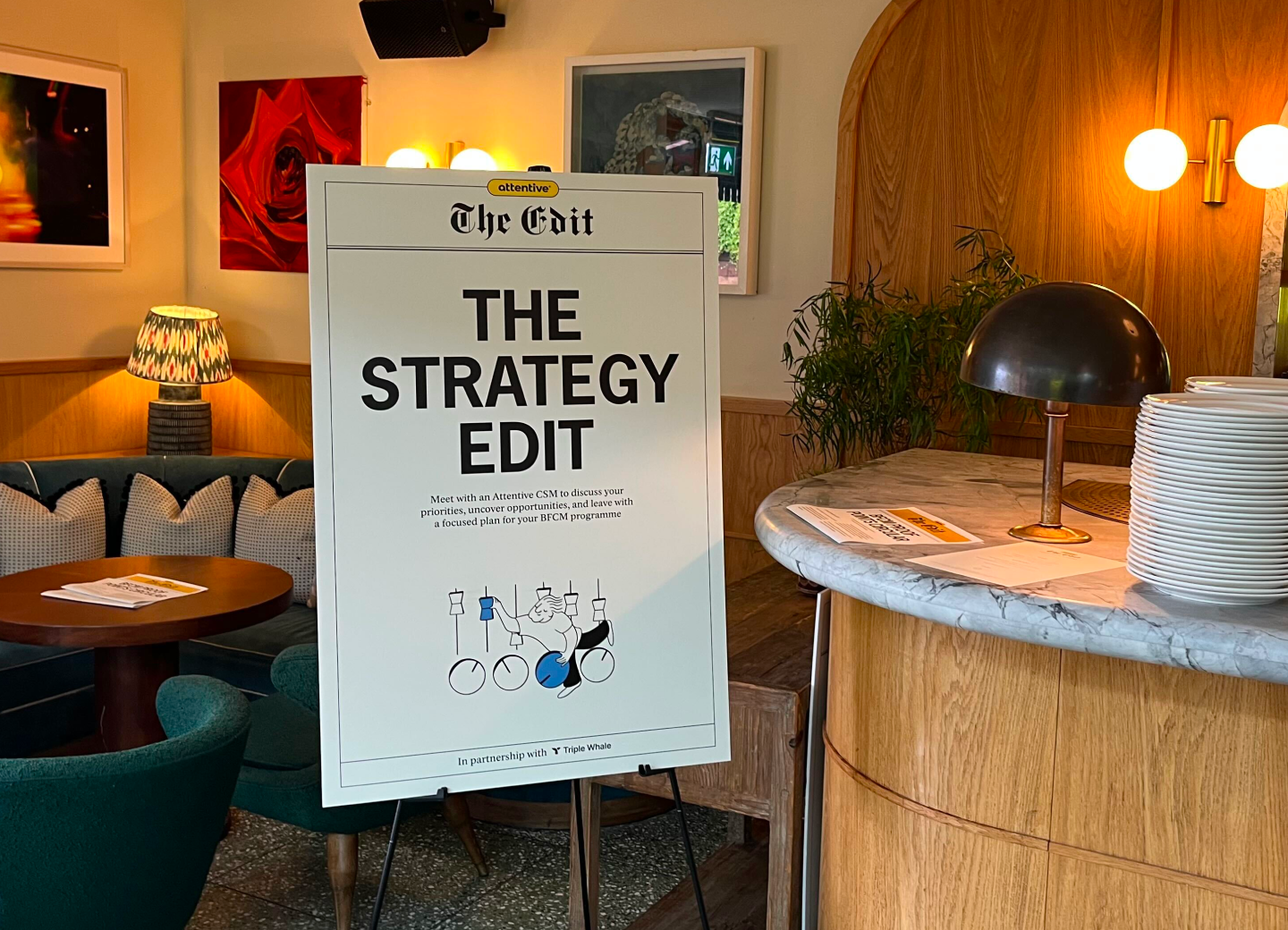
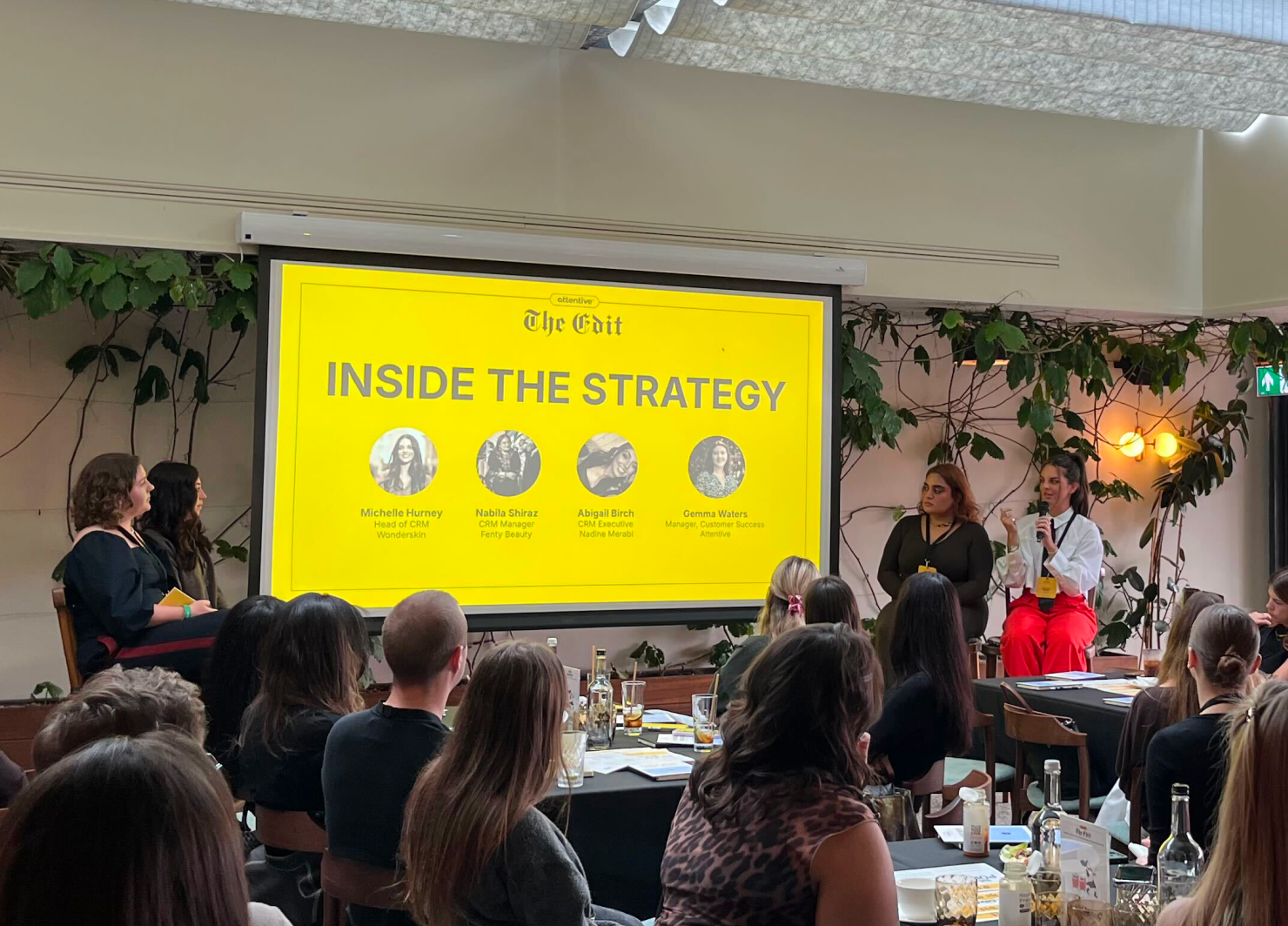
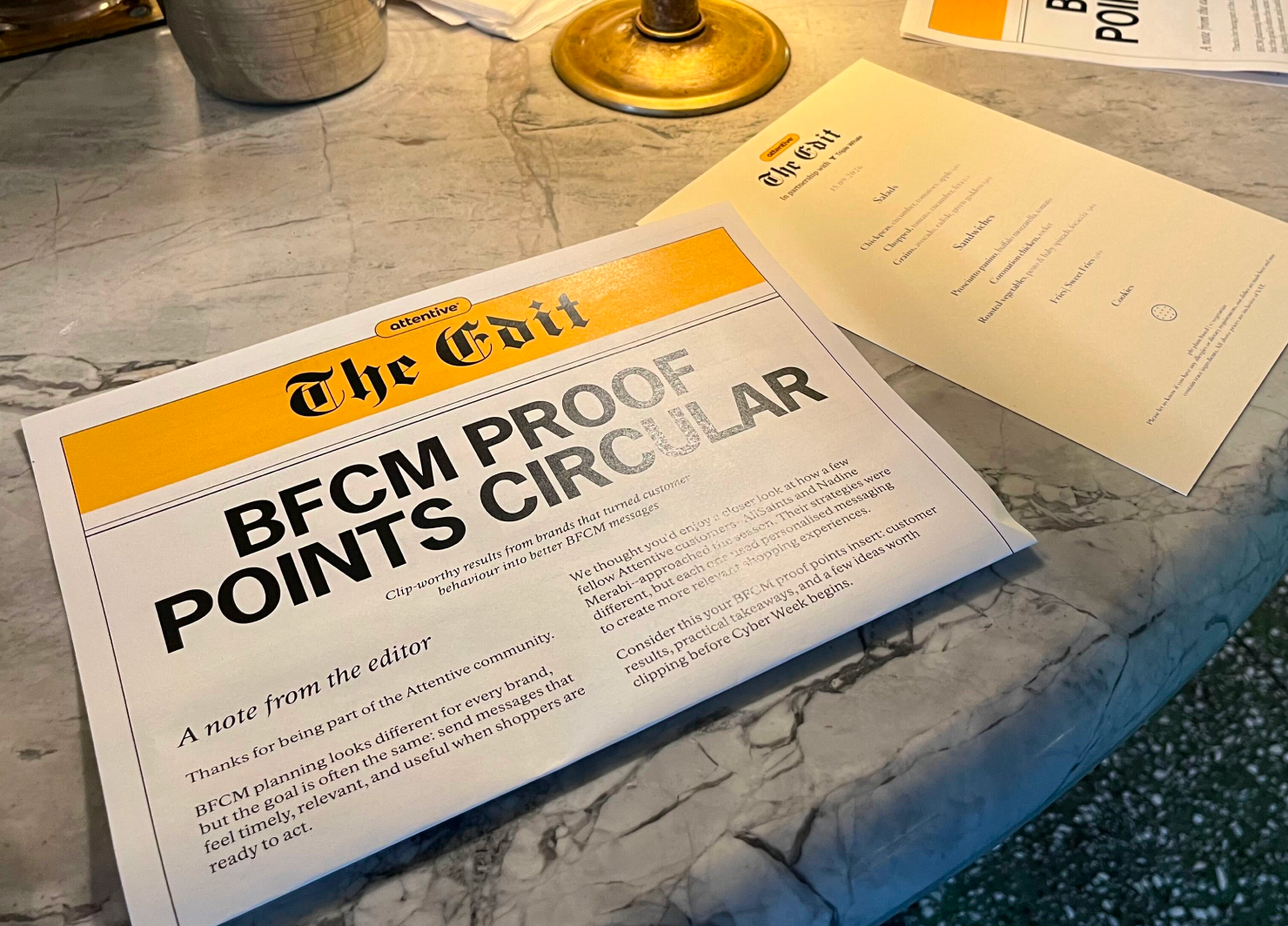
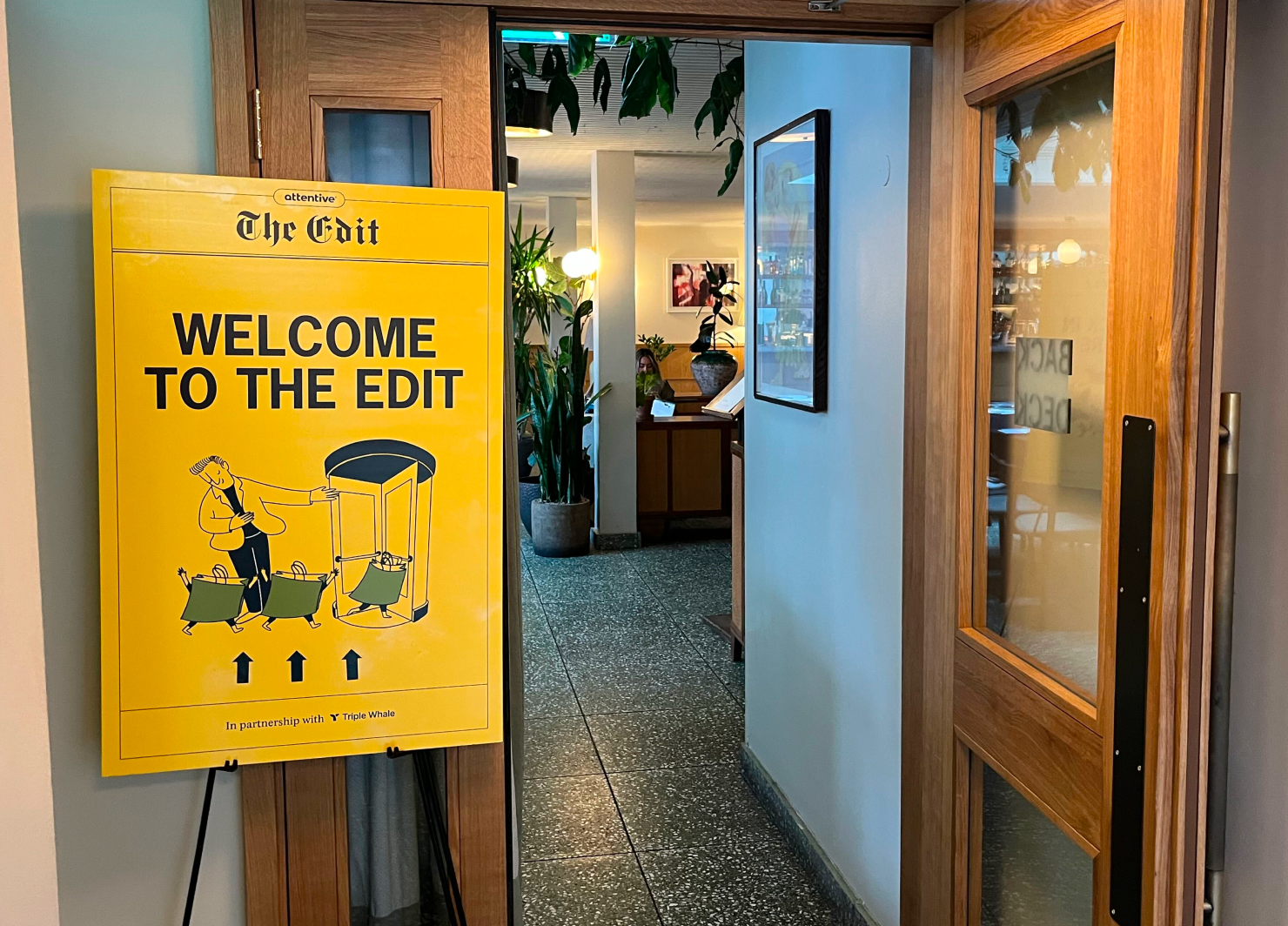
To dive into these challenges, we hosted The Edit in London this past September. The Edit was an intimate, interactive event where attendees had the opportunity to hear from leading brands, collaborate with peers, and discuss high-impact BFCM strategies.
During the event, three CRM leaders took the stage to share their real-world playbooks: Abi Birch from Nadine Merabi, Michelle Hurney from Wonderskin, and Nabila Shiraz from Fenty Beauty shared how their teams plan, segment, build offers, develop creative, and adapt as the season unfolds.
Here are six ideas worth taking into your own BFCM planning.
1. Plan early so you can be more deliberate later
For these three brands, BFCM planning starts well before customers see the first promotion.
Wonderskin begins by reviewing the previous year as early as February or March. Nadine Merabi moves into active planning around June, with lead generation and database growth ramping up through August and September.
That early preparation gives teams more flexibility when it comes to customer messaging and promotions. Rather than treating BFCM as one long promotional window, they can be more deliberate about when different parts of the strategy go live.
At Fenty Beauty, that means holding back sale-focused website sign-up experiences until closer to Black Friday. The team sees a risk in teasing discounts too early: customers who are ready to buy today may decide to wait for the offer instead. By waiting, Fenty can keep the focus on full-price shopping in the weeks before the event, then introduce sale messaging when interest in BFCM is more likely to be building.
Try this: Map your internal readiness timeline separately from your promotional schedule. Ask your team: Where does starting earlier give us more freedom to hold back customer messaging until it’s most relevant? The more prepared you are behind the scenes, the more choice you have about when—and when not—to communicate with customers.
2. Build value beyond the headline discount
All three brands are thinking about how to make BFCM offers compelling without applying the same discount to everything.
Nadine Merabi is testing targeted offers on selected ranges and changing promotional windows, giving customers different reasons to engage throughout the season. At Fenty Beauty, curated bundles and limited-edition products add another dimension to the offer. A headline such as “up to 60% off” can capture attention, while exclusive products and category-specific bundles give customers more to explore once they arrive. For Wonderskin, bundles also create opportunities for product discovery. Someone who knows the brand for its lip stain might discover eye makeup through a thoughtfully built holiday set.
The headline discount might get someone through the door, but what they find when they get there can give them another reason to buy.
A practical starting point: Look beyond the percentage off. What else makes your BFCM offer valuable to customers—exclusivity, convenience, product discovery, or access to something they can’t get at another time?
3. Segment around behavior, not just demographics
During peak season, sending the same email to everyone can quickly make your messaging feel repetitive. Stronger relevance comes from paying attention to what customers are actually doing—and adjusting the message around those signals.
Fenty Beauty groups subscribers by specific behaviors:
- VIPs get early access that recognizes their loyalty.
- Browsers who haven’t purchased get product recommendations based on what they’ve shown interest in.
- Sale-only shoppers receive more promotion-led messaging, while full-price customers can have a different experience.
- Inactive subscribers may receive timely reminders designed to bring them back into the journey before BFCM demand peaks.
Different actions often point to different needs. Paying attention to those patterns can help you make each message feel more relevant, while building a clearer picture of how your audience shops during peak season.
Ask your team: Split one broad BFCM audience into (at least) three behavior-based groups. For each one, ask: What has this customer done, and what would be most useful to say next?
4. Give customers more control over what communications they receive
Sending more emails during Black Friday only works if the extra volume still feels relevant. A busier campaign calendar doesn’t mean every subscriber needs every message.
The panelists use two practical ways to reduce repetition and make additional BFCM sends more relevant:
- Adjust sends based on behavior: Fenty Beauty removes shoppers from broader sale emails once they click or buy. Unless there’s something genuinely new to share—like a restock or new product drop—the team avoids repeating a message that has already done its job.
- Give subscribers a choice: Wonderskin lets subscribers opt in or out of Black Friday emails separately from regular brand updates. That gives customers more control over what they receive—and can also surface people who may not want ongoing communications but do want to hear about BFCM offers. Nadine Merabi uses a similar approach, tailoring peak-season messaging around what subscribers have said they want.
Both strategies start from the same idea: when customers tell you something through their behavior or preferences, your messaging should respond.
Before launch: Given the higher volume of BFCM communications, test whether a dedicated preference option could help you send more selectively. Consider letting subscribers choose whether they want peak-season emails, then use that preference alongside clicks and purchases to shape what they receive next.
Need a cadence framework? Check out our BFCM Message Sending Guide for practical advice on how to space your sends, avoid fatigue, and keep subscribers engaged throughout peak season.
5. Experiment with BFCM-only creative
BFCM is an opportunity to do something different creatively. The trick is making sure it still feels unmistakably like you.
Nadine Merabi moved beyond its usual understated style with bold, dark visuals of models moving and dancing in sequin-adorned partywear. The result captured the energy of the clothes while helping customers picture the occasions they might wear them for.
Wonderskin took a product-led approach with its limited-edition Black Vinyl lip stain. The creative leaned into the shade itself: glossy black-plum lips, close-up texture shots, dramatic portraits, and darker, moodier styling across social and campaign assets. Rather than simply adding a Black Friday badge to existing creative, the team built a visual world around the product that felt specific to the moment. The campaign also extended into an in-person pop-up, giving the launch a life beyond the inbox.
Fenty Beauty focuses on how its products look on people. Influencer content, assets from its artistry team, and video and GIF-style creative show products being applied and worn across different skin tones, helping customers see shades, finishes, and techniques in action. Nabila pointed out that Rihanna is also an important part of the creative mix: as the brand’s founder, her presence brings instant recognition and tends to perform strongly, but it’s used selectively alongside the wider product and artistry content.
Three brands, three different creative approaches. Peak-season creative doesn’t have to mean turning up the volume everywhere. It can mean identifying what’s already distinctive about your brand or product—and giving yourself permission to push that idea further.
Put this into practice: Identify the part of your brand that customers already recognize—your product, visual identity, personality, or point of view. How could you dial that up for BFCM rather than defaulting to the usual sale creative?
6. Stay responsive as the season unfolds
However carefully you prepare for BFCM, customers don’t always behave according to the forecast. Neither does inventory.
Nadine Merabi monitors live inventory and uses historical cross-sell data to identify related products when popular styles begin to sell out.
At Fenty Beauty, CRM works closely with ecommerce, merchandising, stock, and retail teams. Products selling quickly can be replaced with relevant alternatives, while products getting less attention can receive additional email exposure, site merchandising, or stronger product page recommendations.
That responsiveness starts long before the sale goes live. Having alternative assets, product options, and decision points ready gives teams more room to respond to what’s actually happening without scrambling to rebuild the campaign.
And Cyber Monday isn’t the finish line. As Black Friday gives way to December, the focus starts to shift from promotions toward gifting, limited-edition holiday collections, stocking stuffers, and shipping deadlines. By the time Cyber Monday is over, customers may already be shifting toward holiday shopping—so the messaging needs to move with it.
Your next move: Build a BFCM decision list before launch. Identify the signals you’ll watch—inventory, engagement, purchases, or product interest—and what your team could change in response.
Final thoughts: Make every BFCM message earn its place
The biggest takeaway from The Edit wasn’t a particular discount, send frequency, or segmentation model. It was how deliberately these teams make decisions throughout the season.
They prepare early without assuming customers want to hear about the sale early. They use behavior to decide who needs another message—and who doesn’t. They create value beyond the discount. And they leave enough room in the plan to respond when customer behavior or inventory changes.
That’s a useful way to think about BFCM: not as one big promotional moment, but as a series of decisions shaped by what customers are doing.
Want more ideas to help you plan for peak season? Explore Attentive’s Black Friday Cyber Monday hub for more strategies, inspiration, and resources to help you make every message count.

.png)