
These omnichannel marketing examples show how Hello Adorn, Levenger, ReserveBar, Clove, SNDYS, and AllSaints give email, SMS, push, and automated journeys distinct jobs while building one connected customer relationship.
Customers take a brand in all at once. They may discover a product in email, get an SMS when it’s back in stock, and open a push notification that takes them to a collection they’ve been waiting for. To them, those are not separate programs. They are one relationship.
That makes the hard part of omnichannel marketing a series of decisions: What changed? What job does the next message need to do? Which channel fits? Should another message be sent at all?
The six brands below answer those questions in sequence, building one operating model from channel role to shared context, behavior, journeys, and marketer judgment.
1. Hello Adorn: Use push to create a differentiated VIP experience
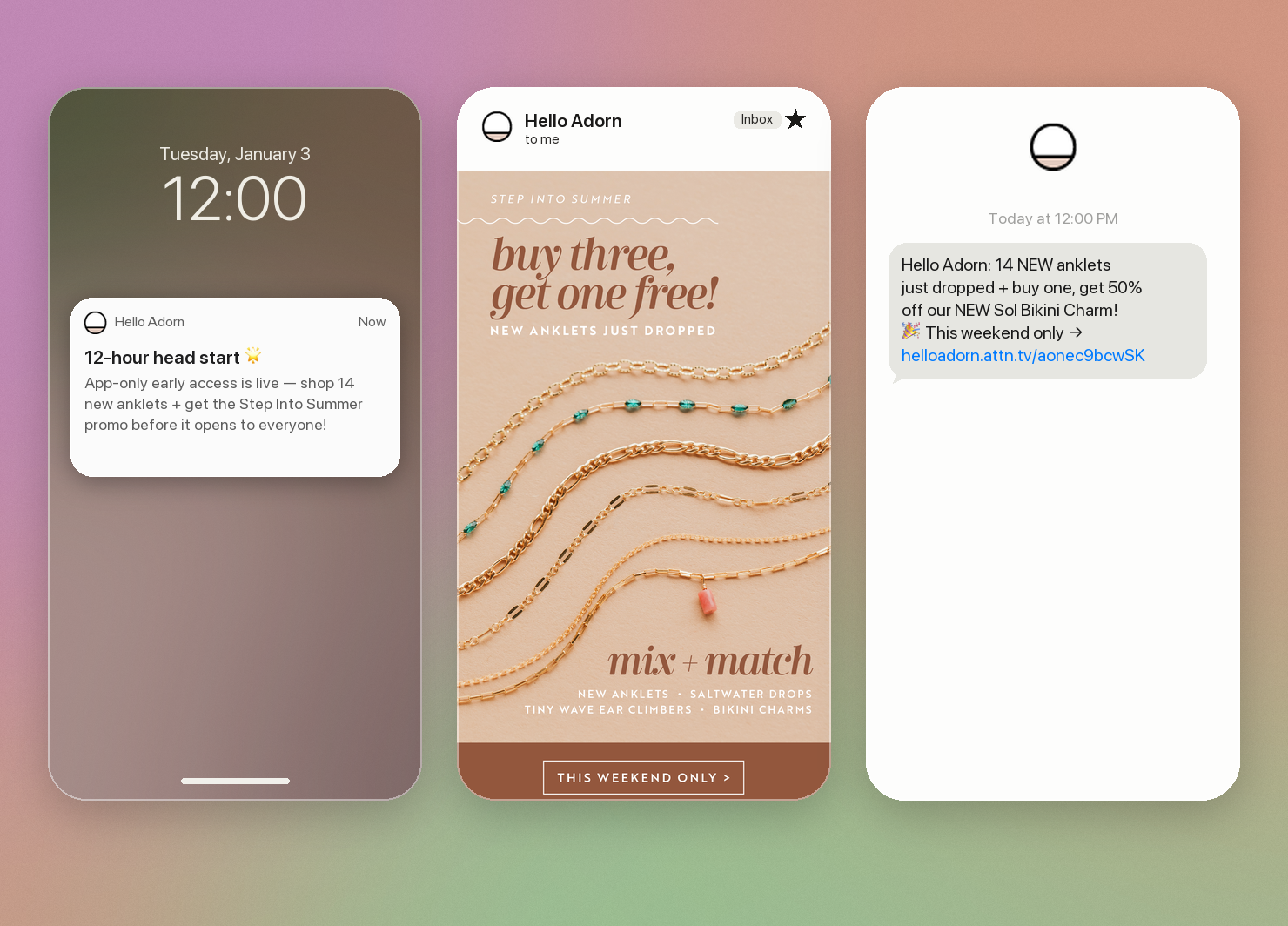
Hello Adorn's lifecycle strategy had been spread across separate email, SMS, and push platforms. For the two-person team responsible for ecommerce, app management, campaigns, and lifecycle marketing, that meant more manual planning and a limited view of how customers moved across channels.
Bringing the channels together didn’t mean making them interchangeable. During the Step Into Summer launch, app customers received early access to a new anklet collection, with a push notification that deep-linked directly to it. Push made app membership feel like a benefit.
“Customers aren't thinking about channels. They're just interacting with our brand.”
— Jordan Munson, Manager, Digital Commerce Systems, Hello Adorn
What you can take from this: Give every new channel a one-sentence job another channel doesn’t already perform. Early access, back-in-stock alerts, and direct returns to an in-app experience can make push useful on its own terms. If the same message could be copied unchanged into email or SMS, the channel needs a clearer role.
Read the full customer story: How Hello Adorn Turned Push Into a VIP Growth Channel
2. Levenger: Match the channel to the amount of story it needs
A distinct channel role is the starting point. Next comes matching the channel to the amount of story a message needs.
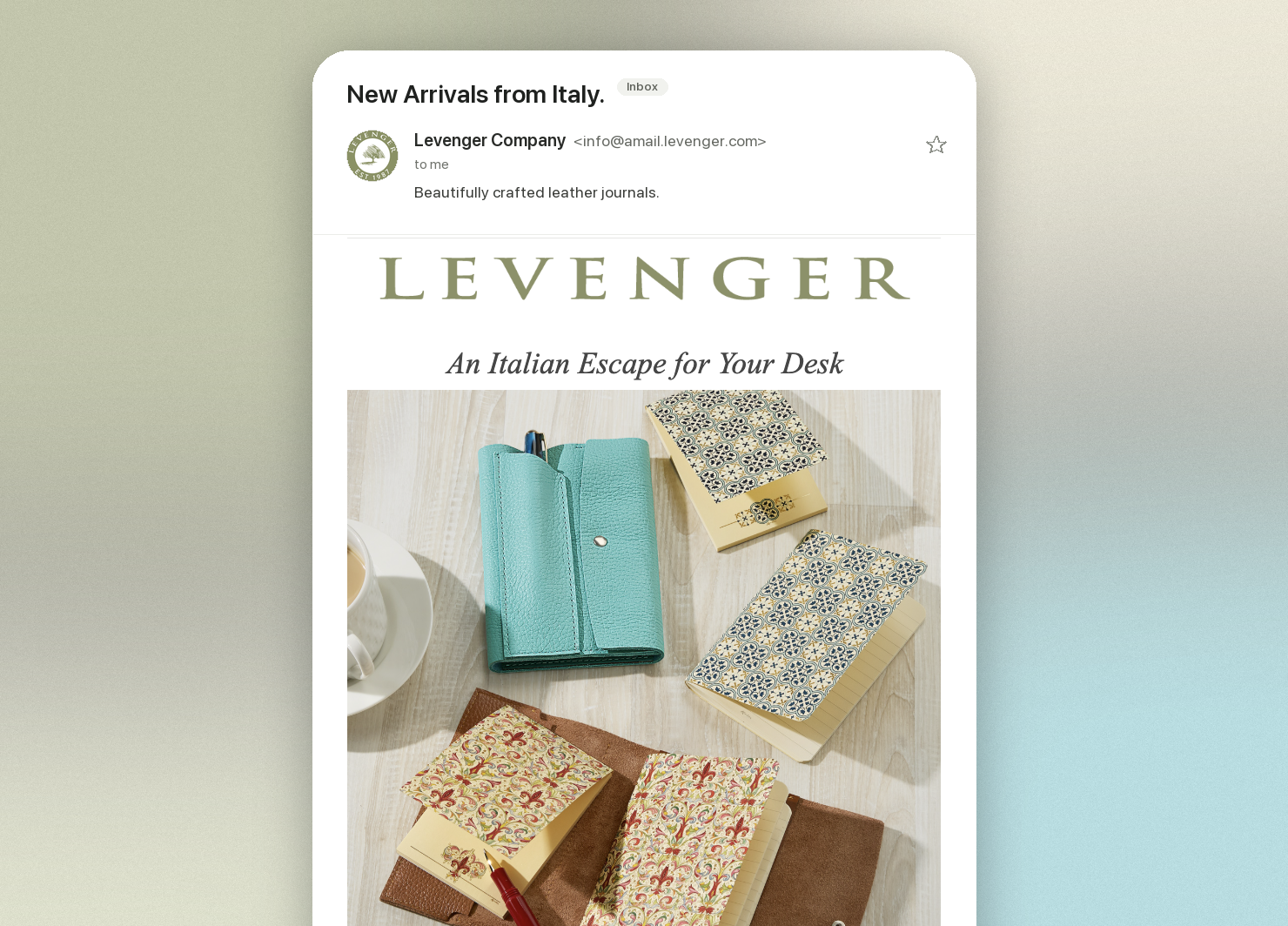
Levenger sells products that benefit from explanation. Email gives the brand room for product education and story. SMS supports moments when timing matters more, including launches, seasonal events, offers, and reminders tied to demonstrated interest.
That difference appears in Levenger's post-purchase journey. After a first order, the brand uses a day-15 SMS reminder and offers at 30, 60, and 90 days, while email continues the product and brand story. The purchase changes the conversation, and each channel carries the part it’s best suited to handle.
“Email gives us room to protect the brand and tell the fuller product story, while SMS adds immediacy.”
— Margaret Moraskie, CEO, Levenger Co.
What you can take from this: Classify important messages as story-heavy or moment-heavy before assigning a channel. Use email when customers benefit from context, education, merchandising, or visual depth. Use SMS when the value comes from a concise prompt at the right time.
Read the full customer story: How Levenger Built More Intentional Customer Journeys
3. ReserveBar: Use shared context to prevent duplication and customer friction
Distinct channel roles only work when the channels know enough about one another to stay out of the customer's way.
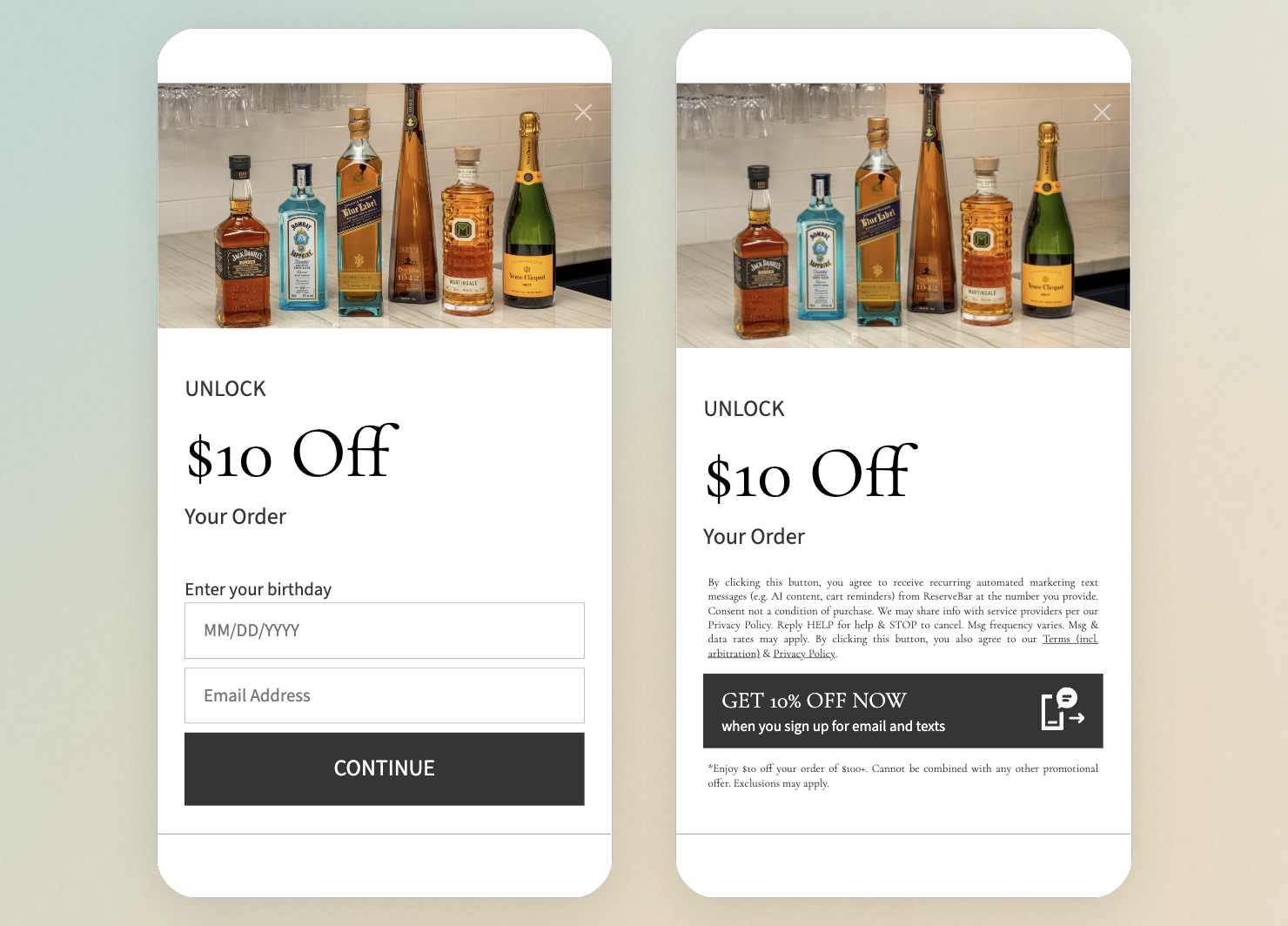
For ReserveBar, disconnected programs created friction for both the CRM team and customers. The team built similar campaigns across multiple systems and reconciled separate reporting. Customers subscribed to more than one channel could receive overlapping abandonment messages or another promotion after they had already purchased.
Bringing triggered email and SMS closer together allowed customer behavior and purchase context to influence what happened next. The important change happened in the decision rules. An action in one part of the relationship could now change another channel’s next move.
“We were definitely over-messaging customers, and having to reconcile reports by hand.”
— Kate Zaman, CMO and Head of Partnerships, ReserveBar
What you can take from this: Audit the decision rules behind your busiest journeys before adding more holiday creative. Check purchase exits, suppression rules, abandonment timing, and transactional context. Ask whether a customer action should cancel, change, or delay something already scheduled elsewhere.
Read the full customer story: How ReserveBar Connected Email and SMS
4. Clove: Let customer intent determine the next touchpoint
Once channels share context, the next step is letting customer behavior change the decision.
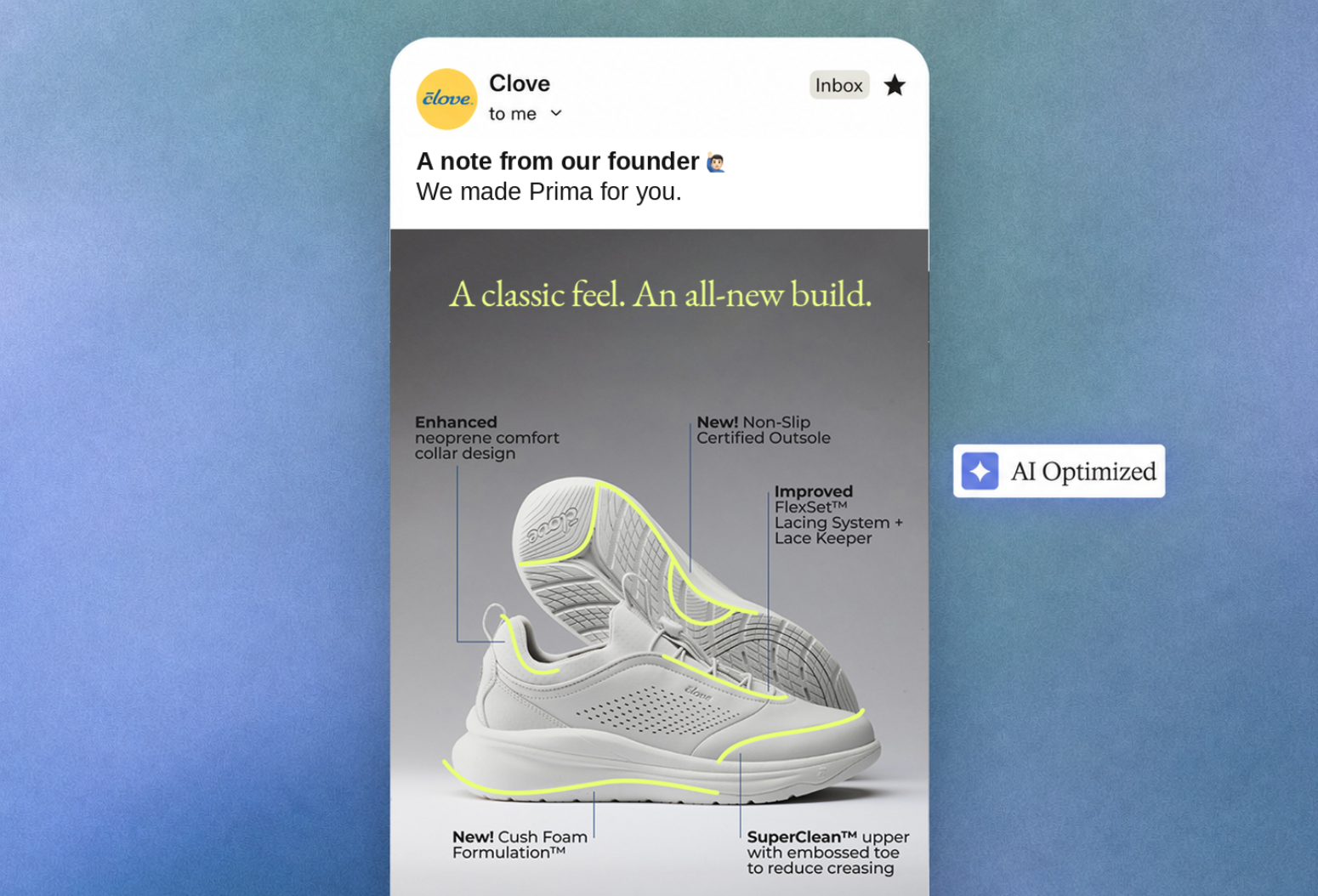
Clove uses email for product education and deeper lifecycle communication, while SMS is reserved for product drops, sales, incentives, and timely reminders. Browse, cart, loyalty, purchase, and return activity create different reasons to communicate.
That continues after purchase. Loop-related journeys can send an expiring-return or out-of-stock-exchange update, so the next message reflects what the customer is actually dealing with.
“New tools are only valuable when they solve a real customer or business need.”
— Nick Sanetra, Director of Marketing, Clove
What you can take from this: Build an event → decision → channel map for your highest-value behaviors. For browse, cart, purchase, loyalty, and return events, define what the event tells you, whether it creates a useful reason to communicate, and which channel best fits that reason. Start with the customer event.
Read the full customer story: How Clove Built a Lifecycle Marketing Engine Across SMS, Email, and AI
5. SNDYS: Let journeys maintain momentum between major campaign moments
Once behavior can shape the next touchpoint, campaigns do not have to carry the whole lifecycle program.
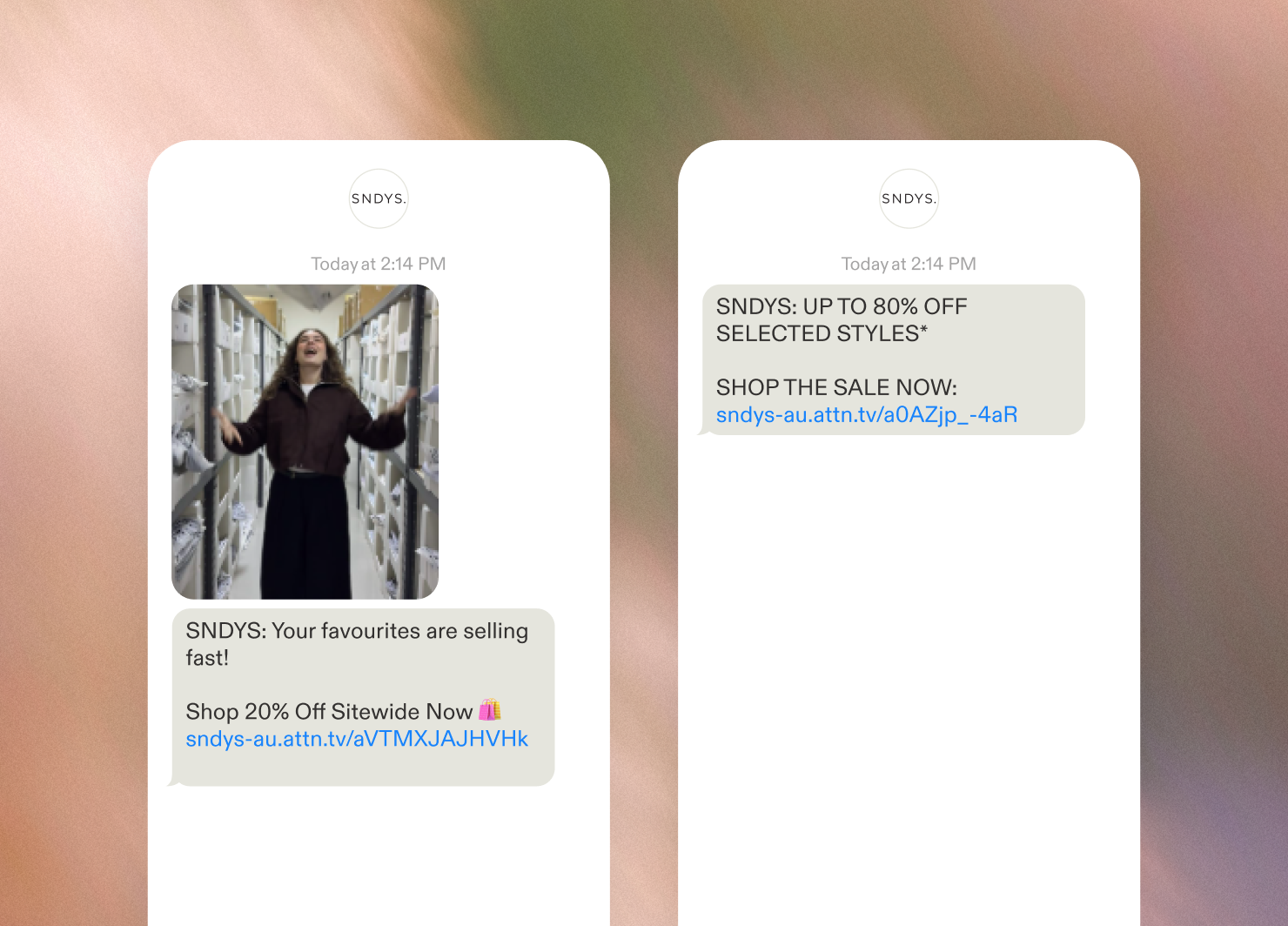
SNDYS already knew SMS could perform during major sales and Black Friday. The opportunity was to make it useful between those moments, when shoppers were signing up, browsing, adding items to cart, and moving closer to purchase.
Welcome, browse, add-to-cart, and checkout journeys now account for more than 50% of attributed SMS revenue despite representing only a small share of message volume. Campaigns create the big moments; journeys respond in between.
“There was more we could be doing with SMS beyond those big campaign moments.”
— Danielle Knox, Ecommerce and Digital Experience Lead, SNDYS
What you can take from this: Plan your holiday calendar in two layers. Map the always-on journeys that respond to customer behavior first, then layer major campaigns on top. That makes it easier to see where a scheduled send adds something useful—and where a journey may already be doing the job.
Read the full customer story: How SNDYS Expanded SMS Beyond Sale Periods
6. AllSaints: Coordinate globally without losing brand or local relevance
That operating model becomes harder at global scale, where shared principles have to coexist with local judgment.
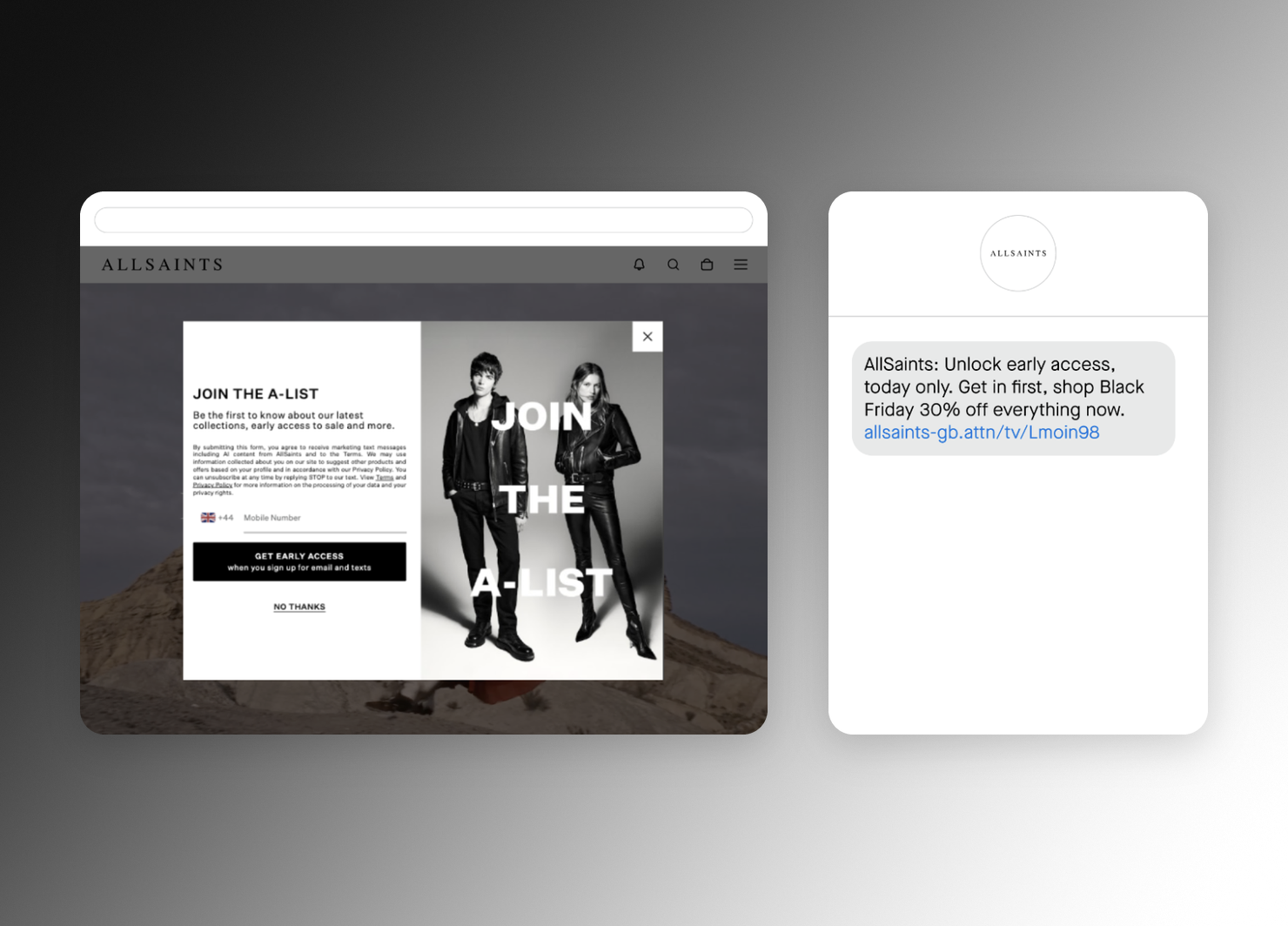
AllSaints manages messaging across the UK, US, EU, and international markets. SMS adds immediacy, email gives the team room to adapt content by market, and triggered journeys respond to specific customer behaviors.
The team adapts campaigns around moments such as spring break and festival season and uses dynamic email content for different climates and regional conditions. The system stays coordinated while each market executes its own way.
“The key is to make that communication feel relevant and worth it.”
— Louisa Maloney, Global CRM Manager, AllSaints
What you can take from this: Centralize the principles. Leave the execution details local. Establish shared channel roles, journey logic, and rules for avoiding unnecessary messages. Then give regional teams room to adjust creative, timing, merchandising, and cultural context.
Read the full customer story: How AllSaints Built a Global On Brand Growth Engine
The common pattern: Coordinate the decision, not the distribution
Read in sequence, the examples build on one another. Hello Adorn gives each channel a role. Levenger matches that role to message depth. ReserveBar adds shared context. Clove lets behavior change the next decision. SNDYS uses journeys between campaigns. AllSaints scales the model while keeping local judgment.
Together, they form one operating model: distinct channel jobs, shared customer context, behavior-driven next steps, and clear stopping rules.
A mature email, SMS, and push strategy comes down to four habits: know what changed, decide the job, choose the channel that fits, and know when to stop. That’s coordinated lifecycle marketing.
Seven questions to plan the next customer touchpoint
- What changed? What did the customer browse, click, purchase, ignore, return, or show interest in?
- What job needs to be done next? Does the customer need explanation, a reminder, an alert, a reward, reassurance, or a direct path back to an action?
- Which channel is best suited to that job? Choose based on the experience the message needs to create.
- What has the customer already received or done? Carry previous interactions forward so the next message doesn’t start from zero.
- What should change or stop the sequence? Define the purchase, engagement, or other event that should cancel, delay, or alter another touchpoint.
- Is this better handled by a journey or a campaign? Let individual behavior trigger messages when relevance depends on the customer's timing.
- Would sending nothing be better? Restraint is part of coordination. The next-best message isn’t always another message.
When every channel has a purpose, every message is a decision.
Explore how the Attentive omnichannel marketing platform connects customer context across SMS, email, RCS, and push.