
A good welcome email is the start of a lasting customer relationship.
A welcome email is more than an introduction to your brand. When done well, a thoughtful welcome email series encourages a new subscriber’s first purchase and lays the foundation for them to be a loyal customer.
This edition of the Emails We Love series explores how brands welcome new subscribers. Draw inspiration from 18 of the best welcome email examples we’ve seen and test what gets your subscribers to take action.
18 welcome email examples we love
Each of these messages serves a different purpose within the brand’s full welcome email series. Click on each email example below to see it in full, then determine which elements make sense to add for your brand.
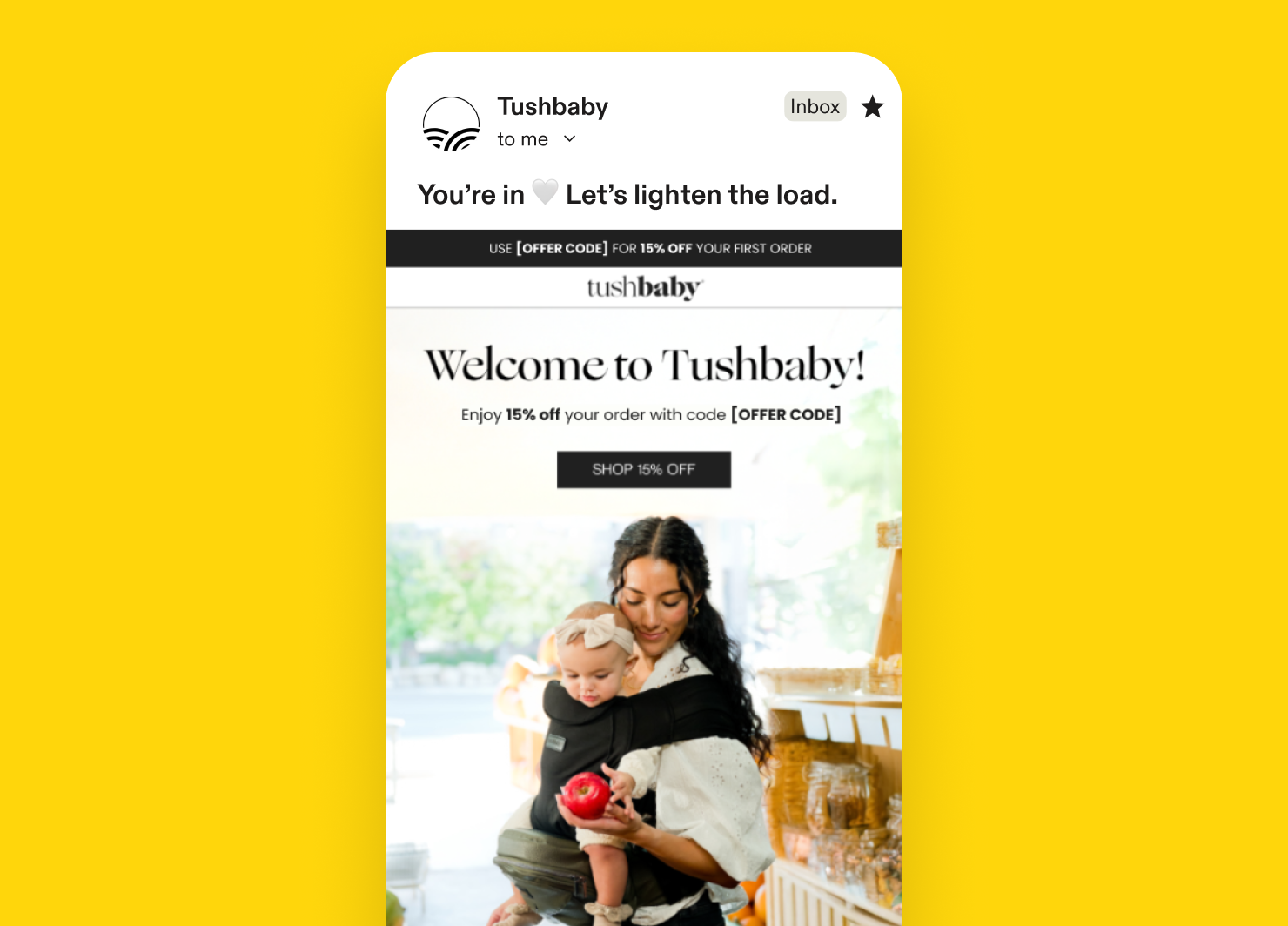
1. Tushbaby: Deliver on your promise
Every good welcome series starts by giving new subscribers what they signed up for, like Tushbaby does in its first welcome message.
[image-modal-trigger-1] [data-bg="#FFD60B"]
[image-modal-trigger-1]
[image-modal-source-1]

[image-modal-source-1]
Why we love it:
- Discount code and a call to action to shop above the fold, no clutter
- Communicates product value up front, then shows how the brand supports parents as their baby grows
- Highlights best sellers with social proof
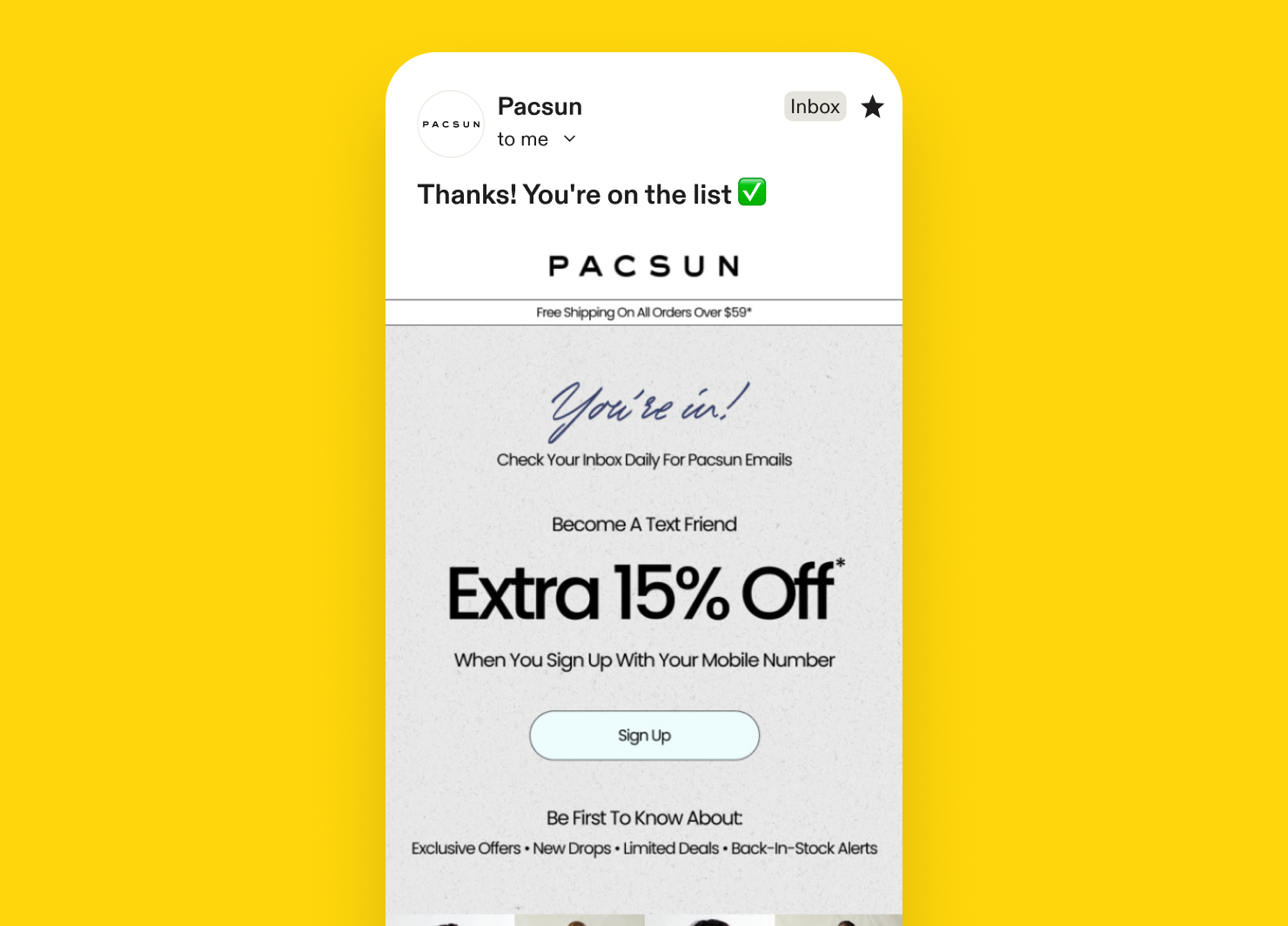
2. Pacsun: Incentivize subscribing to text messages, too
Our research shows it pays to ask shoppers to subscribe to multiple channels:
- 57% of shoppers say they’re more likely to make a purchase from a brand when they see the same promotion in multiple places.
- 85% of those who get emails and texts from brands are open to subscribing to both channels when a brand asks.
In their welcome email, Pacsun invites email-only subscribers to sign up for texts too.
[image-modal-trigger-2] [data-bg="#FFD60B"]
[image-modal-trigger-2]
[image-modal-source-2]

[image-modal-source-2]
Why we love it:
- Adds an incentive to sign up for SMS
- Spells out the perks of signing up for texts
- Interchangeable seasonal image block invites subscribers to discover what’s new
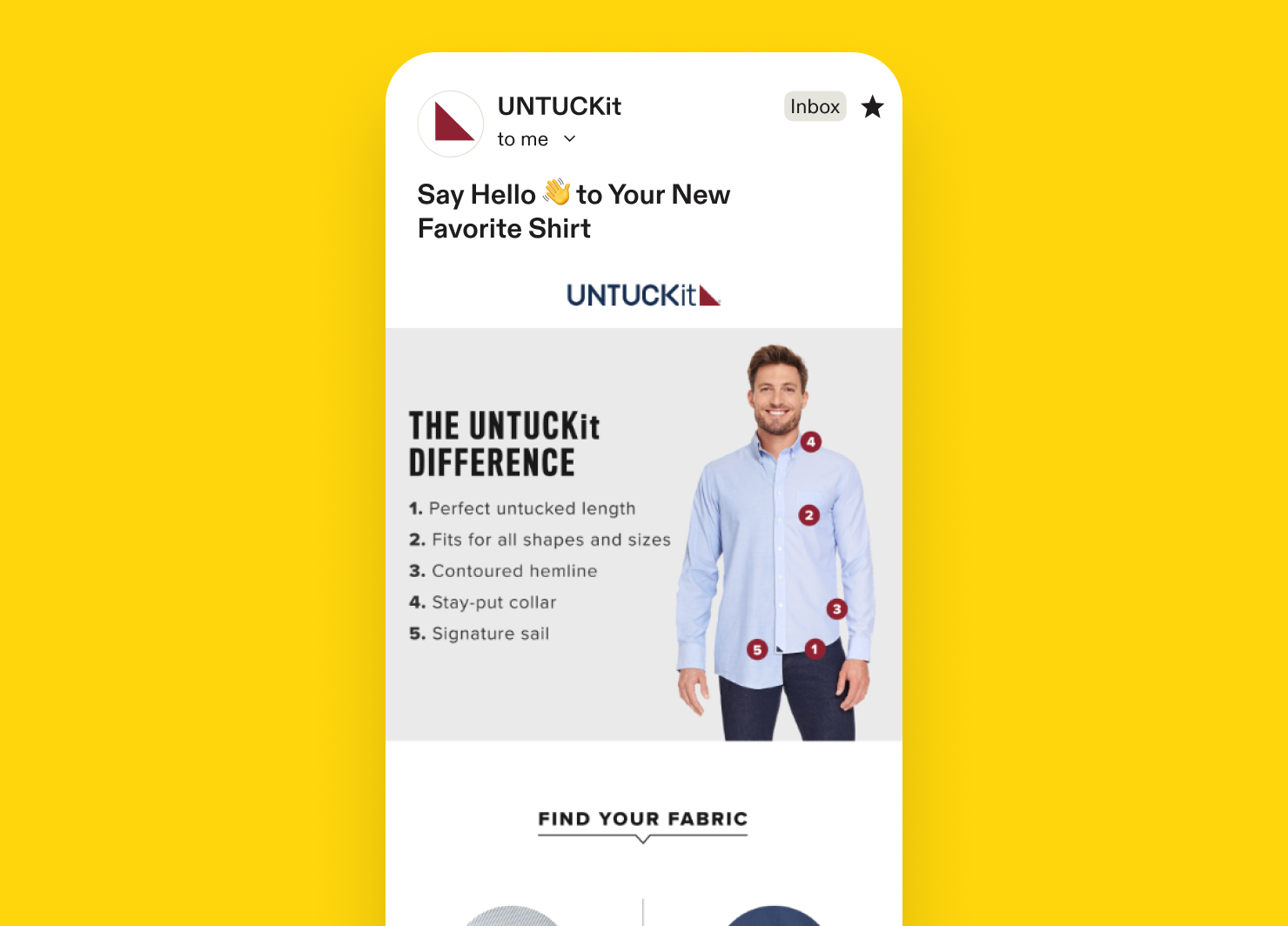
3. UNTUCKit: Highlight your differentiators
Use a product-focused welcome email to introduce new subscribers to what makes your product stand out, like UNTUCKit does.
[image-modal-trigger-3] [data-bg="#FFD60B"]
[image-modal-trigger-3]
[image-modal-source-3]

[image-modal-source-3]
Why we love it:
- Shows the difference between a staple customers are used to and the unique features that make UNTUCKit special.
- Guides their next step with a fabric selector and curated recommendations
- Social proof emphasizes quality
{{pistachio-one}}
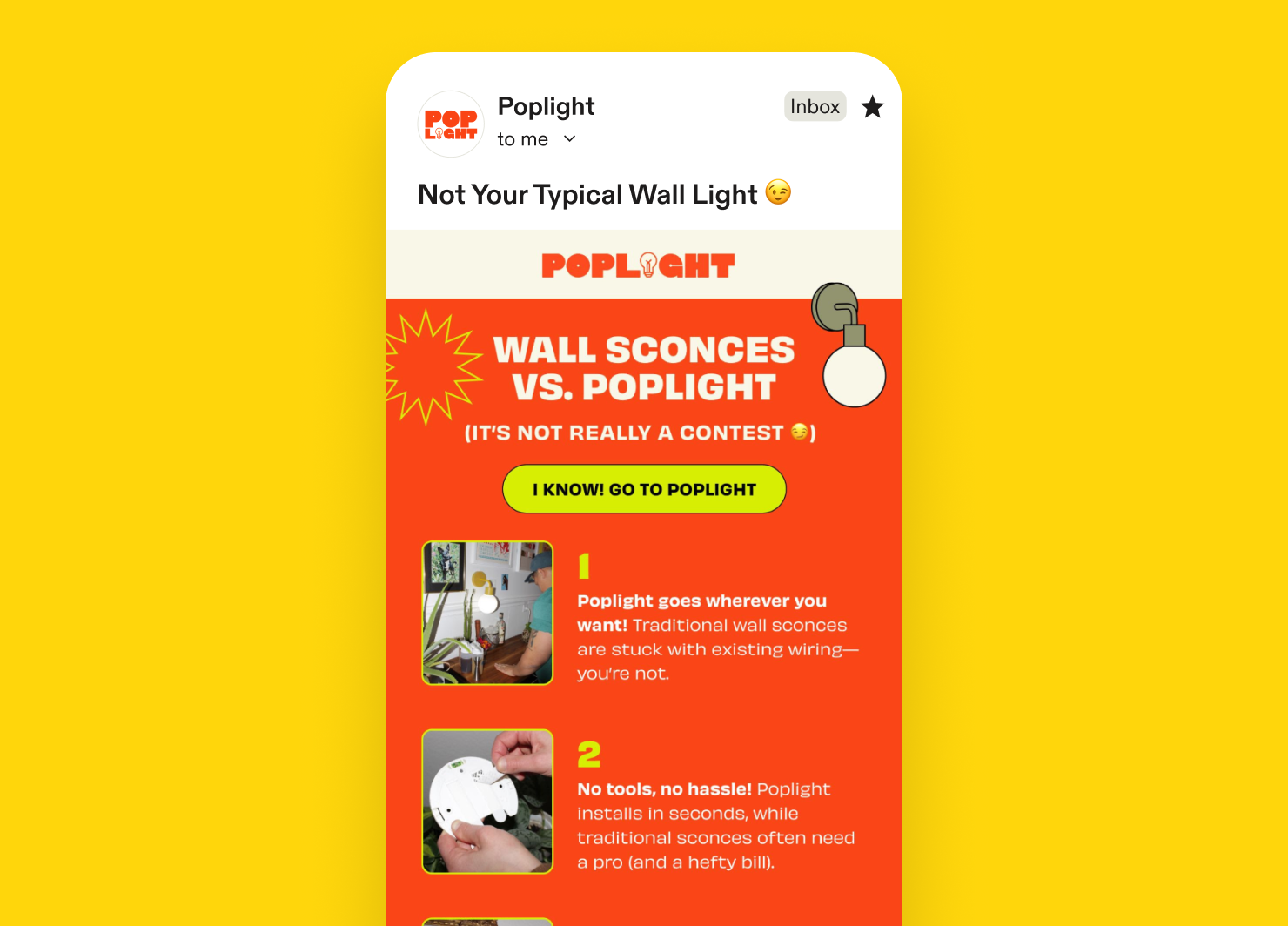
4. Poplight: Address objections to purchase
Anticipate the reasons a potential customer might hesitate to buy and answer their questions in your welcome email, like Poplight does.
[image-modal-trigger-4] [data-bg="#FFD60B"]
[image-modal-trigger-4]
[image-modal-source-4]

[image-modal-source-4]
Why we love it:
- Shows the benefits of Poplight products compared to the traditional option
- Social proof from trusted publications
- Reminds subscribers about their welcome offer
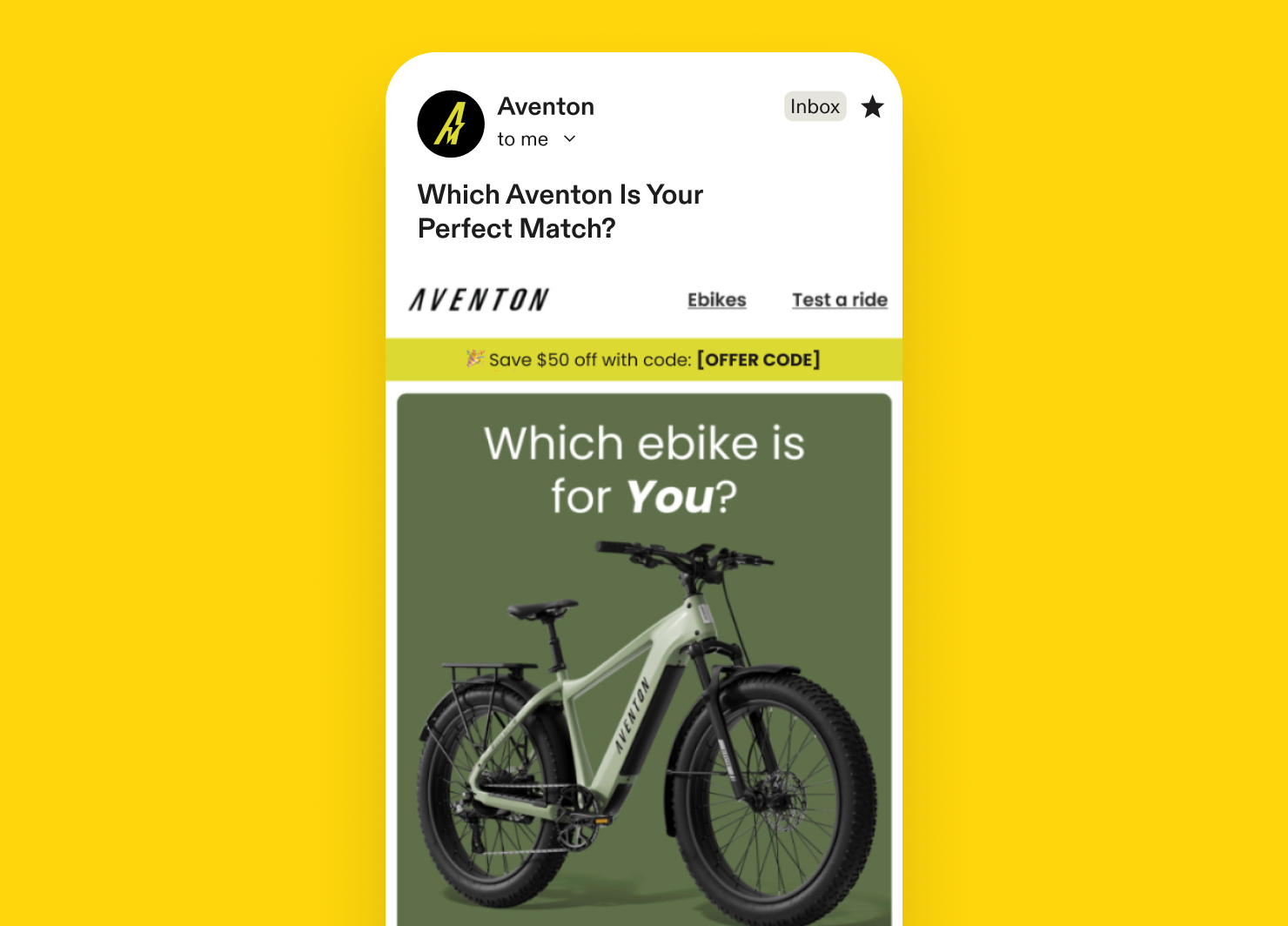
5. Aventon: Help shoppers choose with an educational welcome email
A welcome email that helps shoppers narrow down their options gets them to checkout faster.
[image-modal-trigger-5] [data-bg="#FFD60B"]
[image-modal-trigger-5]
[image-modal-source-5]

[image-modal-source-5]
Why we love it:
- Reminds shoppers about their promo code at the top
- Describes the main product categories with a CTA to shop each one
- Eases shopper concerns with policy information
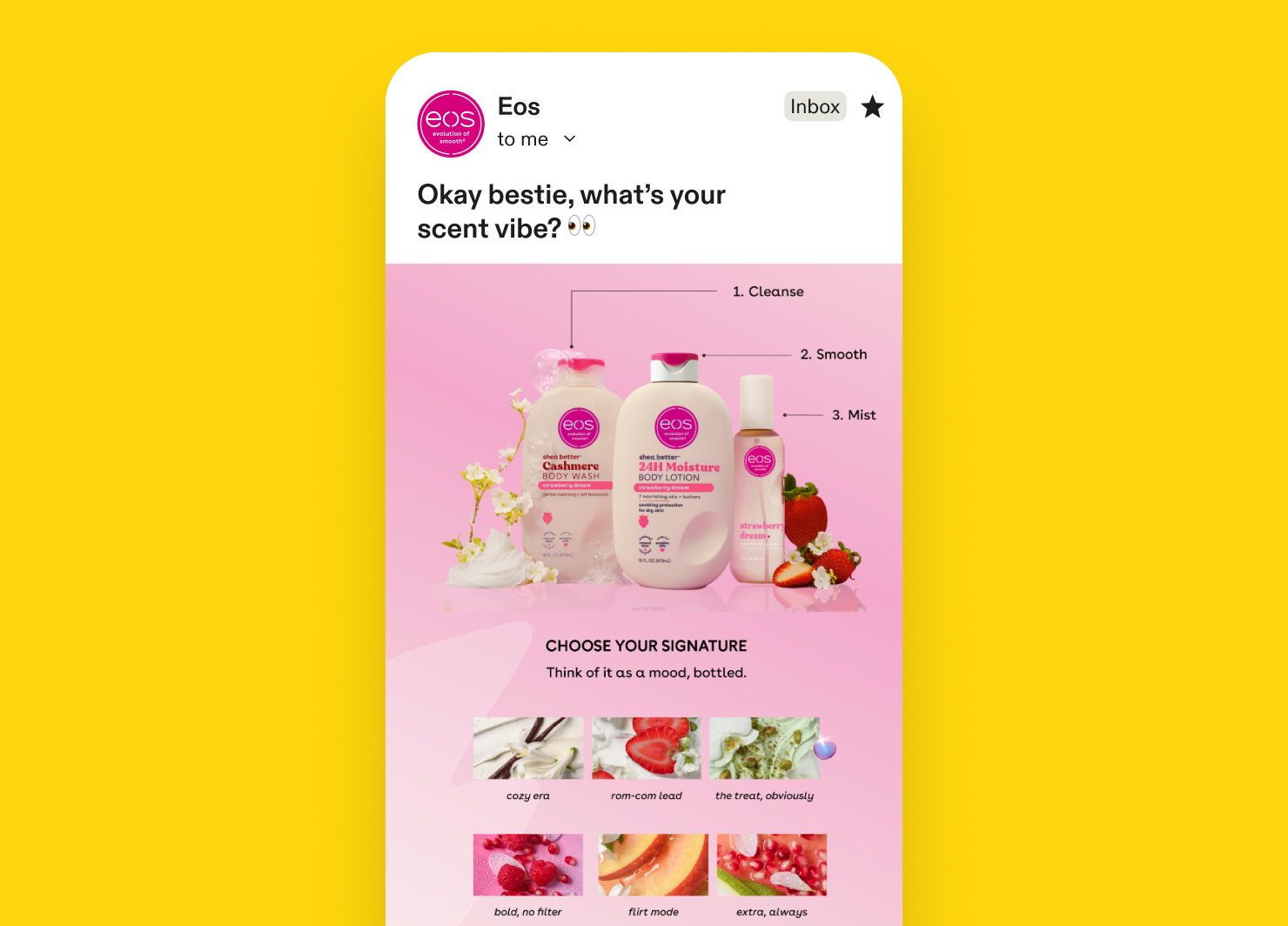
6. eos: Recommend a bundle
If you have products that go together, like eos’ smooth-skin starter pack, share them as a unit.
[image-modal-trigger-6] [data-bg="#FFD60B"]
[image-modal-trigger-6]
[image-modal-source-6]

[image-modal-source-6]
Why we love it:
- Promotes a bundle as a complete system
- Guides the shopper through a decision process, starting with the bundle, then adding vibe-based scents
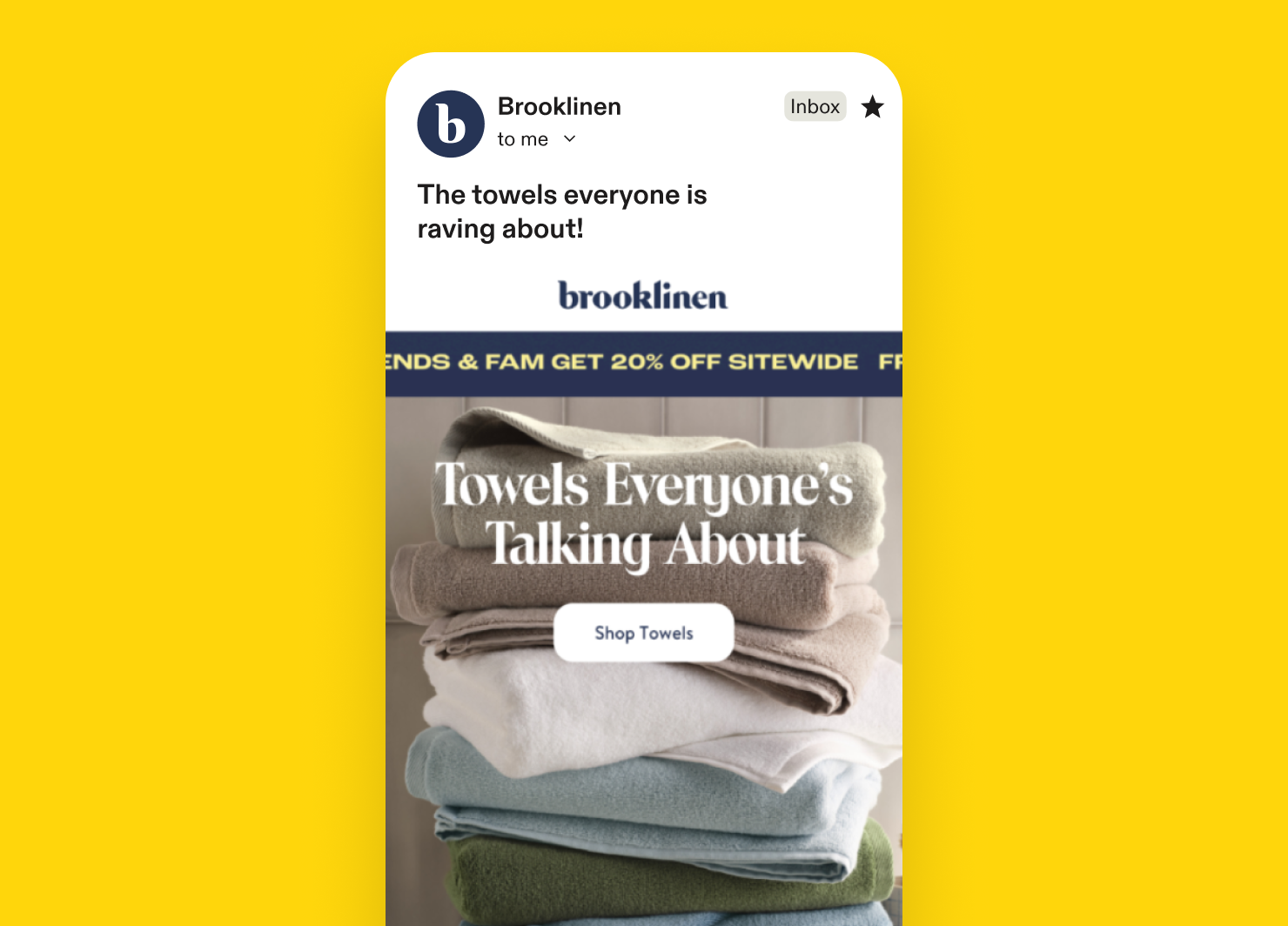
7. Brooklinen: Personalize the welcome experience
You often don’t have a lot of information about a customer when they first sign up. An information-gathering welcome email helps you learn their product interests and make future messaging more relevant.
So ask what they’re looking for so you can segment your welcome flow, like Brooklinen does.
[image-modal-trigger-7] [data-bg="#FFD60B"]
[image-modal-trigger-7]
[image-modal-source-7]

[image-modal-source-7]
Why we love it:
- Polls customers about what they’re looking for in one email, then follows up with this category-specific email
- Uncluttered CTA above the fold
- Compares product types within the category
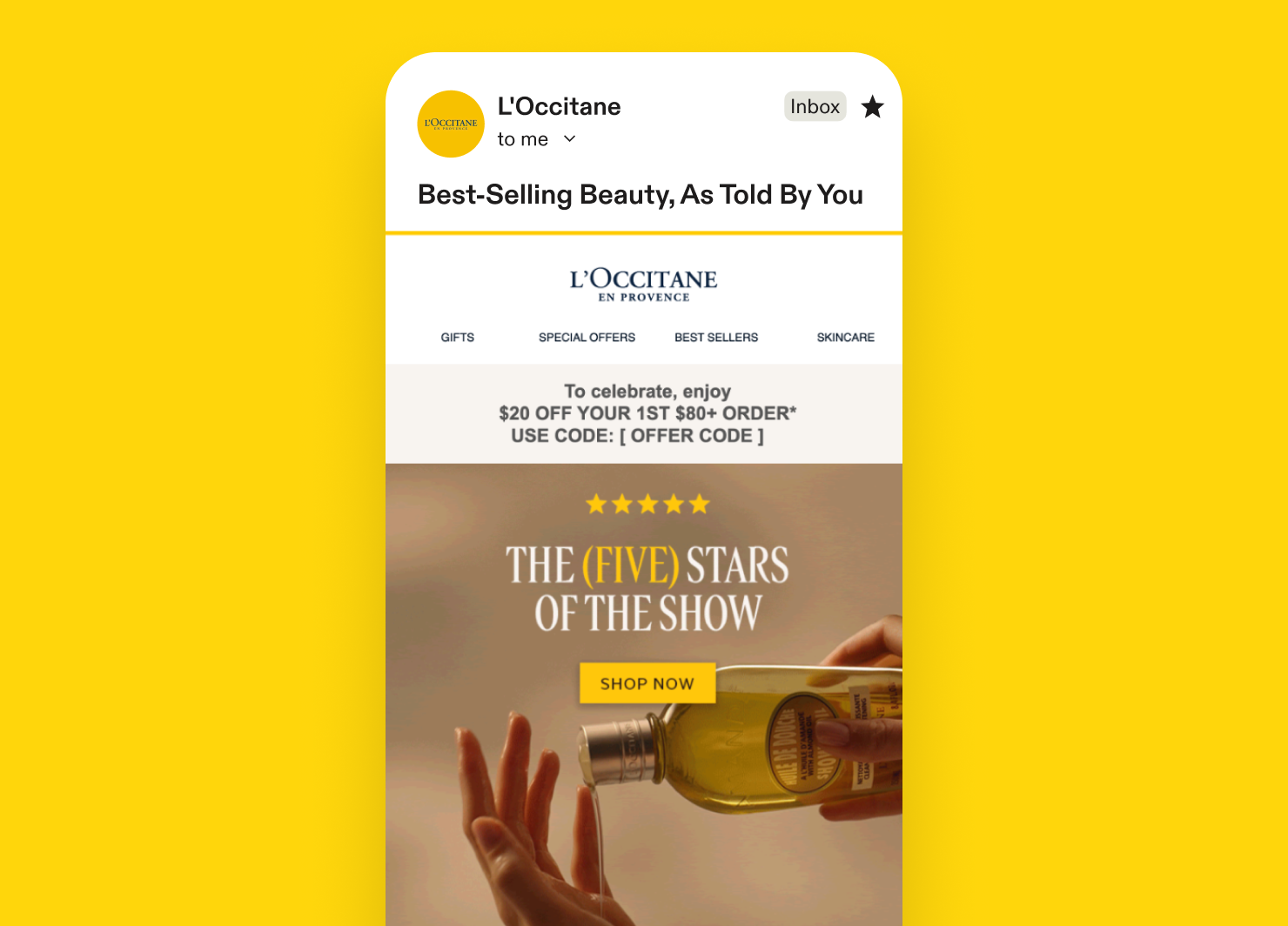
8. L’Occitane: Highlight social proof
Praise from other sources—customer ratings, industry publication features, influencer reviews—can do a lot to prove the claims you make about your products.
Here, L’Occitane’s welcome email uses customer testimonials to build trust by showing what customers love.
[image-modal-trigger-8] [data-bg="#FFD60B"]
[image-modal-trigger-8]
[image-modal-source-8]

[image-modal-source-8]
Why we love it:
- Reminds shoppers about the welcome offer at the top
- Lets social proof be the entire focus of the email, featuring different products through that lens
- Shares a quiz at the end to help undecided shoppers
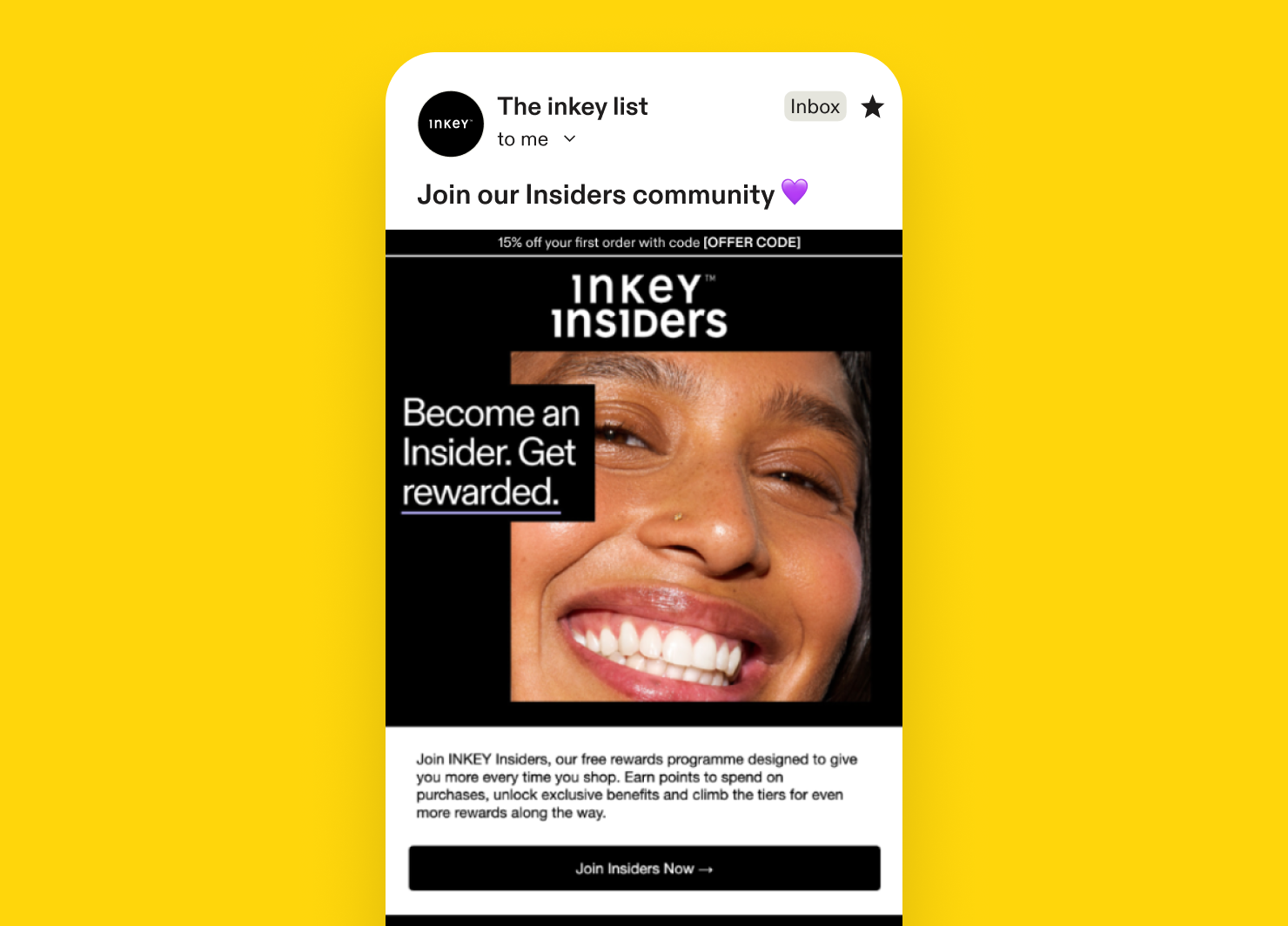
9. The INKEY List: Invite them to your loyalty program
Share about other ways shoppers benefit by shopping with you—like The INKEY List does with its loyalty program.
[image-modal-trigger-9] [data-bg="#FFD60B"]
[image-modal-trigger-9]
[image-modal-source-9]

[image-modal-source-9]
Why we love it:
- Lists out the exclusive benefits of joining the loyalty program
- Illustrates how points turn into actual savings
- Reminds subscribers about their discount code at the top and bottom
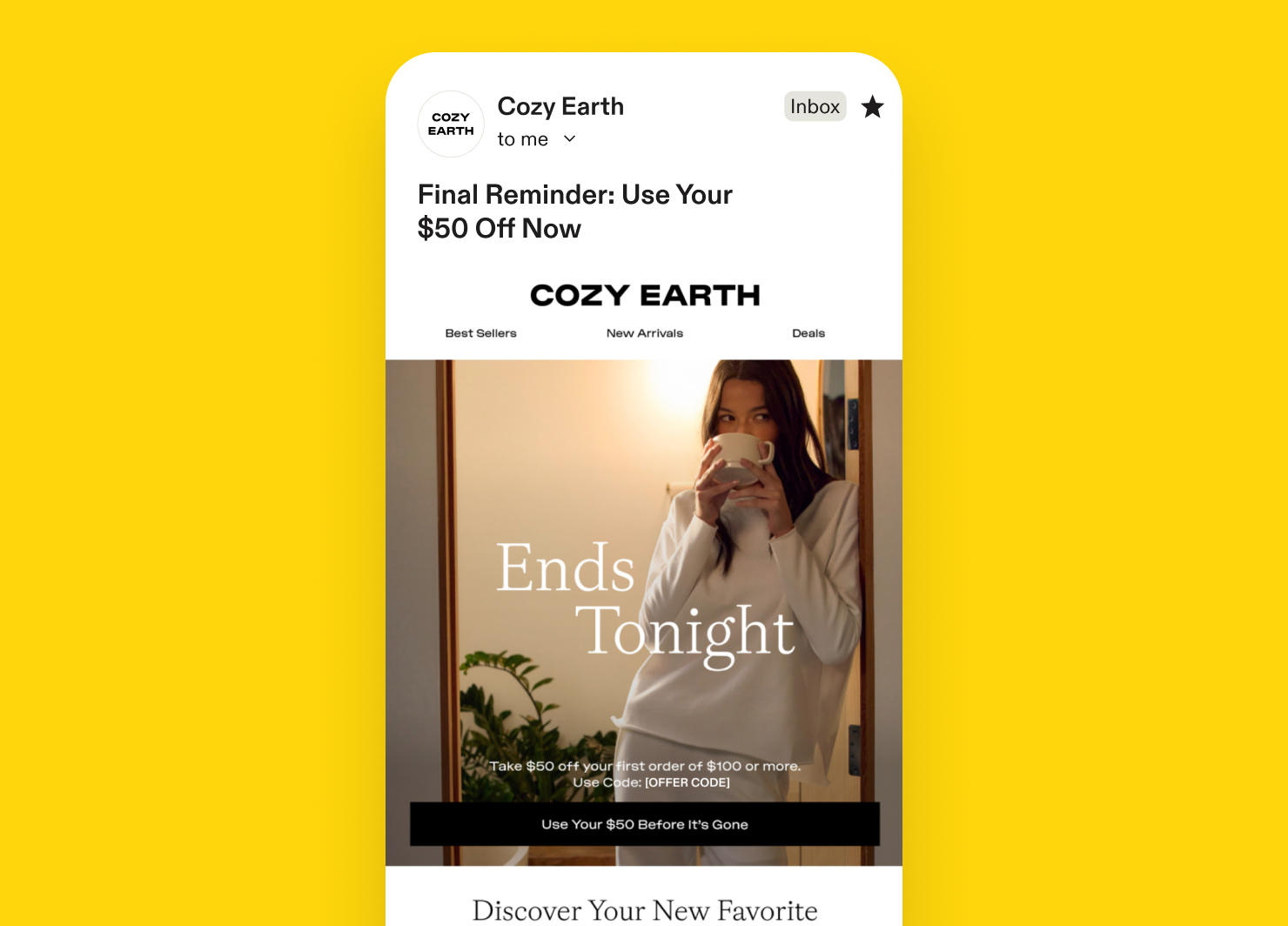
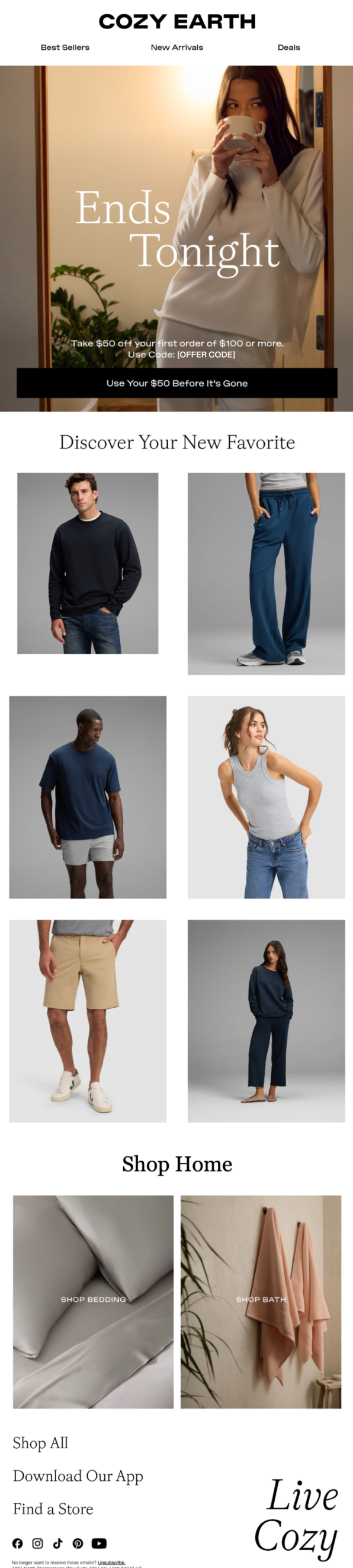
10. Cozy Earth: Remind subscribers before their offer expires
Lean into a little FOMO to remind new subscribers about your welcome offer at the end of your welcome email series, like Cozy Earth does.
[image-modal-trigger-10] [data-bg="#FFD60B"]
[image-modal-trigger-10]
[image-modal-source-10]
[image-modal-source-10]
Why we love it:
- Short welcome message with a clear primary action above the fold.
- Features a selection of products to draw shoppers in with something specific.
- Subscribers currently receiving the welcome flow are excluded from certain campaigns to prevent message fatigue.
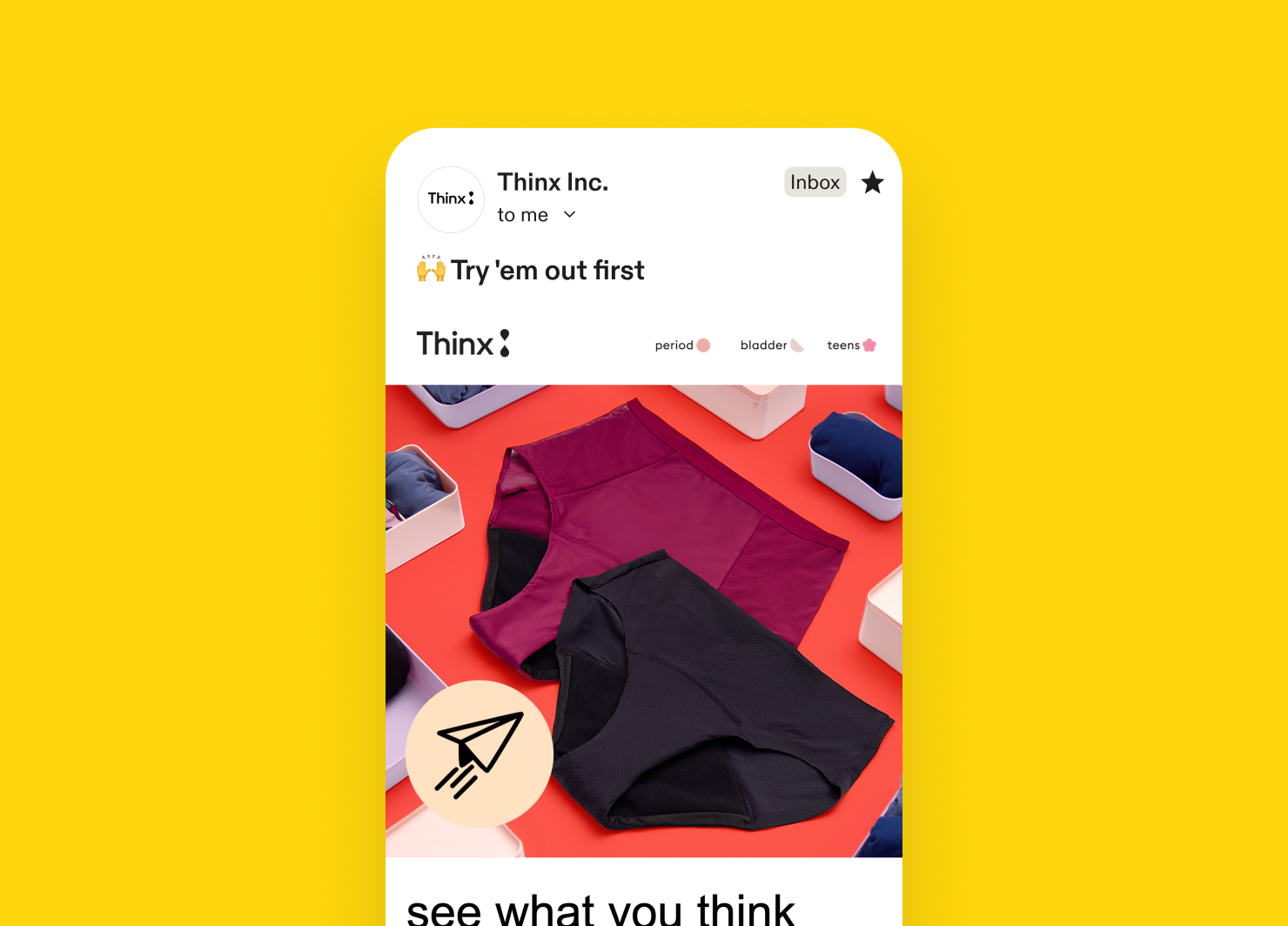
11. Thinx: Highlight policy information
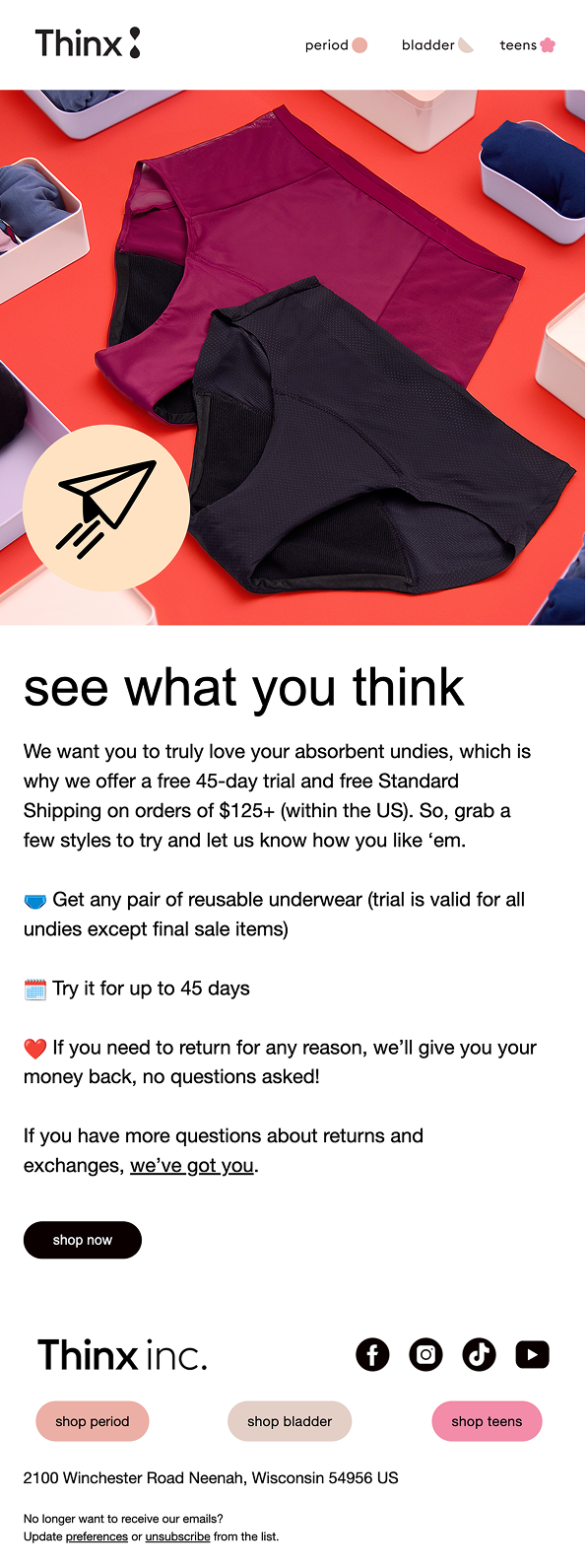
Use your welcome email to build trust by explaining policies that reduce shoppers’ perceived risk of trying out your brand. THINX shares about their free 45-day trial.
[image-modal-trigger-11] [data-bg="#FFD60B"]
[image-modal-trigger-11]
[image-modal-source-11]
[image-modal-source-11]
Why we love it:
- Dedicated email to the 45-day trial
- Encourages shoppers to load up their cart, increasing AOV
- Clarifies when the trial doesn’t apply
12. Native: Help them find you in store
Towards the end of your welcome email series, if subscribers are having trouble committing, they may just want to see it in person.
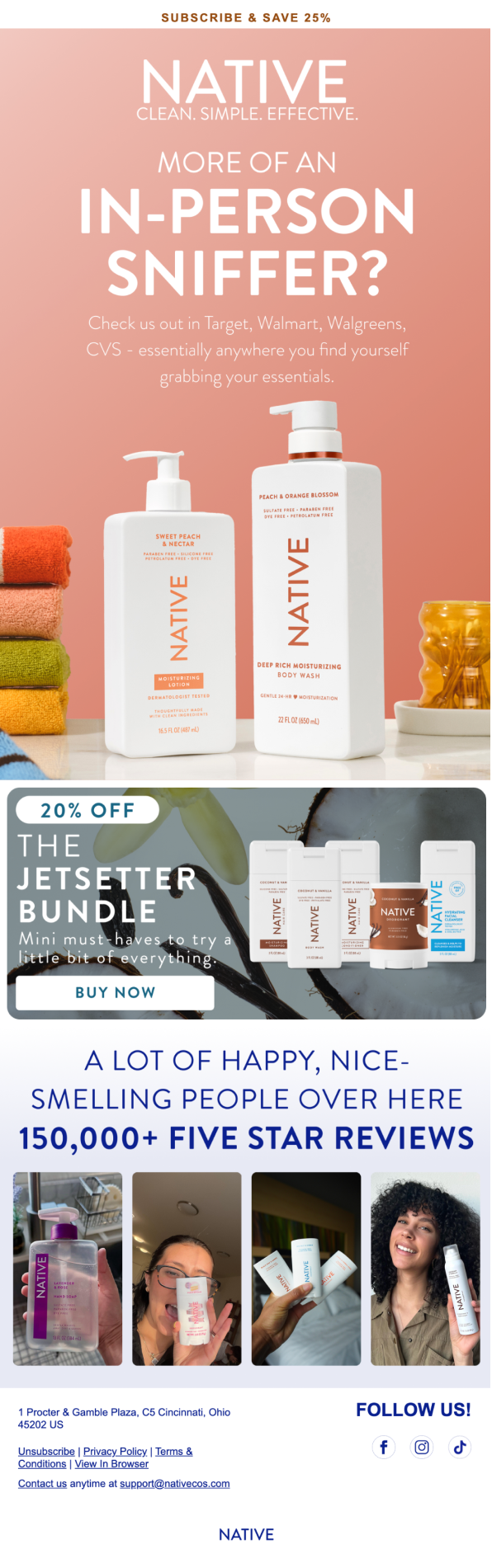
Native shares where subscribers can find them in a store.
[image-modal-trigger-12] [data-bg="#FFD60B"]
[image-modal-trigger-12]
[image-modal-source-12]
[image-modal-source-12]
Why we love it:
- Shares which stores Native can be found in
- Features a bundle that lets customers sample a few things
- Highlights reviews and customer photos as social proof
13. TOMS: Share your brand story and values
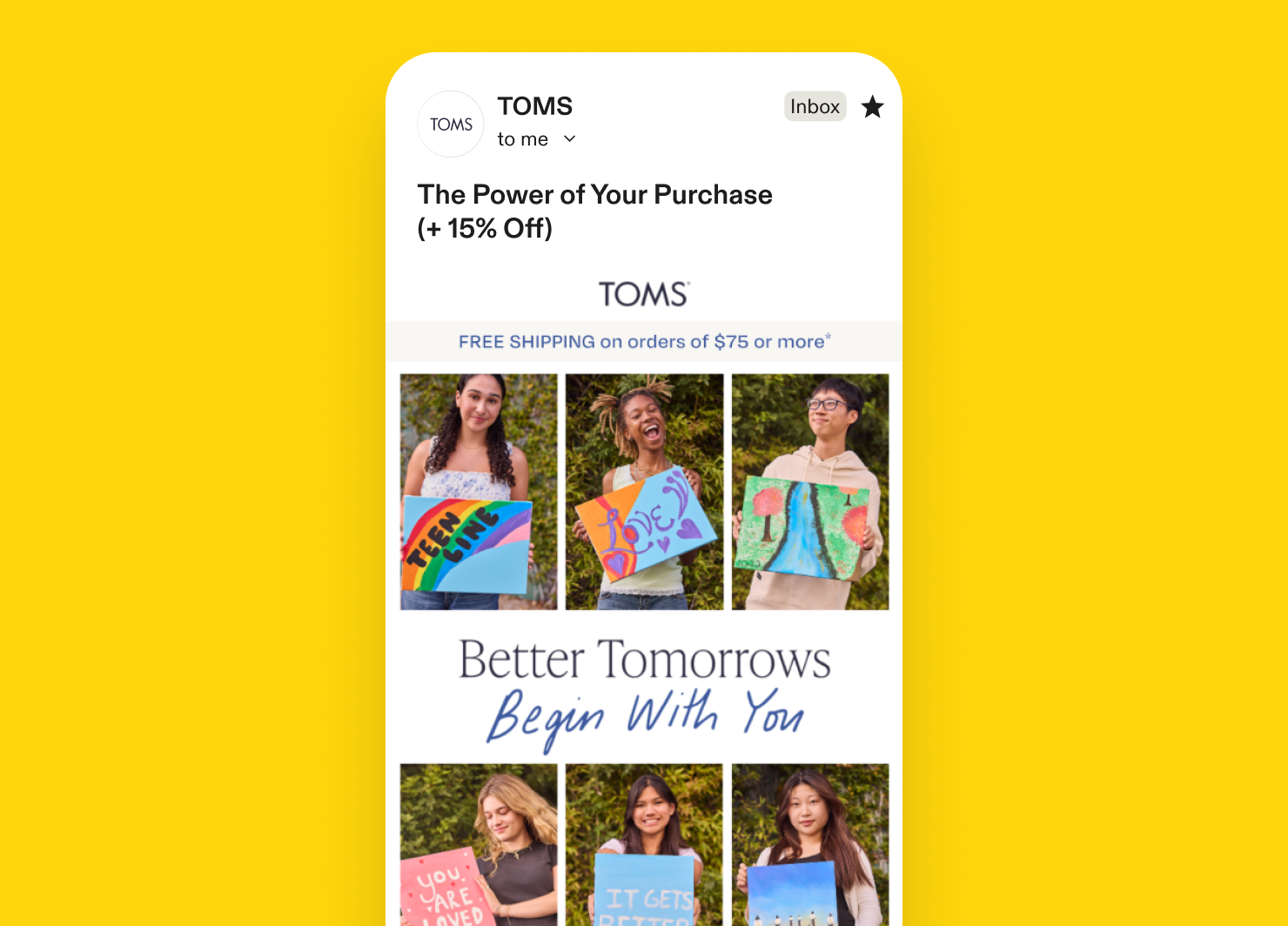
If your brand has a philanthropic aspect, connect your brand story to the difference shoppers can make in your welcome email, like TOMS does.
[image-modal-trigger-13] [data-bg="#FFD60B"]
[image-modal-trigger-13]
[image-modal-source-13]

[image-modal-source-13]
Why we love it:
- Shares about the social impact a purchase has
- Reminds shoppers about their welcome offer
- Curates a few styles to shop
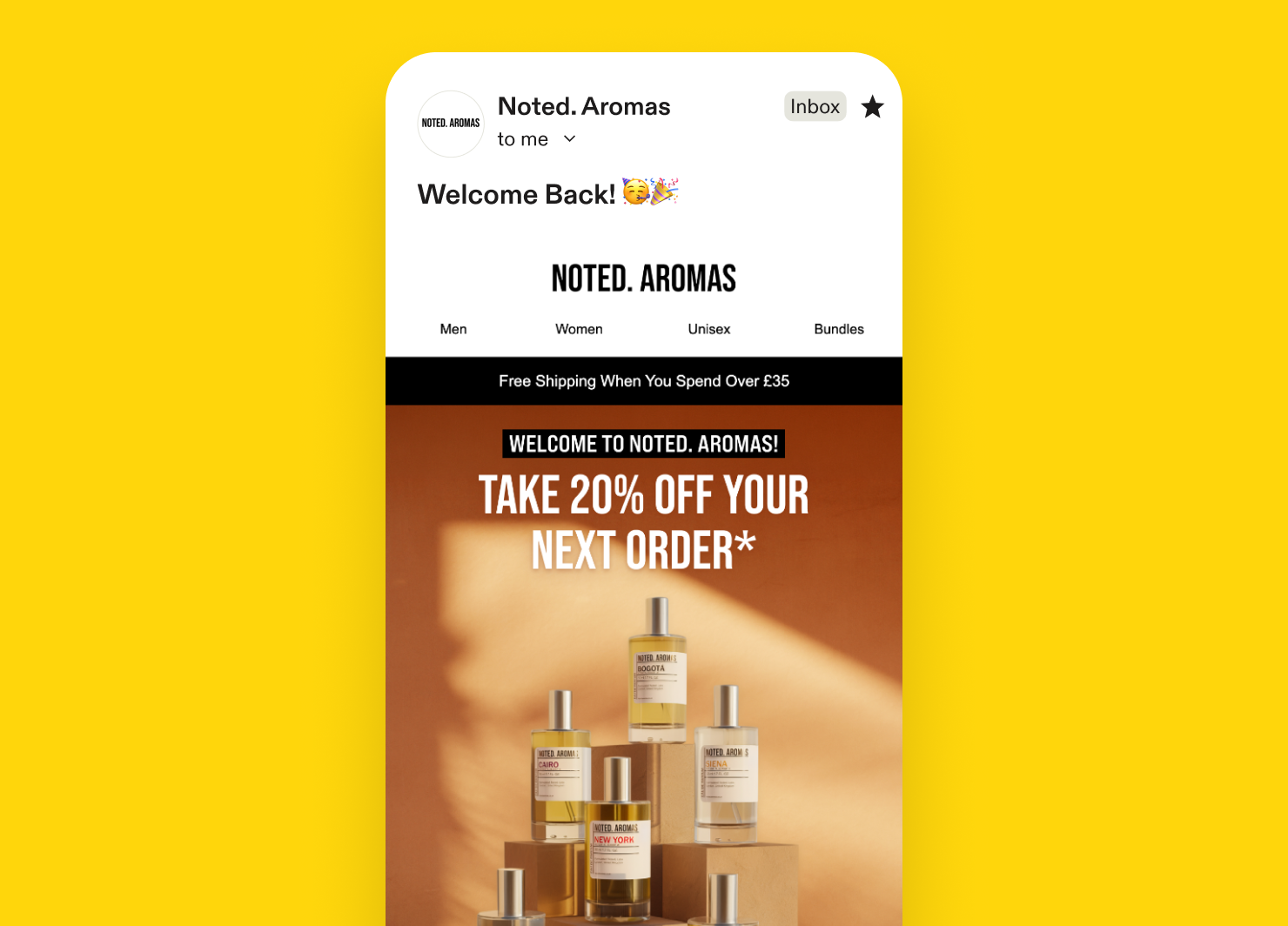
14. Noted Aromas: Acknowledge existing relationships
Not every new subscriber is a new customer. Noted Aromas welcomes existing customers with a next-order discount.
[image-modal-trigger-14] [data-bg="#FFD60B"]
[image-modal-trigger-14]
[image-modal-source-14]

[image-modal-source-14]
Why we love it:
- Different welcome email for first-time customers vs. returning customers
- Customer reviews highlight product quality
- Guides customers to purchase with a curated selection
“We’ve layered in segmentation so VIPs get treated differently to one-time buyers.”
— Jake Heath, eCommerce Director, eComplete Group
{{pistachio-two}}
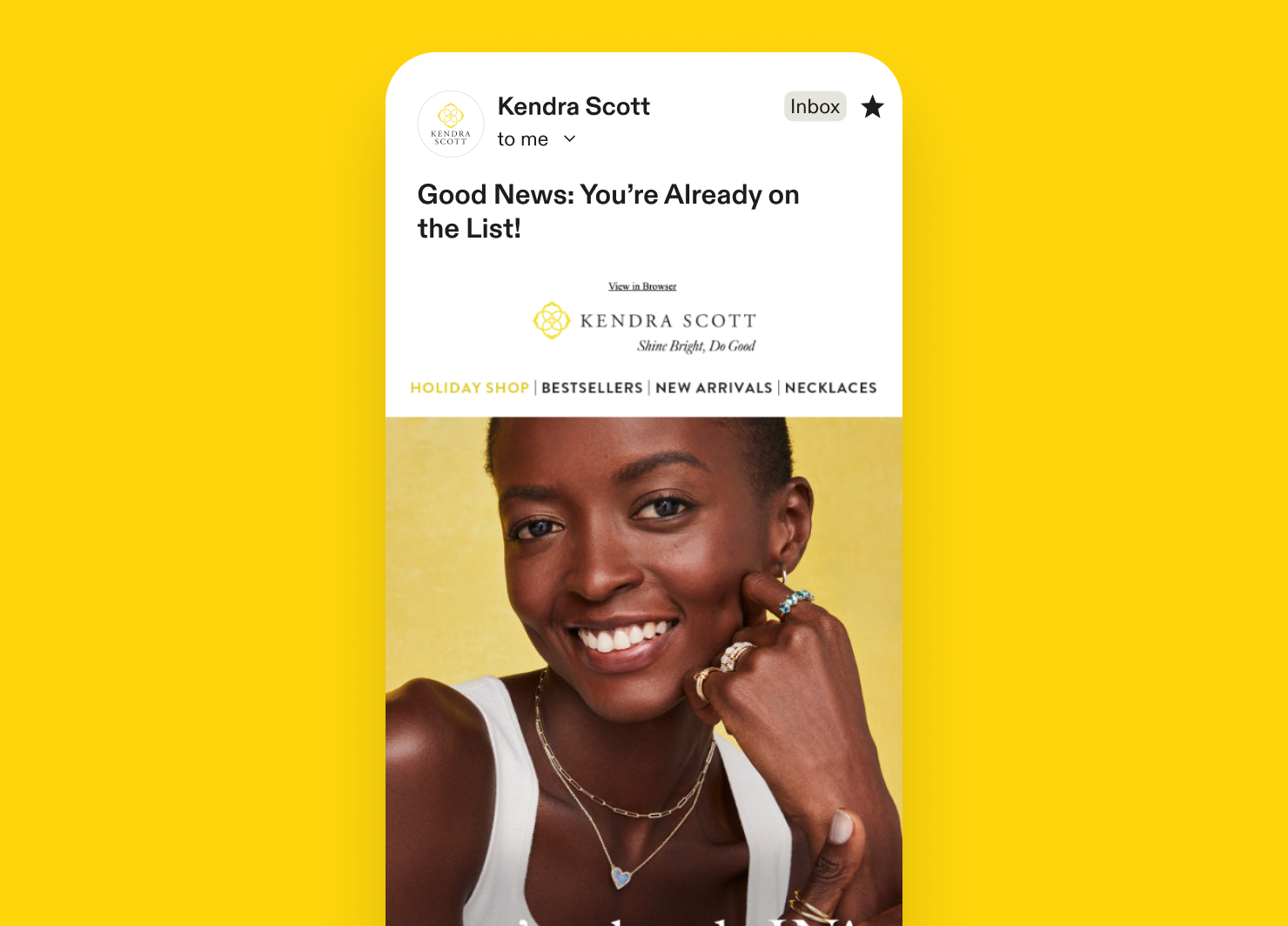
15. Kendra Scott: Celebrate existing subscribers
Some existing subscribers sign up without realizing they’re already on the list. Instead of ignoring these customers, Kendra Scott celebrates them.
[image-modal-trigger-15] [data-bg="#FFD60B"]
[image-modal-trigger-15]
[image-modal-source-15]

[image-modal-source-15]
Why we love it:
- Celebrates the existing relationship
- Shares a referral offer as an alternative to a welcome discount that isn’t applicable to them
- Sparks shopper interest with a curated product selection
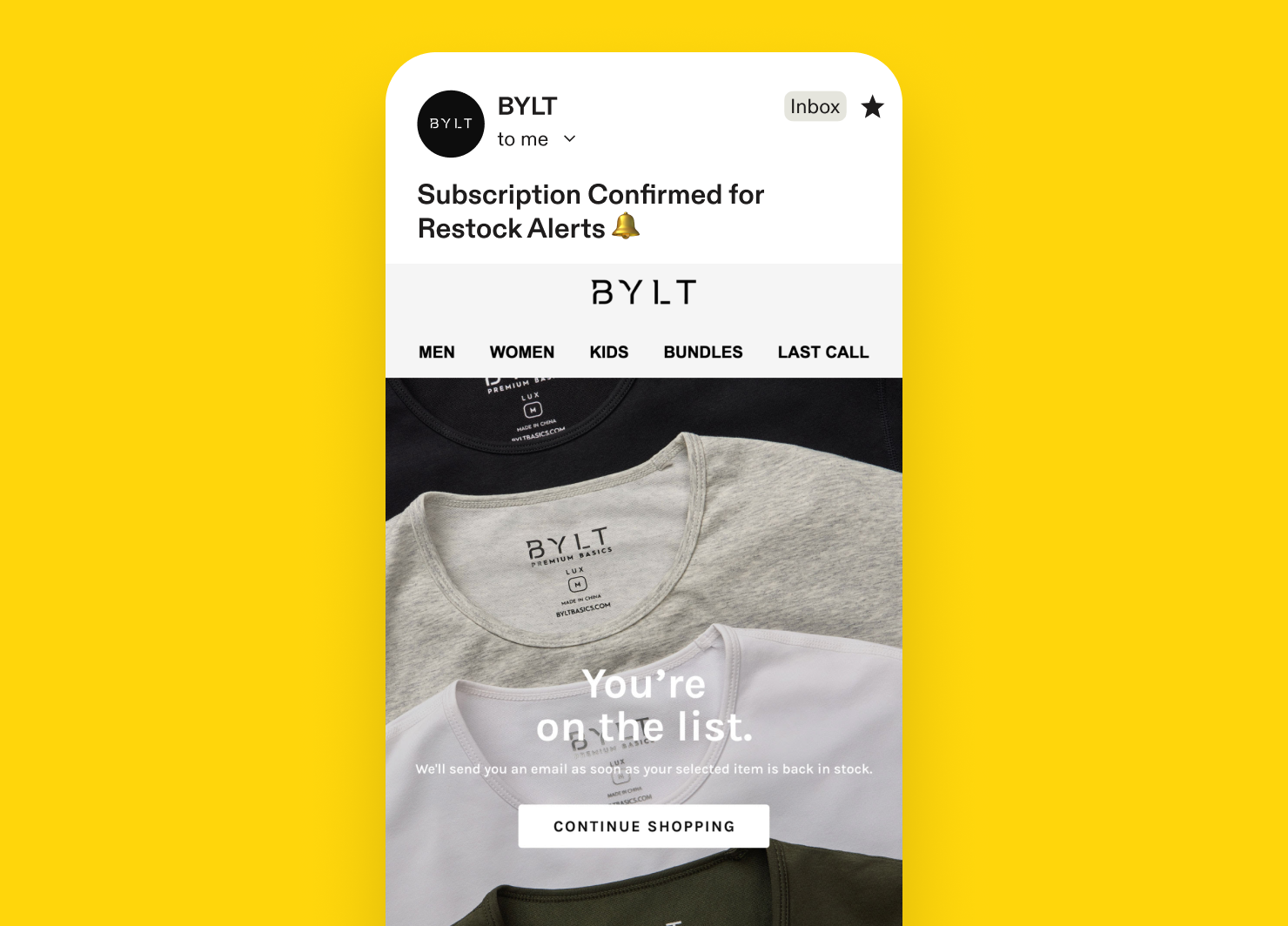
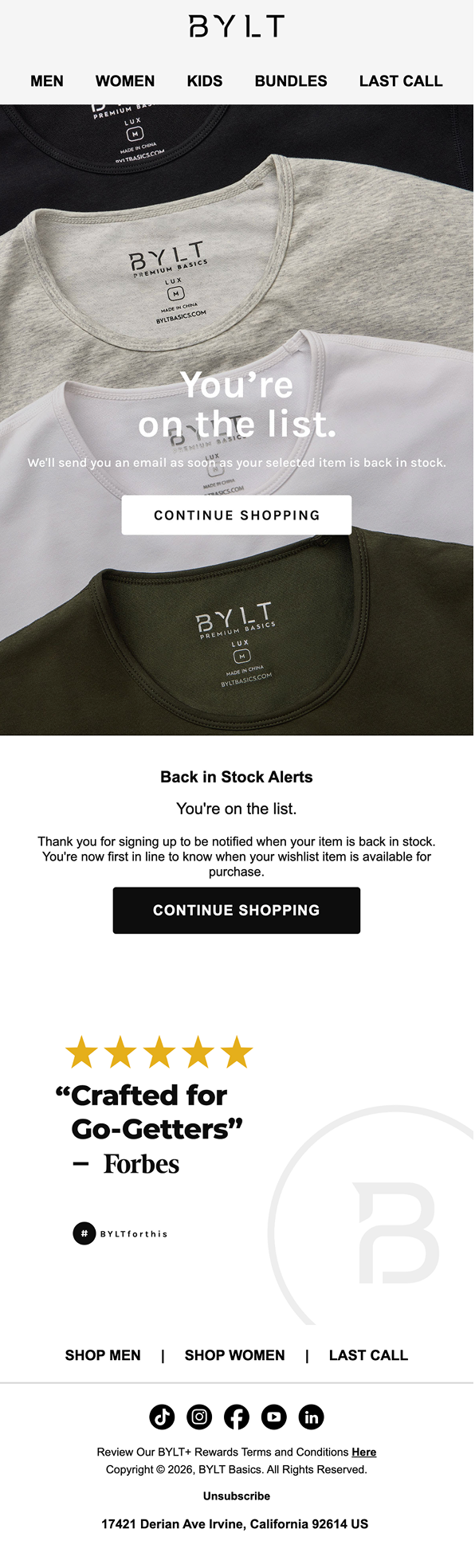
16. BYLT: Build a different flow depending on how they sign up
If shoppers can subscribe via a restock alert list, use that sign-up source to tailor the welcome email series to their sign-up intent, like BYLT does.
[image-modal-trigger-16] [data-bg="#FFD60B"]
[image-modal-trigger-16]
[image-modal-source-16]
[image-modal-source-16]
Why we love it:
- Confirms the reason subscribers signed up
- Highlights social proof to communicate value
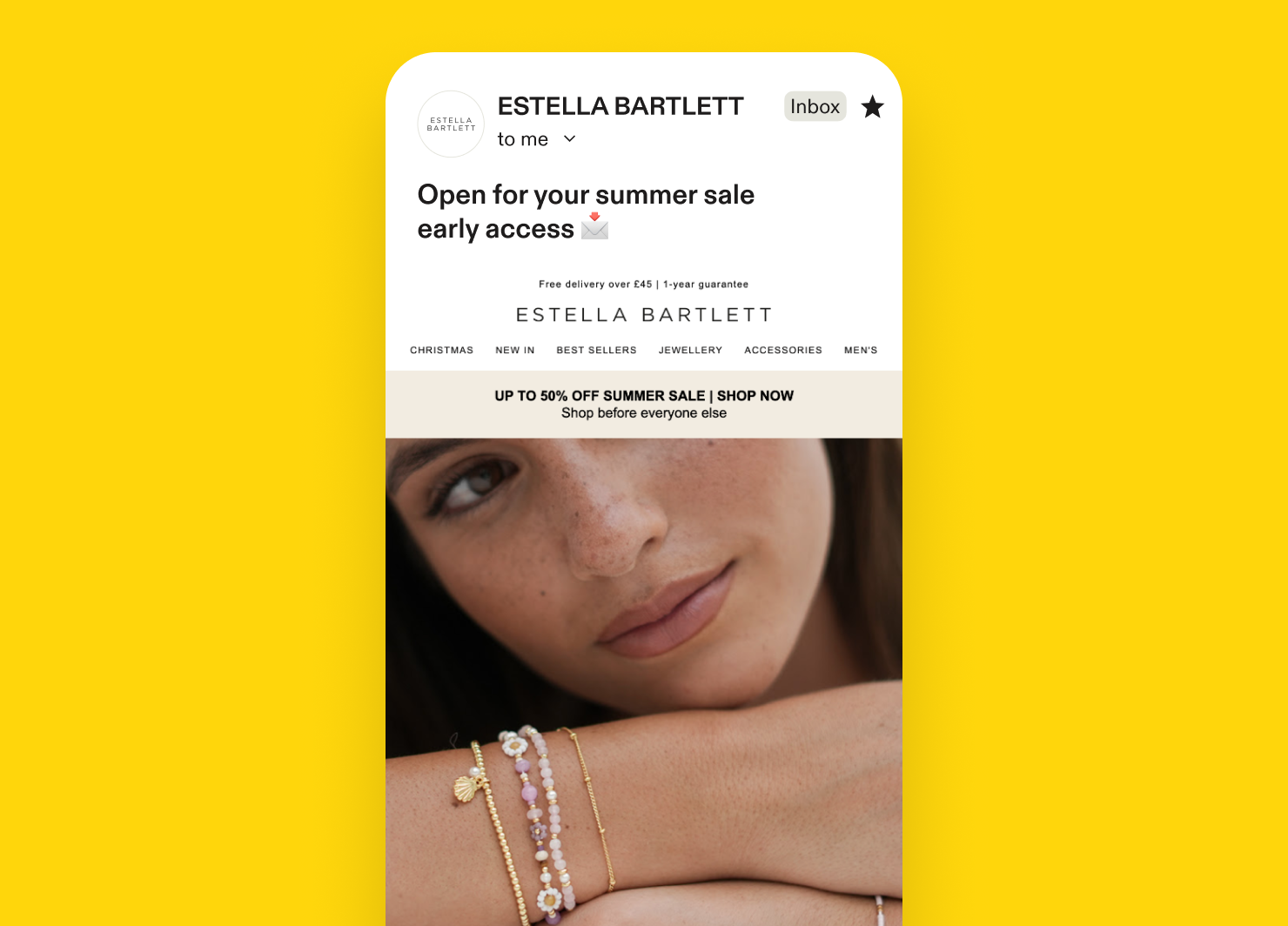
17. Estella Bartlett: Switch out your usual welcome flow for special occasions
If you’ve got a sale going on, acknowledge it in your email welcome flow. This is particularly useful if shoppers can’t stack a welcome offer on top of the sale.
Estella Bartlett’s early access welcome email reached a 38.4% click-through rate—more than 3x their standard welcome flow.
[image-modal-trigger-17] [data-bg="#FFD60B"]
[image-modal-trigger-17]
[image-modal-source-17]

[image-modal-source-17]
Why we love it:
- Replaces standard welcome journey with sale-specific copy
- Highlights popular product categories to guide the shopping journey
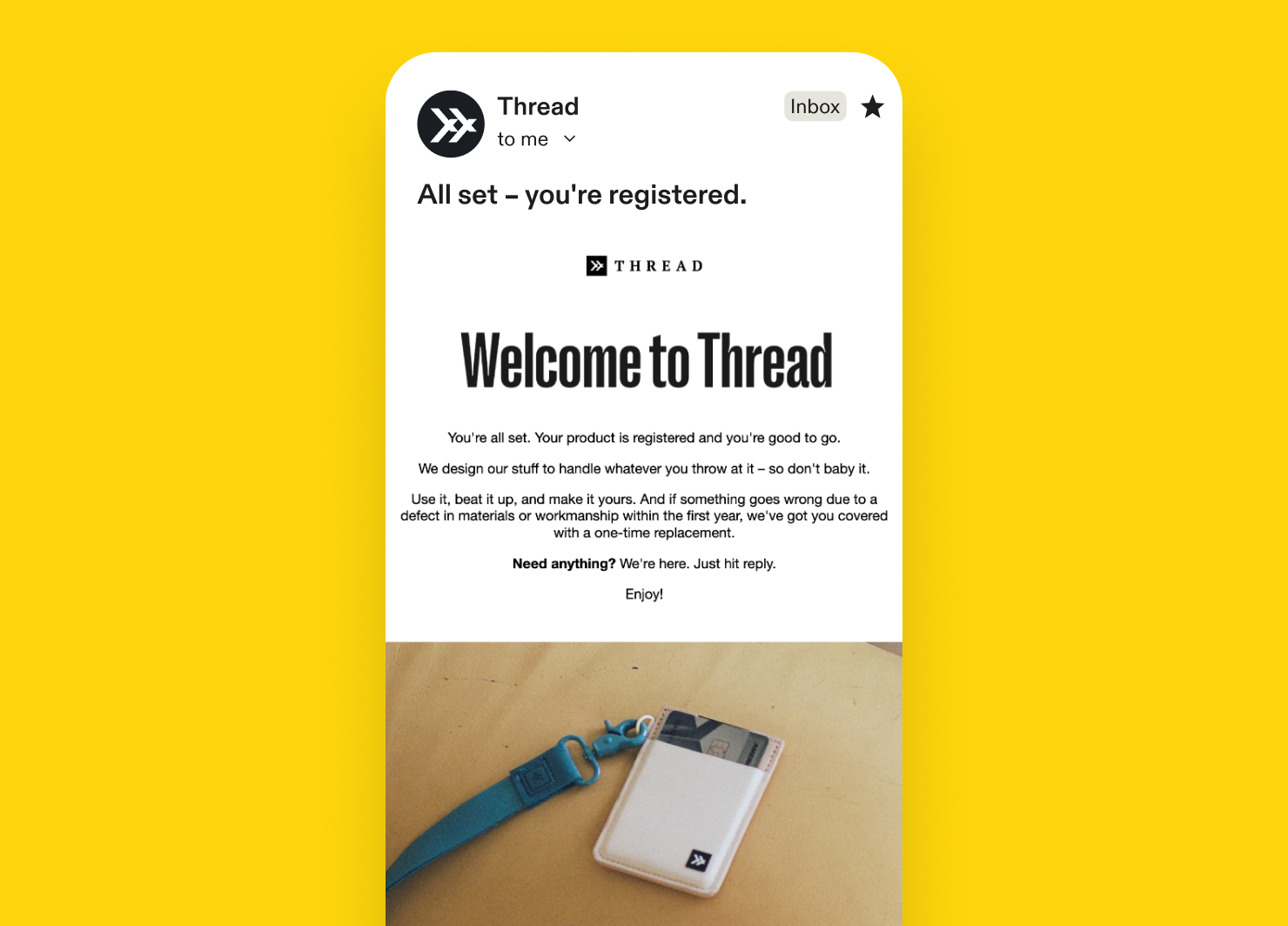
18. Thread: Turn transactional messages into relationship-building moments
Activating a warranty usually isn’t a special occasion, but Thread uses that operational touchpoint to start building the direct relationship.
[image-modal-trigger-18] [data-bg="#FFD60B"]
[image-modal-trigger-18]
[image-modal-source-18]

[image-modal-source-18]
Why we love it:
- Starts by confirming the registration and emphasizing that the brand is available for support
- Highlights categories to shop
- From here, Thread continues the flow by educating on their brand, sharing best sellers, and highlighting social proof
{{pistachio-three}}
Welcome flow in action: A basic email welcome series you can start with
So, how do you put your email welcome series together? The right flow will vary brand by brand, but three to four emails are a good starting point. Test content, timing, and sequence length from there.
Use the framework below to plan your welcome email series, then adapt your emails to each message’s purpose.
Email 1: Deliver on your promise and set expectations
Send your first email right when a subscriber signs up. Include your welcome offer, briefly introduce your brand, and set expectations for future emails, whether you send a weekly newsletter, product tips, or exclusive deals. Include a clear call to action that guides them to use your welcome offer.
Email 2: Help them find the right product
Introduce your range by featuring customer favorites, a quiz, a buying guide, or curated collections. Help them understand the differences between similar products. If you collected preferences at sign-up, use those answers to tailor this email. These helpful resources give new subscribers valuable content even if they’re not ready to buy.
Email 3: Build trust
Address the pain points that may hold subscribers back from buying. Share social proof with customer reviews and industry accolades to highlight quality. Share helpful resources that show how to use a product, so subscribers can envision it in their routine. Explain your returns policy or guarantee to reduce perceived risk.
Email 4: Remind them about their welcome offer
Send a reminder about the welcome offer at the end of your welcome email sequence. If it expires, let them know how long they have.
Welcome email best practices
A successful welcome email is part of the greater customer journey, from sign-up to purchase and beyond. Use these six best practices to create a consistent brand experience throughout your welcome email series.
It starts with a strong sign-up experience
Your list growth strategy needs just as much attention as the email sequence that follows it.
To draw in new subscribers, entice them with a strong incentive, highlight the benefits of being a subscriber, and show your sign-up form at the right moment.
72% of shoppers say pop-ups usually appear before they’re ready to subscribe and 66% feel annoyed when pop-ups appear before they’ve had a chance to look around.
A tool like Attentive’s AI Grow personalizes sign-up unit timing based on each shopper’s behavior—surfacing your unit at the moment each individual shopper is most likely to sign up.
In an 84-day test using AI Grow, Levenger increased email signups 27%, while welcome journey revenue rose 39%.
{{grey-one}}
It’s part of a welcome series
Some brands stop at one welcome email. But you miss out on opportunities to nurture a new subscriber into a customer—and the potential value that comes from a long-term relationship with them.
Not all shoppers will act right away. A welcome email series will keep your brand top of mind while they consider, give additional information to help them decide, and remind them to take action.
Start with the three- to four-email framework above, then test the content, timing, and additional messages. Assess welcome email performance through click-through rates, purchases, and revenue to understand the business impact.
It encourages a first purchase
Every email in your welcome flow should be geared towards guiding new subscribers towards their first purchase.
That might mean recommending products, answering common questions, proving product quality, or sharing how easy your policies make it to try your product risk-free. And of course, reminding shoppers about their welcome offer in each one with a clear CTA to shop.
It’s personalized to the subscriber
Usually, you don’t have much behavioral data yet about new subscribers. But you still have enough to personalize their welcome series using data from:
- Sign-up source: Different landing pages and referral sources can give you insight into what’s relevant to new subscribers.
- Preference collection: A short question in your sign-up form or in a first email can tell you who or what they’re shopping for.
This information lets you segment shoppers early in the relationship and show them the right content to encourage their first purchase. As shoppers engage, use browse behavior to refine recommendations.
It’s coordinated with SMS
Email and SMS play different roles in your CRM strategy and coordinating across channels can boost performance.
So ask for both pieces of contact information at sign up so you can lean on each channel’s strengths.
Email gives you more room for product education, comparisons, and storytelling. Text messages can deliver timely reminders to encourage quick action.
{{grey-two}}
It switches to a post-purchase flow after they buy
When a subscriber checks out, suppress the rest of your welcome flow for them. Switch to a post-purchase flow that helps them fall in love with their new purchase and eventually, buy their next. Use that next email series to share helpful resources, such as care instructions or tips for getting started.
Welcome email FAQs
1. When should you send a welcome email?
Send your first welcome email immediately after someone subscribes.
For follow-up emails, test send time based on how subscribers engage, and coordinate them with your SMS welcome messages.
2. How many emails should be in a welcome series?
Start with three to four emails, each with a clear purpose: deliver the benefit you promised, introduce your products, build confidence, and remind subscribers to act.
Treat these best practices as a starting point and test whether additional messages help your audience move toward purchase.
3. What’s a good email subject line for a welcome email?
A good welcome email subject line makes it clear why the subscriber is hearing from you and what’s inside. Confirm their sign-up or highlight the benefit they requested, then tailor later subject lines to each email’s purpose. Preview text can add another useful detail.
Our analysis of triggered email subject lines found that subject lines using “you” or “your” and those without emojis performed better. Test these approaches and first-name personalization with your audience. Change one variable at a time and compare performance to see which version earns attention.
4. Should you offer a discount in a welcome email?
89% of email subscribers are influenced by a welcome incentive—and 44% won’t sign up without one.
According to our internal data, sign-up units with a discount bring in 55% more subscribers than a generic “stay in the know” prompt.
But a discount isn’t required for every welcome experience. Early sale access, restock alerts, free gift with purchase, and other incentives can be motivating, too.
Choose an incentive that fits your brand, then test its impact on sign-ups and purchases.