


Record holiday spending is on the horizon—but earning your share takes a plan. Here’s where to focus this BFCM.
Deloitte forecasts $1.70–$1.71 trillion in U.S. retail sales across the broader holiday season, up 4–4.8% YoY—with e-commerce estimated to grow 7.5–8.4%.
But with shoppers overwhelmed by choice and turning to AI to help them decide what to buy, brands need to give them a reason to pay attention.
Attentive’s enterprise retail benchmarks point to three priorities:
- Match marketing pressure to purchase intent
- Grow your audience’s value by turning new subscribers into engaged, repeat customers
- Help shoppers find more of what they need without leading with discounts
Here’s how to put those priorities to work before, during, and after BFCM.
1. Match marketing pressure to purchase intent
In our enterprise retail benchmarks, click-through rate fell 6% YoY, while click-to-conversion rose 9.2%. That suggests shoppers are engaging more selectively, but those who click are more likely to buy.
Use what shoppers browse, save, and buy to decide what to send, when to follow up, and when to ease off:
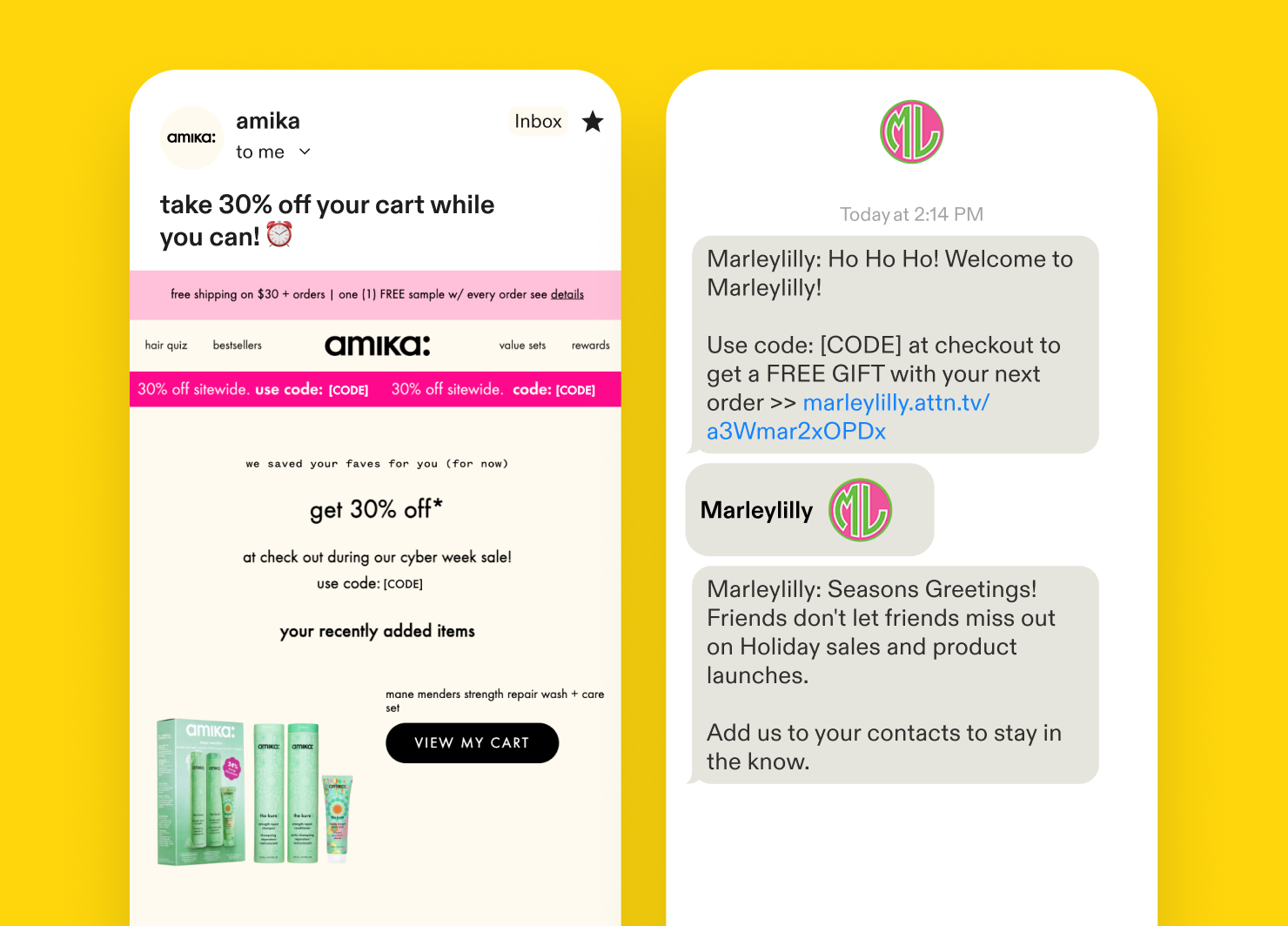
- Segment shoppers by interest. Before BFCM, group subscribers by the products or categories they’ve browsed, saved, or bought. Invite them to build wishlists ahead of the sale.
- Personalize your sale announcements. At launch, feature products each group is likely interested in, and alert shoppers when saved items go on sale.
- Keep high-intent journeys active. When shoppers sign up, browse a product, or add to cart, they’re showing you where their interest lies. Welcome and abandonment journeys respond to those signals while they’re fresh. Pausing them to make room for campaigns means missing timely opportunities to act on that active interest. Keep these flows running during BFCM, with messaging that reflects your current sale.
- Prioritize messages by shopper intent. When campaigns and journeys overlap, give the message most relevant to the shopper’s recent activity priority. For example, delay a general sale reminder when a timely cart-recovery message is due. Use frequency caps and suppression rules to prevent overlapping sends. Marketers using suppression rules were 23% more likely to report improved BFCM performance.
- Ease off when engagement fades. During BFCM, message inactive subscribers less often. Keep key sale announcements in the mix—some shoppers may be waiting for those deals—but scale back follow-ups if they don’t engage. If they remain inactive, use a sunset message to strategically re-engage them.
- Adapt messages as holiday needs change. Made In Cookware replaces evergreen flows with seasonal journeys during key sale windows. Shift your messaging across the holiday season too: move from gift discovery to delivery dates as shipping deadlines approach, then highlight pickup or digital gift cards after the cutoff, where available.
2. Turn new subscribers into engaged, repeat customers
List growth is outpacing revenue growth. Subscribers grew 18.4% YoY, while revenue grew 0.8% and revenue per subscriber fell 14.7%.
Give new BFCM subscribers a reason to buy—and stay engaged after the sale:
- Match your sign-up experience to your BFCM offer. Keep sign-up units live during BFCM, and align both the popup copy and welcome flow with the current sale.
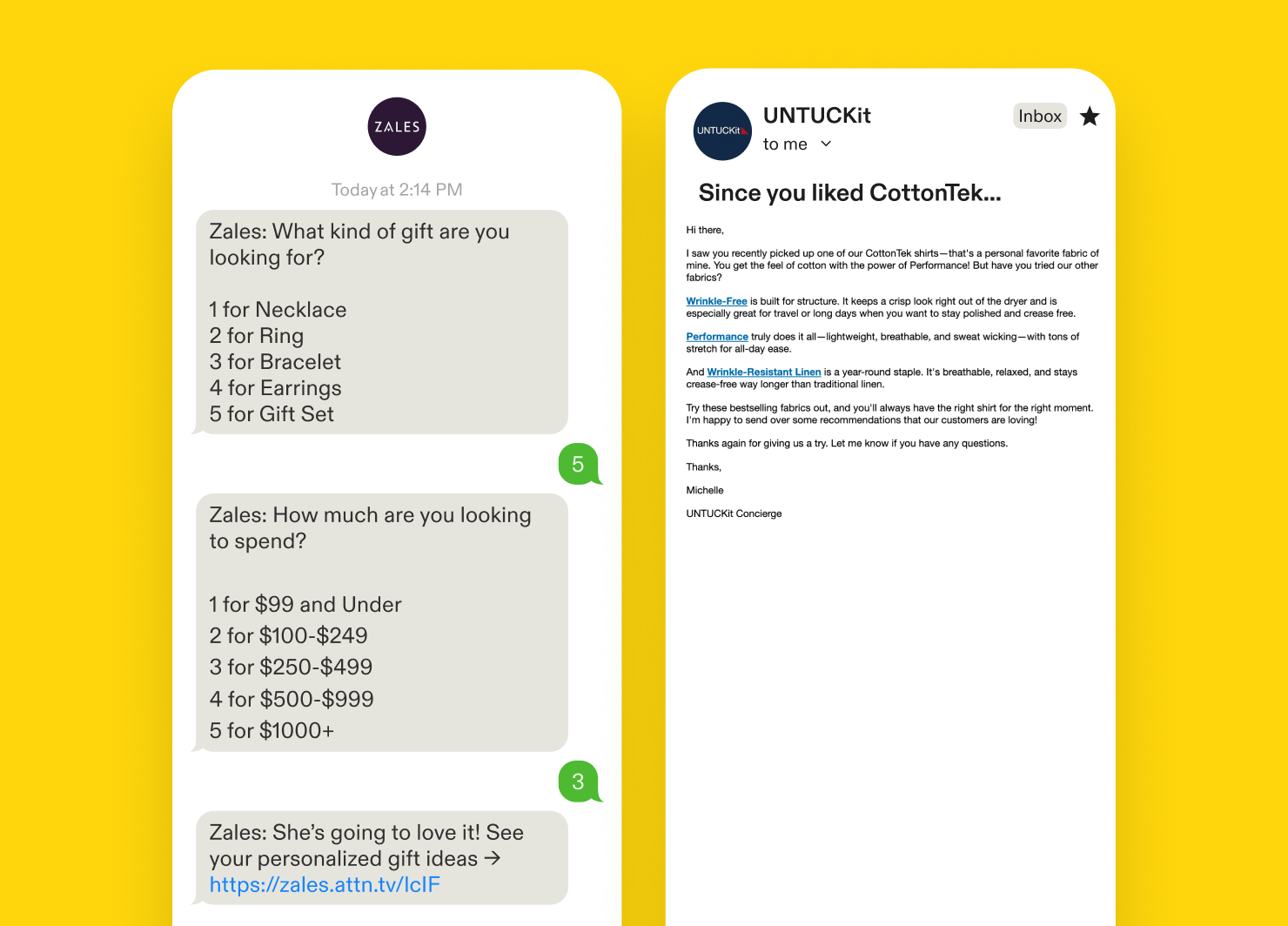
- Collect zero-party data to guide the first purchase. Ask shoppers who they’re buying for or which products and categories interest them. Use their answers to tailor their welcome experience and give relevant recommendations. Collect these preferences at sign-up, through welcome messages, or in an on-site quiz. Waiting until onboarding keeps the opt-in process simple and gives new subscribers a useful first interaction with your brand. After the holidays, refresh gift buyers’ interests before assuming they want more of what they gave someone else.
- Give subscribers a reason to stay. Highlight benefits they’ll receive beyond BFCM, such as early access to launches or subscriber-only offers. If they’re joining both email and SMS, explain what they’ll get from each.
- Help customers get more from their purchase. Add product tutorials, styling ideas, recipes, or care tips to post-purchase flows.
- Measure what happens after sign-up. Track engagement, first purchase, repeat purchases, and revenue per subscriber at 30, 60, and 90 days after sign-up. Use those results to refine how you attract, convert, and retain subscribers.
{{grey-one}}
3. Build purchase value without leading with discounts
Conversion rate rose 3.1% YoY and click-to-conversion rose 9.2%, while average order value remained relatively steady, up 1.7%, according to our benchmarks. Together, these signals show that purchase intent and propensity is increasing, while basket sizes are holding. That creates an opportunity to build bigger baskets through relevant product recommendations.
Help shoppers fill their carts by providing value:
- Help shoppers discover something relevant. During BFCM, spotlight new arrivals and bestsellers, personalize collections based on what shoppers browse or buy, and feature products for holiday parties, hosting, or gifting. Curate gift guides by recipient, interest, or budget to help shoppers narrow their choices. Kendra Scott used a conversational gift guide to offer tailored recommendations.
- Make stocking up worthwhile. During BFCM, offer repeat buyers multipacks of products they already use. A coffee brand, for example, could feature a bundle of a customer’s usual beans, making the quantity and savings clear.
- Help shoppers build a more complete basket. Recommend product pairings, cross-sells, or bundles that help shoppers put together a gift or complement what they’re buying. Carry those recommendations through campaigns and lifecycle journeys. Cart thresholds for free shipping or gift-with-purchase can give shoppers another reason to add more.
- Match incentives to shopper needs. For shoppers already showing strong purchase intent, lead with relevant products, early access, or convenient delivery options. Target price-sensitive groups (that you identify through purchase history and offer engagement) with incentives or messaging around savings.
{{grey-two}}
Turn BFCM interest into lasting growth
Before BFCM, review your campaigns and journeys together. Keep high-intent journeys active, use subscriber preferences to guide purchases and build lasting relationships, and help shoppers build more complete baskets. Match incentives to shopper needs so discounts play a deliberate role in your strategy.
Then map how your messaging will change as shoppers move from discovery and deal seeking to delivery deadlines—and from their first purchase to their next.
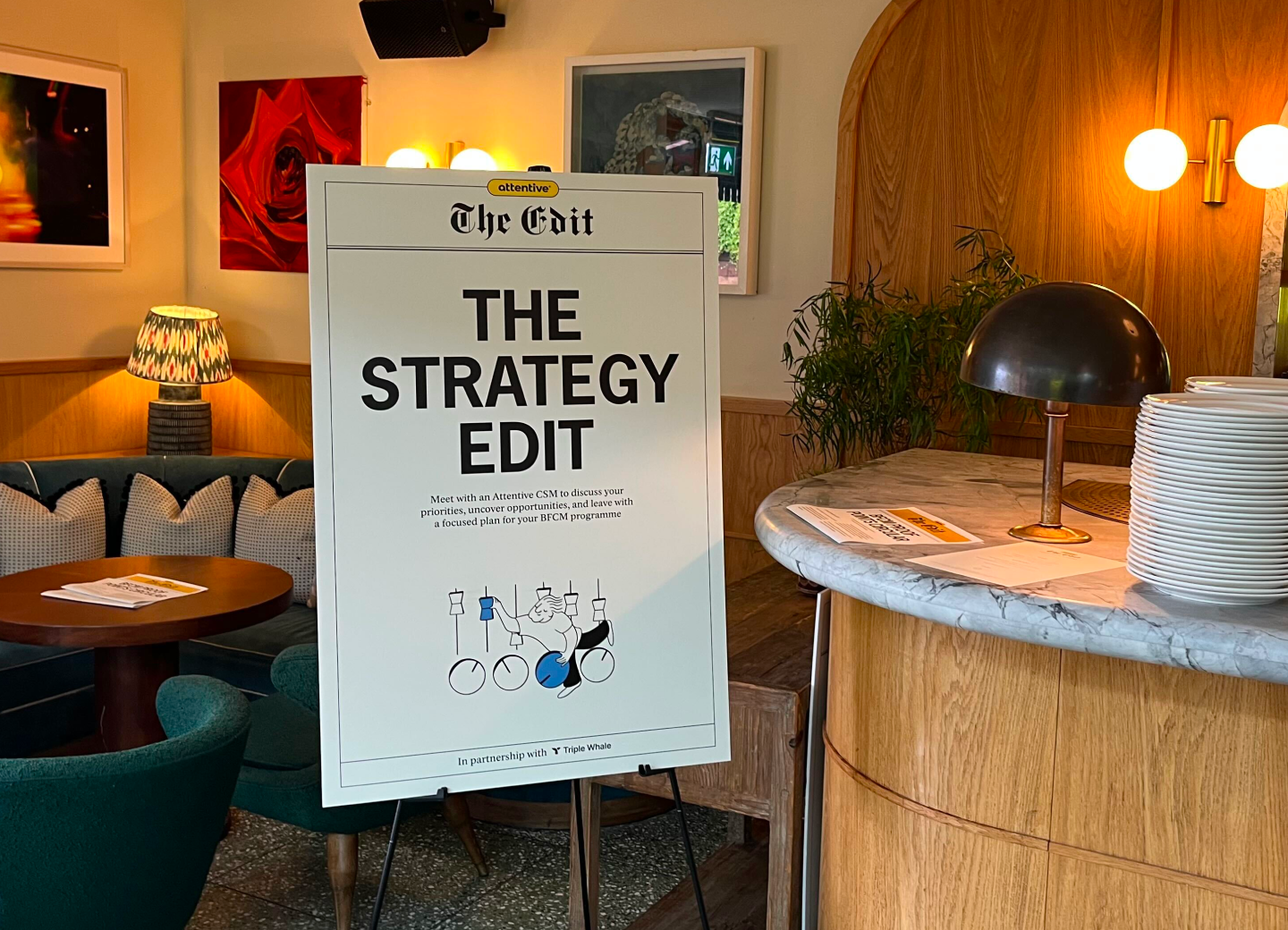
Looking for more expert BFCM guidance? Explore The Edit, Attentive's guide to planning your Cyber Week strategy.

.png)